
Reviewed · MUSEUMS
Asia Camera Museum Admission Ticket
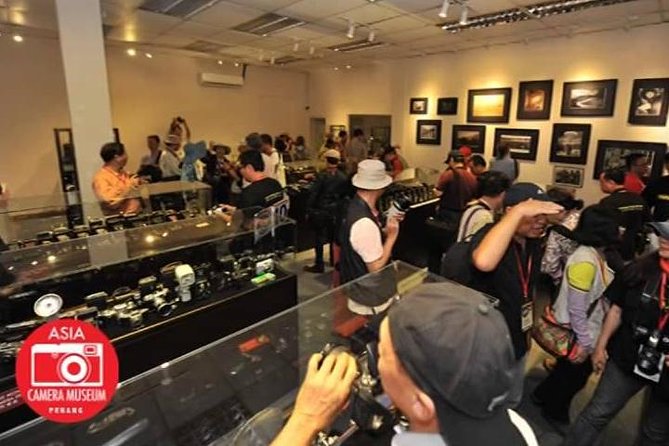
The Asia Camera Museum makes old photography equipment feel surprisingly lively. You can look through vintage cameras, study a rare Magic Lantern projector, see a silent movie projector powered by an oil lamp and gears, and use some of the equipment for hands-on photographs.
I like the working darkroom, which explains the once-mysterious process of developing film, and the camera repair workspace, with tools used to restore mechanical cameras in the 1960s. The main drawback is its short visit length: you can see the collection in 30 minutes, but you will want closer to an hour if you stop for explanations and hands-on activities.
- More than 1,000 cameras and accessories cover the development of photography from early equipment to modern times.
- A rare Magic Lantern projector is shown with a large-format hand-painted glass color slide from the early 1900s.
- A darkroom display explains how photographic film was developed before digital cameras.
- A 1960s repair bench lets you examine the tools used to fix and restore mechanical cameras.
- Hands-on camera activities allow you to look through old equipment and take phone photos through working vintage cameras.
- May, a passionate guide, may lead the visit and add personal explanations, local tips, and practical help with the exhibits.
In This Review
- George Town’s Camera Museum Is More Than a Display Case
- What You See in 30 Minutes to One Hour
- The Collection: From Early Cameras to Modern Equipment
- The Magic Lantern and Hand-Painted Slide
- The Oil-Lamp Silent Movie Projector
- Inside the Darkroom
- The 1960s Camera Repair Workspace
- The Hands-On Part Makes the Visit Work
- May’s Guided Explanations
- Is the 6.52 US Dollar Price Good Value?
- Practical Details Before You Go
- Who Will Get the Most From This Museum?
- Should You Book the Asia Camera Museum?
- FAQ
- Where is the Asia Camera Museum located?
- How long does the museum visit take?
- What are the museum’s opening hours?
- What does the admission ticket include?
- Are food, drinks, and hotel transfers included?
- Do I need to print my confirmation?
- Can the ticket be cancelled or changed?
George Town’s Camera Museum Is More Than a Display Case
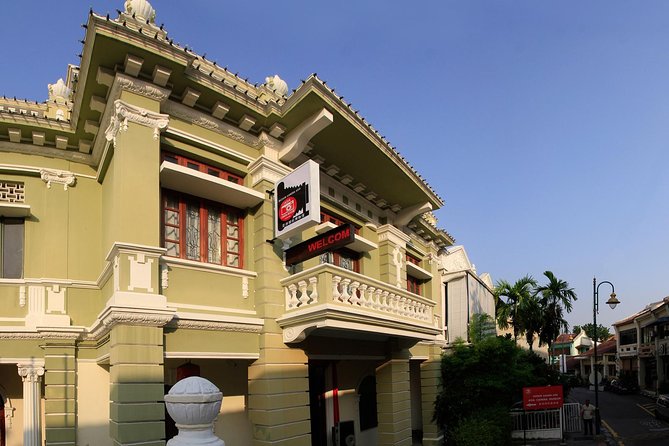
The first surprise here is the way the museum turns cameras into objects you can use, not just things you look at behind glass. You can examine old lenses, hold vintage cameras, and try framing an image through equipment made long before smartphones became everyday tools.
That matters because the collection is not limited to famous camera brands or polished showroom pieces. You also see the tools, projectors, slides, and darkroom equipment that made photography possible. The visit connects the finished photograph with the work behind it.
The museum is especially appealing if you enjoy photography, cinema, engineering, or old machines. You do not need to know much about cameras before entering. The hands-on displays give you a way into the subject even if your main interest is simply finding an unusual stop in George Town.
What You See in 30 Minutes to One Hour
Plan on 30 minutes for a quick look and up to an hour for a fuller visit. The difference depends on how much time you spend handling equipment, studying the collection, and listening to explanations.
A short visit can cover the main camera displays and the most striking projectors. If you want to understand how film was developed, examine the repair tools, and use your phone with the older cameras, allow the longer time.
The compact duration makes this easy to fit between other George Town sights. It also makes a useful stop during a hot afternoon, when an indoor museum offers a change from walking outside. Since food and drinks are not included, treat this as a museum admission rather than a full half-day outing.
A few more George Town trips to weigh up
- George Town Highlights & Upside Down Museum tours (4 Hours)
★ 4.5 · 7 reviews - Quirky Art Museum called Ur-Mu in Bukit Bintang, KL
★ 5.0 · 49 reviews - Best of Kuala Lumpur City Tour Including National Museum and National Monument
★ 3.0 · 23 reviews
The Collection: From Early Cameras to Modern Equipment
The museum contains over 1,000 cameras and related accessories. That number gives the visit real range, but the collection is most useful when you take time to compare how cameras changed across different periods.
You might find yourself paying attention to the size, shape, controls, and materials of each camera. Older mechanical equipment shows how much physical work once went into making a photograph. Today, a phone handles focusing, exposure, storage, and processing in seconds. Here, those tasks become visible.
For photographers, the displays offer a chance to look closely at equipment with a practical purpose. For everyone else, the cameras provide a simple story about changing technology. You can see photography move from specialist machinery toward the small, automatic devices now carried by almost everyone.
The large collection does not mean you must inspect every item. I recommend focusing on the pieces that connect with the demonstrations. A camera becomes more interesting when you can look through it, learn how it worked, or see the repair tools needed to keep it operating.
The Magic Lantern and Hand-Painted Slide
One of the museum’s strongest historical objects is a rare Magic Lantern projector from the early 1900s. It is displayed with an antique, large-format glass color slide that was hand-painted.
This is a useful reminder that projected images existed before modern film and digital presentation. The slide was not simply a printed photograph. Color and detail were added by hand, making the object both a piece of early visual technology and a small work of craft.
The exhibit gives you a good reason to slow down. Instead of viewing the projector as an odd old machine, you can think about the care required to create and show an image at that time. It helps explain why early projection was such a special form of entertainment.
If you like the history of cinema, this may be one of the most memorable displays in the museum. If you are mainly interested in cameras, it broadens the visit by showing how photographic images were shared with an audience.
The Oil-Lamp Silent Movie Projector
Another unusual object is a 35mm silent movie projector illuminated by an oil lamp and operated with gears. The combination of film, mechanical movement, and oil lighting makes the projector easy to remember.
Modern movie projection feels effortless. This machine shows the opposite. Film had to move through the projector at the right speed, the gears had to work together, and the light source had to illuminate the image. The equipment makes early film technology feel physical and mechanical.
You may not get a full cinema demonstration, so think of this as a display that explains the machine rather than a movie screening. Its value is in seeing the parts and understanding the process.
The projector also gives the museum a wider focus. This is not only a collection of still cameras. It includes the equipment used to display moving images, making the visit useful for anyone interested in the early development of photography and film.
Same city, a completely different kind of day:
- Half-Day Penang Countryside Cycling Tour
★ 4.5 · 454 reviews - Penang: Flexible 6-Hours Highlights
★ 5.0 · 378 reviews - Penang: Flexible Full-Day Adventures
★ 5.0 · 105 reviews - Penang: Flexible Half-Day Escapes
★ 5.0 · 65 reviews
Inside the Darkroom
The darkroom section explains how film was developed. Darkrooms have been part of photography since the early 19th century, and the display helps you understand the steps between taking a picture and seeing the final image.
If you are used to an instant phone preview, this part may be the clearest contrast in the museum. Traditional photography required patience and careful handling. The image was not immediately available, and mistakes could not be corrected with a quick tap.
The darkroom also adds practical context to the cameras. A camera was only one part of the process. Film, chemicals, timing, light control, and printing all mattered. Seeing the darkroom helps connect the camera in your hand with the finished photograph.
This section may be brief, but it gives the collection a stronger purpose. You are not only looking at old objects. You are learning how a photograph once moved from exposure to development.
The 1960s Camera Repair Workspace
The camera repair workspace is one of the museum’s most personal and useful displays. It shows the tools used by a camera repairer in the 1960s to fix and restore mechanical cameras.
Old cameras were built to be serviced. A skilled repairer could open the body, adjust small parts, and return the machine to working order. The tools make that work easier to imagine, even if you do not have a technical background.
You can play around with the equipment and look closely at the bench. This is a strong feature for anyone who likes machinery, watches, bicycles, or other objects designed to be repaired rather than replaced.
It also adds a human side to the collection. Cameras did not simply age on their own. People maintained them, repaired them, and kept them in use. That practical story is easy to miss in a standard museum display, but the repair station brings it forward.
The Hands-On Part Makes the Visit Work
The museum encourages you to touch and feel its vintage cameras. That is a major reason to choose this experience instead of only viewing camera photographs online or walking past a display of locked equipment.
One especially enjoyable activity lets you use your phone to take photographs through functioning old cameras. The result gives your pictures a retro feel while letting you experience the framing and viewing process of older equipment.
Do not expect every camera in the collection to be available for handling. The attraction is the chance to interact with selected pieces, not unrestricted access to every object. Still, even a few working examples can make the technology easier to understand.
If you are visiting with children or with someone who is not a camera enthusiast, start with the hands-on section. It offers an immediate activity and gives the rest of the museum more meaning. A person who might skip a row of old cameras may pay closer attention after trying one.
May’s Guided Explanations
The museum’s staff can make a real difference to the visit. May is specifically associated with guided tours here, and she is described as passionate, friendly, and well informed about the collection.
Her role appears to go beyond reciting dates and names. She can help you use the older equipment, assist with taking pictures, and explain what you are seeing in plain terms. She may also offer general suggestions for things to do around Penang.
A guided explanation is valuable in a collection this large. More than 1,000 objects can become a blur if you walk through alone. A good guide helps you notice the pieces that matter, understand how they worked, and connect separate displays into a clear story.
Guide availability and the exact person leading your visit can vary, so do not book solely on the assumption that May will be present. Still, the museum’s small scale gives the experience a personal feel, and the maximum group size is 15 people.
Is the 6.52 US Dollar Price Good Value?
At about $6.52 per person, admission is modest for a museum with more than 1,000 items and hands-on displays. The value is strongest if you take time to use the vintage cameras and listen to the explanations rather than rushing through in 15 minutes.
For a quick stop, the price remains reasonable, but the visit may feel brief if you only want a long, formal museum tour. The attraction is built around close viewing and interaction, not hours of galleries.
The price includes admission only. Food, drinks, and hotel transportation are not included. Since the museum is near public transportation in George Town, you can combine it with other stops without paying for a separate transfer.
I see this as a good-value small museum admission, especially for photographers and anyone curious about old technology. The experience offers something different from a general city attraction, and the repair bench and working equipment add value beyond the size of the ticket.
Practical Details Before You Go
The museum is open daily from 10:00 a.m. to 6:00 p.m. The stated opening schedule covers April 1, 2025 through March 31, 2027, with the same daily hours.
You receive booking confirmation at the time of purchase. You must print the confirmation voucher and exchange it for the actual admission ticket at the ticket counter, so keep that requirement in mind before setting out.
The experience is suitable for most people, and the group size is limited to 15. That is small enough to make staff explanations and hands-on activities more manageable than they would be in a large tour group.
The ticket is non-refundable and cannot be changed. If your George Town schedule is uncertain, this matters more than the low price. Book when you are reasonably sure you can go.
Who Will Get the Most From This Museum?
I would recommend the museum first to photographers, camera collectors, and anyone interested in the mechanics behind image-making. The chance to use old equipment gives the visit a purpose beyond simply looking at historical objects.
It also works well for families, provided everyone understands that this is a small museum rather than a major entertainment attraction. The touch-and-feel displays can hold attention better than a room of untouchable artifacts.
Film fans should pay special attention to the Magic Lantern and silent movie projector. People interested in craftsmanship will likely enjoy the repair workspace, while casual sightseers may prefer the phone photography activity.
You may want to skip it if you have no interest in cameras, old machinery, photography, or film and have very little time in George Town. The museum is friendly and hands-on, but its subject remains specific.
Should You Book the Asia Camera Museum?
Book this admission if you want an affordable, personal museum visit with working examples rather than a formal collection behind glass. The darkroom, 1960s repair bench, Magic Lantern, and oil-lamp projector give the museum plenty of character, while the phone photography activity keeps the experience practical.
I would allow 45 minutes to an hour, print your voucher, and visit during the daily 10:00 a.m. to 6:00 p.m. opening window. If you are a photographer, this is an easy yes. If you are simply exploring George Town, it is a worthwhile short stop when you want something unusual and indoors.
FAQ
Where is the Asia Camera Museum located?
The Asia Camera Museum is in George Town, Malaysia.
How long does the museum visit take?
The visit takes approximately 30 minutes to one hour, depending on how closely you examine the displays and take part in the hands-on activities.
What are the museum’s opening hours?
The museum is open Monday through Sunday from 10:00 a.m. to 6:00 p.m.
What does the admission ticket include?
The ticket includes admission to the Asia Camera Museum.
Are food, drinks, and hotel transfers included?
No. Food, drinks, hotel pick-up, and hotel drop-off are not included.
Do I need to print my confirmation?
Yes. You must print your confirmation voucher and present it at the ticketing counter to redeem the actual admission ticket.
Can the ticket be cancelled or changed?
No. The experience is non-refundable and cannot be changed for any reason.
Just added around George Town
- Penang Tropical Fruit Farm with Fruit Tasting★ 4.5 · 12 reviews
- Penang City Sightseeing Tour★ 4.5 · 8 reviews
- Penang Instagrammable Tour with Lunch★ 5.0 · 8 reviews
- Penang City & temple Tour with Penang Hill Train Fast Lane Ticket★ 4.5 · 6 reviews
- Penang Round Island Tour With Tropical Spice Garden & Entopia Butterfly Farm★ 4.0 · 15 reviews
- Penang Tour With Your Experience Personal Driver★ 5.0 · 14 reviews
- Penang Rainbow Skywalk at The Top Komtar Observation Deck Tickets★ 4.0 · 8 reviews
- Penang Private Car Charter (5 Hrs)★ 4.5 · 7 reviews
Museums, compared.
Quirky Art Museum called Ur-Mu in Bukit Bintang, KL
Read our review →
Best of Kuala Lumpur City Tour Including National Museum and National Monument
Read our review →

George Town Highlights & Upside Down Museum tours (4 Hours)
Read our review →
Treasures Of The Far East-Malacca, Museum, Trishaw Ride(Private)
Read our review →
Islamic Arts Museum Admission with Kuala Lumpur Famous Landmarks
Read our review →Browse the lists this tour appears in