
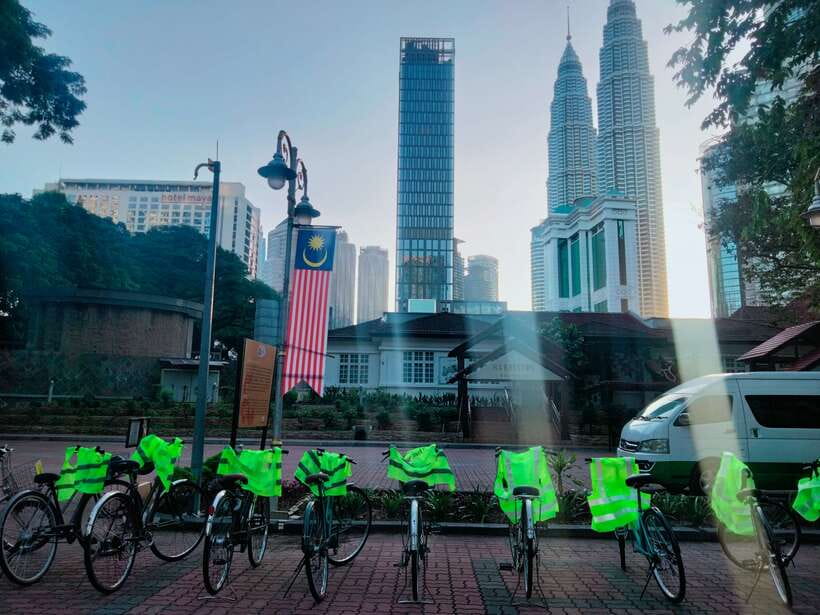
Reviewed · CYCLING TOURS
Hidden Kuala Lumpur: 4-Hour Bike Tour
Kuala Lumpur’s best stories are often found behind its big roads and shiny towers. This four-hour bike ride threads through narrow alleyways, local markets, village houses, and old workshops, then brings you close to modern Kuala Lumpur and KLCC. It is part city tour, part food outing, and part cultural lesson.
I especially like the small-group format and the chance to see daily life rather than only famous buildings. The stops for Hainanese coffee, local food, tropical fruit, Teh Tarik, and possibly bread-making give the ride real flavor. The main consideration is the heat: cycling in 34 C weather takes a moderate level of fitness, and the route may change with weather, group ability, or traffic conditions.
In This Review
- Key points to know
- From Sultan Abdul Samad Building to the back lanes
- Finding Kuala Lumpur’s narrow passageways
- Coffee, markets, and food along the way
- Old trades and houses on stilts
- Places of worship and a multicultural city
- Kampung Baru and the city’s modern edge
- How difficult is four hours on a bicycle?
- What the six-person group changes
- Is the $75 price good value?
- Who will enjoy this ride most?
- Should you book Hidden Kuala Lumpur?
- FAQ
- How long is the Hidden Kuala Lumpur bike tour?
- Where does the tour meet?
- What does the tour include?
- Is the tour available in English?
- How large is the group?
- What should I wear?
- Is the tour suitable for children?
- What happens if the weather is poor?
- Can I bring luggage or a large bag?
Key points to know
- Six riders maximum: The small group makes it easier to follow your guide through tight lanes and ask questions.
- A bike tour with food stops: Hainanese coffee, local snacks, an Indian breakfast, tropical fruit, Teh Tarik, and possible bread-making add plenty of variety.
- Old Kuala Lumpur up close: You may see hand-made trades, Chinese eateries, village homes on stilts, markets, and places of worship.
- Guide Elena receives especially strong praise: Her city knowledge, cultural explanations, and close attention to riders are a major part of the experience.
- Come ready for heat and riding: Comfortable closed-toe shoes, a hat, sunscreen, and moderate fitness will make the four hours easier.
- Your booking supports a local home: The operator makes a contribution toward Puan Nafsiah’s 100-year-old Kampung Baru house for each adult participant.
From Sultan Abdul Samad Building to the back lanes
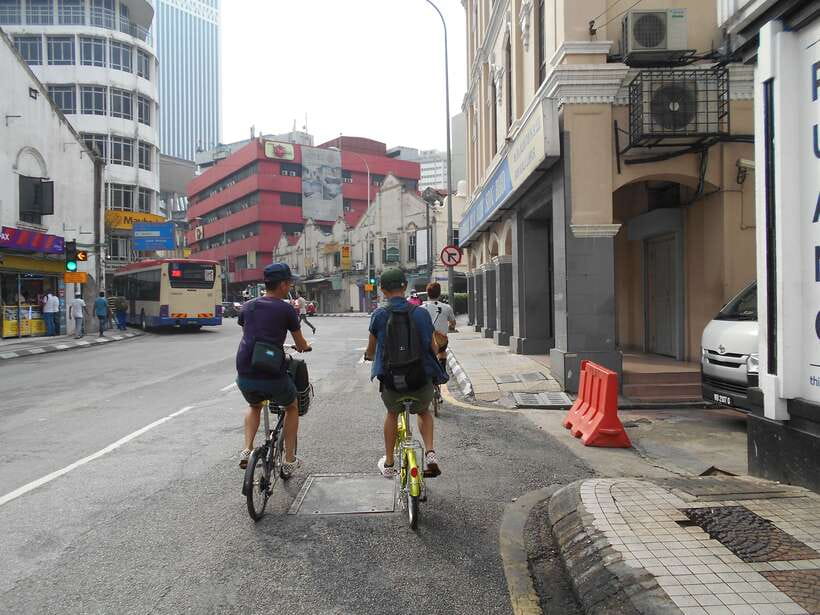
The tour begins at Q Cafe at Menara DBKL 1 on Jalan Raja Laut. Arrive 15 minutes early for registration, the indemnity form, insurance details, and bike fitting. You need to provide your height when booking, which helps the operator prepare a suitable bicycle.
The route then moves through central Kuala Lumpur, beginning around Kuala Lumpur City Gallery, the Sultan Abdul Samad Building, and the Petaling Street area. These are familiar names, but the ride does not treat them as a quick checklist of monuments. They provide the setting for understanding how the city developed from older commercial and residential districts into the modern capital around KLCC.
Petaling Street is an especially useful starting point because it connects food, trade, and migration. You can expect a traditional Hainanese coffee before setting off into the less obvious parts of the city. That pause matters. It gives you a local taste before the physical part of the outing begins, and it lets the guide explain what you are seeing before the lanes become more confusing.
The route is not designed as a fast cycling workout. It is a slow, stop-and-start ride with time for photographs, explanations, food, and short visits. You will need to stay close to the guide, since the appeal lies partly in turning into passages that would be easy to miss on foot or from a car.
A few more Kuala Lumpur trips to weigh up
- Cycling Through the Heart of Kuala Lumpur with Hotel Pickup
★ 5.0 · 16 reviews - Kuala Lumpur: Evening Food Tour by Bike
★ 5.0 · 13 reviews - Backcountry Cycling
★ 5.0 · 10 reviews
Finding Kuala Lumpur’s narrow passageways
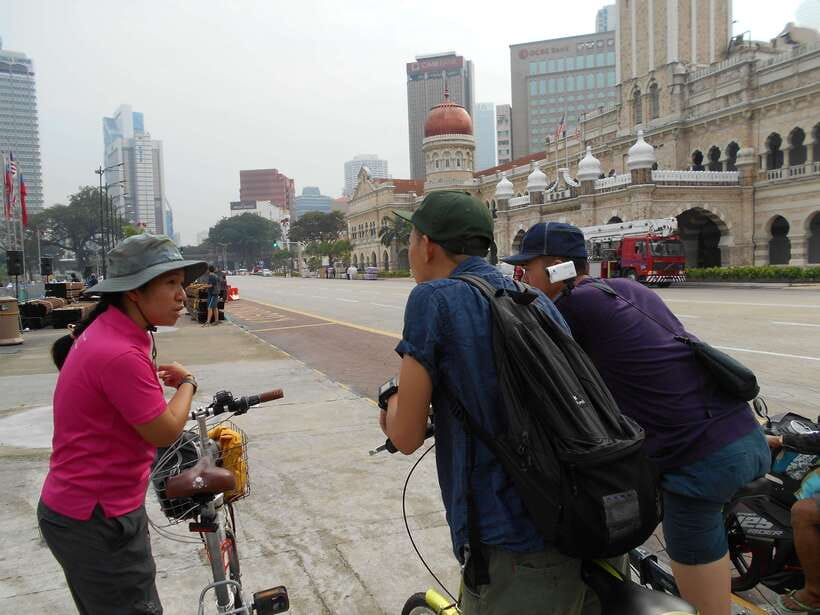
The most unusual part of the outing is the transition from the main streets into dark, single-file passages. These lanes connect the old and new sides of Kuala Lumpur in a way that regular sightseeing buses cannot match.
You may pass through a morning market used mainly by local residents. The exact route and market activity can vary, but the point is to see a working part of the city rather than a display prepared for visitors. There may be unusual tropical fruit, small food sellers, and compact stalls where the city’s daily shopping takes place.
This is where the small group helps. A maximum of six participants is much easier to manage in a narrow lane than a large procession of bicycles. Elena, one of the named guides associated with this experience, is praised for keeping an eye on riders while explaining the city’s customs and religious mix. That matters in Kuala Lumpur, where a short ride can bring you past several communities and forms of worship.
The lanes also require patience. You may stop often, walk the bicycle for a short stretch, or wait while the guide gathers the group. If you want constant motion and long open-road cycling, this is not the right tour. If you enjoy pauses and small discoveries, the stop-and-go rhythm is part of the appeal.
Coffee, markets, and food along the way
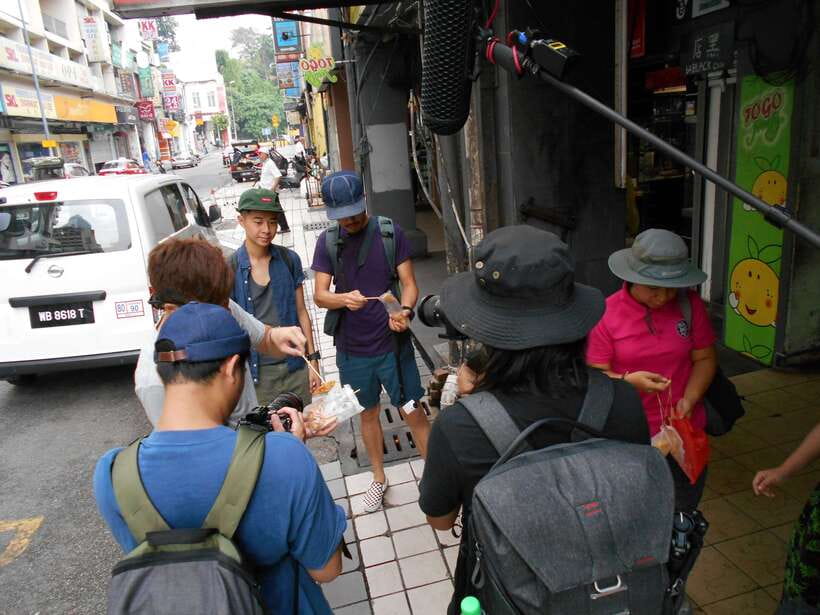
Food is not an afterthought here. The outing includes refreshments, and the route can work almost like a compact food tour. Hainanese coffee starts the day, while later stops may include local snacks, an Indian breakfast, tropical fruit, and drinks from small neighborhood shops.
You may also get a chance to try Teh Tarik, Malaysia’s famously pulled tea. The drink is sweet, milky, and served with plenty of show when prepared in the traditional manner. A possible bread-making stop adds another hands-on element, but it is subject to availability, so you should not book this tour solely for that activity.
The food stops are useful for another reason: they slow the pace and create natural openings for questions. You can ask about ingredients, religious customs, family businesses, or the way older trades survive alongside new construction. The guide’s explanations are what turn a snack into a piece of local context.
Dietary requirements should be shared when you book. That is important because the food is part of the route, and the operator needs notice to plan around specific needs. The tour provides a bottle of water and refreshments, but I would still bring extra water if you are sensitive to heat.
Old trades and houses on stilts
One of the strongest features is the focus on things that are easy to overlook. The route includes heritage hand-made trades, old Chinese eateries, and traditional village houses on stilts. These details show Kuala Lumpur as a lived-in city, not just a collection of towers and shopping centers.
A house on stilts can tell you more about older building methods and neighborhood life than a polished museum display. You can see how homes relate to drainage, heat, flooding, and limited urban space. The tour does not promise a formal architectural lecture, but the guide explains the daily routines and local practices that give these places meaning.
The hand-made trades are equally valuable. Small workshops and craft businesses are easy to pass without noticing, especially when you are traveling by car. By bicycle, you move slowly enough to see the working edges of the city, where skills and businesses continue in ordinary surroundings.
Keep your expectations flexible. This is not a guaranteed series of indoor demonstrations, and the route can change according to weather, group size, rider ability, and local conditions. Think of the experience as a guided look at surviving fragments of older Kuala Lumpur rather than a fixed museum itinerary.
Same city, a completely different kind of day:
- Kuala Lumpur: Batu Caves Half-Day Tour with Pick-Up Option
★ 4.5 · 4,288 reviews - Private Half-Day Batu Caves and Cutural Tour in Kuala Lumpur
★ 5.0 · 3,107 reviews - Sambal Streets Kuala Lumpur Food Tour with 15+ Tastings
★ 5.0 · 2,438 reviews - Historical Malacca Guided Day Tour (Shared Tour)
★ 5.0 · 2,172 reviews
Places of worship and a multicultural city
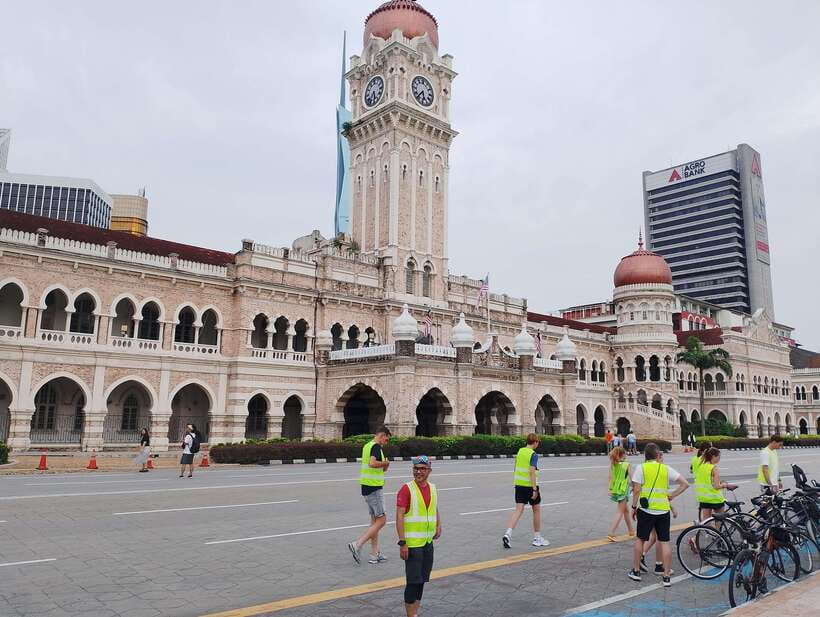
The route may include visits or passes by beautiful places of worship, including temples and a mosque. This is one of the most meaningful parts of the experience because Kuala Lumpur’s identity cannot be reduced to one culture or one faith.
The guide helps explain how different communities shaped the city. You may hear about daily religious practices, food traditions, and the relationship between older neighborhoods and newer development. Dress and behavior should be respectful at any religious site, and follow the guide’s instructions about where you can enter or take photographs.
This portion also gives the tour more substance than a simple ride through colorful streets. You are not only looking at façades. You are learning how people use these places and how different communities occupy the same city.
Still, the exact places visited can vary. The supplied route description names temples, a mosque, Chinese eateries, and a Malay village area, while the timing and weather may require changes. Ask your guide at the start which stops are planned that day.
Kampung Baru and the city’s modern edge
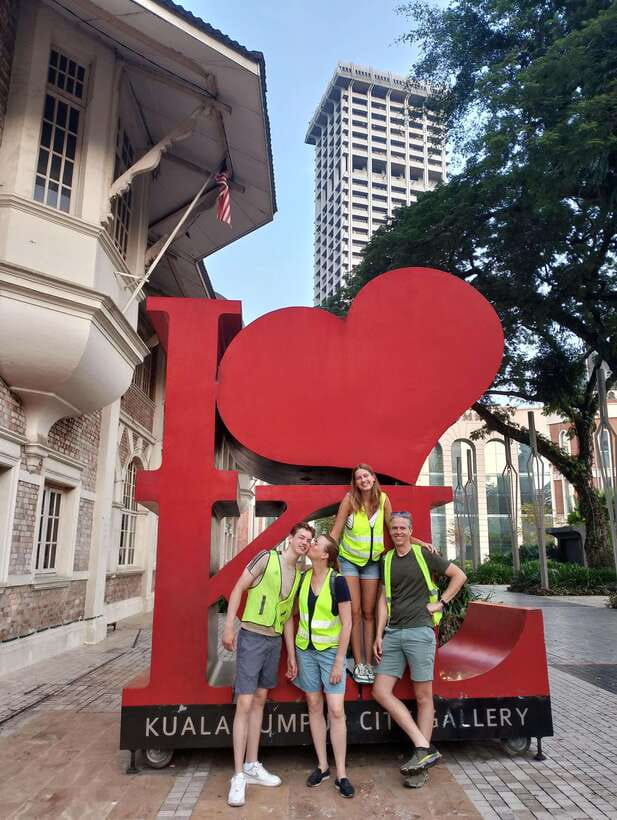
The ride includes the old Malay village area of Kampung Baru, where traditional homes sit close to central Kuala Lumpur’s high-rise core. This contrast is one of the clearest visual lessons of the tour.
You can move from modest village houses to modern architecture near KLCC within a short distance. That change shows how quickly Kuala Lumpur has grown and why older communities remain important to the city’s character. The contribution connected with each adult booking, directed toward Puan Nafsiah’s 100-year-old Kampung Baru home, gives the tour a local community link beyond sightseeing.
Kampung Baru is also a good place to consider what development means. You see the pressure of a central location, but you also see homes, food businesses, and neighborhood routines that have not vanished under new construction. The guide’s stories help connect the buildings to the people who use them.
This is not a panoramic tower tour, so you should not expect long skyline stops. Instead, the city’s modern face appears in passing, close enough to older homes and lanes for the contrast to feel immediate.
How difficult is four hours on a bicycle?
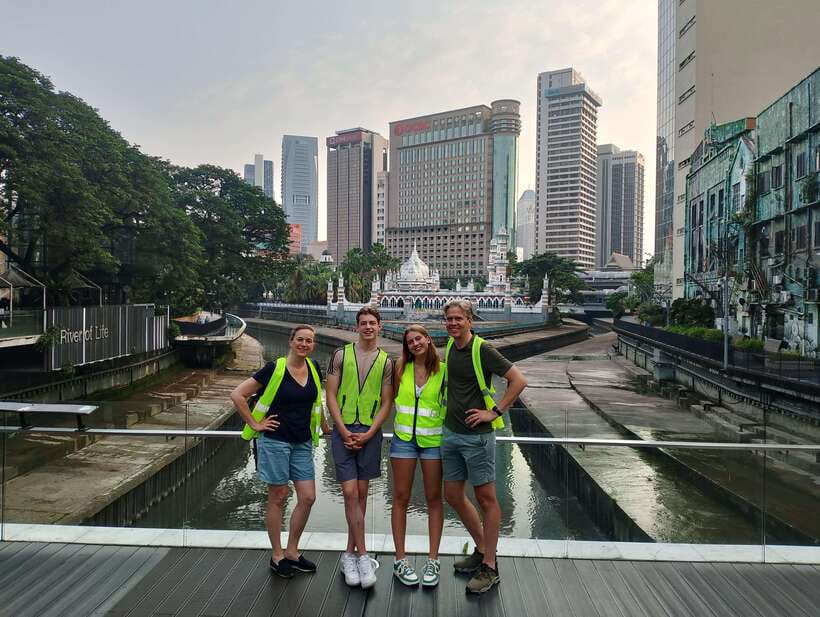
You need a moderate level of fitness. The ride takes place in Kuala Lumpur’s heat, and one rider specifically noted that circling through the city at 34 C can be challenging. The route is not described as an extreme cycling course, but four hours of riding, stopping, walking, and standing is still a physical commitment.
Wear light, comfortable clothing, closed-toe shoes, and a hat. Sunscreen is a smart addition. Large bags and luggage are not allowed, so leave suitcases at your accommodation and bring only what you need for the ride.
You receive a bicycle, helmet, and bottle of water. Tell the operator your height when booking so the bike can be prepared properly. People under 120 centimeters, pregnant women, those with mobility impairments, and people with heart problems or other serious medical conditions should not take this tour.
Weather also matters. The experience depends on favorable conditions, and heavy rain can lead to a different date or a full refund. The route may run longer than four hours if the group needs extra time, so avoid scheduling a tight airport transfer or another fixed appointment immediately afterward.
What the six-person group changes
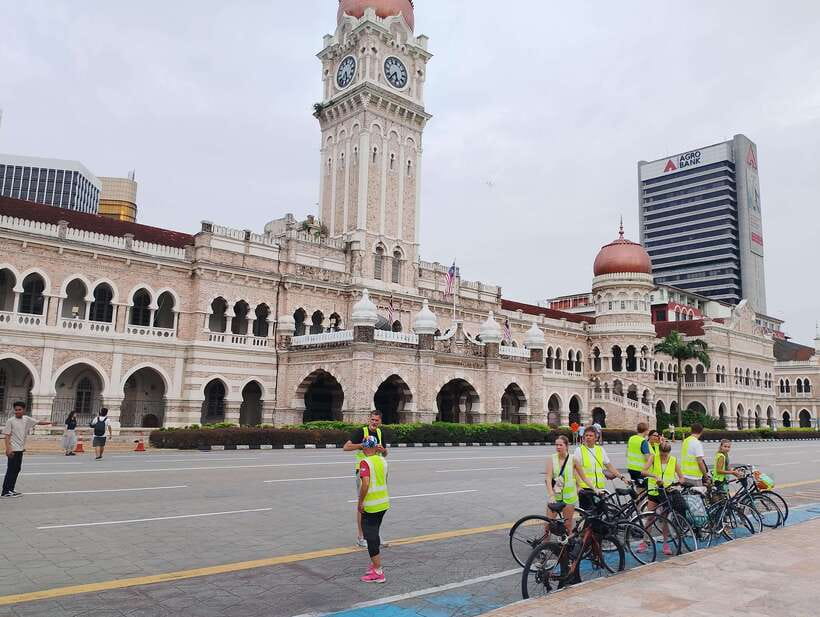
A group limit of six is a real advantage for this particular route. Narrow lanes, markets, food stalls, and village streets are awkward with a large crowd. With fewer riders, the guide can explain details without shouting and keep track of different cycling abilities.
The group size also makes the social side easier. You can ask about food or religion without holding up a long line of bicycles. If you are traveling alone, this is a more personal way to see the city than a large sightseeing circuit.
The trade-off is that the tour’s pace depends on everyone. A slower rider, intense heat, or a busy lane can affect the whole group. The operator may adjust the itinerary for safety and comfort. I see that as sensible, but it means you should not expect a perfectly timed schedule.
The live guiding is available in English and Malay. Elena is singled out for clear cultural explanations and careful attention to the group, but guide assignments can change. Whoever leads the ride, the most important quality is the ability to explain local life while managing a bicycle group in tight urban spaces.
Is the $75 price good value?
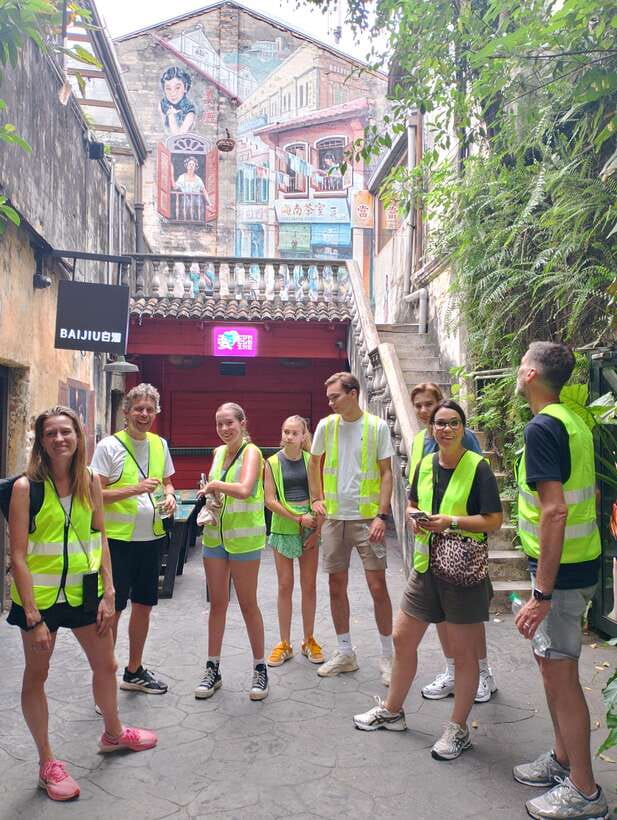
At $75 per person, this is not the cheapest way to see central Kuala Lumpur. You can visit Petaling Street and the Sultan Abdul Samad Building independently for far less. You also have to supply your own time, route planning, and confidence in finding the less obvious lanes.
The price makes more sense if you value access and interpretation. You receive a bicycle, helmet, water, refreshments, a four-hour guided route, and a small group capped at six. The food tastings and cultural stops add value, especially if you want more than a quick ride past major buildings.
I would compare it with the cost of a private guide, bicycle rental, and several small food stops. Once you add those pieces, the price becomes easier to justify. The community contribution connected with Kampung Baru is another positive, though it should not be the sole reason to book.
The strongest value is time. In four hours, you can move between colonial-era landmarks, Chinese commercial streets, Malay village homes, religious sites, local markets, and modern towers. Doing that alone would require careful research and a willingness to get lost without knowing which lanes are appropriate or open.
Who will enjoy this ride most?
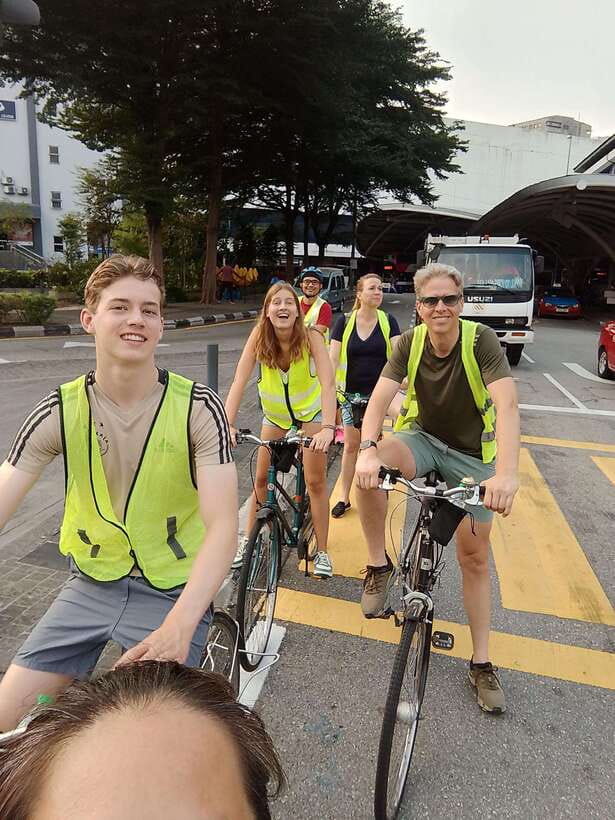
I would recommend it to first-time visitors who want a better feel for Kuala Lumpur than the usual tower-and-mall circuit provides. It also suits returning visitors who have already seen the main sights and want a closer look at food, neighborhoods, and daily routines.
Food lovers should pay attention. The coffee, Indian breakfast, fruit, local snacks, Teh Tarik, and possible bread-making make this more varied than a standard city bike ride. Tell the operator about dietary needs in advance so the food side can be handled properly.
The tour is also a good match for curious cyclists who enjoy learning while they ride. You should be comfortable in city conditions, able to manage four hours at a moderate pace, and willing to follow a guide through changing surfaces and narrow passages.
I would hesitate to recommend it to anyone who dislikes heat, frequent stops, small lanes, or uncertain timing. It is also unsuitable for the listed medical and mobility restrictions. If you want an athletic ride with long stretches of uninterrupted cycling, choose another activity.
Should you book Hidden Kuala Lumpur?
Book this tour if you want Kuala Lumpur at street level: coffee shops, markets, local food, religious buildings, village homes, hand-made trades, and the surprising closeness of old neighborhoods to KLCC. The 4.7 rating from 26 ratings reflects a consistently strong experience, especially around the guides, cultural explanations, food, and unusual route.
The best reason to go is the mix. You are not choosing between a food tour, a cultural tour, and a bike ride. You get pieces of all three, with the caveat that exact stops can shift.
Skip it if the heat or four-hour commitment sounds tiring, or if you need a tightly scheduled activity. For an active visitor who wants to see the city’s less polished and more personal side, this is a smart use of half a day.
FAQ
How long is the Hidden Kuala Lumpur bike tour?
The tour lasts four hours. It may take longer depending on group size, rider abilities, and weather conditions, and the itinerary may be adjusted when needed.
Where does the tour meet?
Meet the guide at Q Cafe, Menara DBKL 1, Jalan Raja Laut, Kuala Lumpur. You should arrive 15 minutes before the scheduled start.
What does the tour include?
The price includes a bicycle, helmet, bottle of water, and refreshments. Food and drink stops can include Hainanese coffee, local snacks, Teh Tarik, and other tastings along the route.
Is the tour available in English?
Yes. Live guiding is available in English and Malay.
How large is the group?
The tour is limited to six participants, making it easier to move through narrow lanes and stay connected with the guide.
What should I wear?
Wear comfortable clothing and closed-toe shoes. A hat and sunscreen are also recommended because Kuala Lumpur can be very hot.
Is the tour suitable for children?
The minimum participation age is 12 years. Participants should also have a moderate level of fitness and be able to cycle for the duration of the activity.
What happens if the weather is poor?
The tour is subject to favorable weather. If it is canceled because of poor conditions, you can choose another date or receive a full refund.
Can I bring luggage or a large bag?
No. Luggage and large bags are not allowed. You should bring only the small personal items you need for the ride.
Just added around Kuala Lumpur
- Transit Tour Private Tour (Ex Port Klang Cruise Centre/KLIA 1 &2)★ 5.0 · 10 reviews
- Kuala Lumpur City & Batu Caves Temple Private Tour★ 4.5 · 3 reviews
- Private Kuala Lumpur Shore Excursions★ 4.5 · 22 reviews
- Private Transfer: Kuala Lumpur International Airport to or from Hotel★ 4.5 · 14 reviews
- Genting SkyWorlds Theme Park Tickets (Optional)★ 5.0 · 5 reviews
- Full Day Melaka Private Tour from Kuala Lumpur★ 4.0 · 5 reviews
- Private Port Klang Cruise to Kuala Lumpur City Tour★ 5.0 · 3 reviews
- Kuala Lumpur Airport Transit Tour (4 hours)★ 5.0 · 12 reviews
Cycling Tours, compared.
Penang Countryside Cycling Tour. PPA2 by Matahari
Read our review →
Back of the Bike Street Food Experience – Real Penang!
Read our review →Browse the lists this tour appears in