
Reviewed · MALACCA TOURS
Melaka UNESCO City Guided Walking Tour – Tip Based
Melaka’s past is packed into a walkable old town: Portuguese fortifications, Dutch civic buildings, Malay royal traditions, Chinese clan homes, and Peranakan interiors all sit within a short route. I like that this tour connects those pieces instead of treating each monument as a separate photo stop. The stories about the mousedeer, St. Francis Xavier, and the city’s trading past give the streets a human scale.
I also like the small group, limited to five people, and the low booking price. Guides such as Mimi and John are praised for warm storytelling and a strong feel for local history. The main consideration is the payment model: your booking fee only secures your place, and you are expected to offer a further tip of RM50 to RM100 per person.
In This Review
- Key points at a glance
- Why this short walk makes sense in Melaka
- Starting at Christ Church and Dutch Square
- St. Paul’s Hill and the Portuguese chapter
- Malay royalty at the Sultanate Palace
- A Famosa and the road to independence
- The Malacca River and the mousedeer legend
- Jonker Street and the Peranakan quarter
- Three small heritage stops with big local detail
- Mimi, John, and the guide factor
- What the $5.20 booking price really means
- Practical advice before you go
- Who should book this Melaka walk?
- FAQ
- How long does the Melaka UNESCO City Guided Walking Tour last?
- How much does the tour cost?
- What is included in the experience?
- How many people can join the tour?
- Where does the tour start and end?
- Is cancellation available?
Key points at a glance
- A compact route through old Melaka: Cover 12 landmarks in about two and a half hours, with no entrance fees listed for the stops.
- A guide-led history lesson: Hear how Malay, Portuguese, Dutch, Chinese, Indian, and British influences shaped the city.
- A very small group: The maximum of five people allows room for questions and a more personal pace.
- The tip-based cost needs explaining: The booking fee is about $5.20, while RM50 to RM100 per person is the suggested guide tip.
- Strong local storytelling: Mimi is noted for humor and pride in her hometown, while John is praised for his friendly approach and clear grasp of the subject.
- Best for first-time visitors: The route gives you a useful orientation before you explore Melaka on your own.
Why this short walk makes sense in Melaka
Melaka is easier to understand once you see how its different eras overlap. The old center is not just a collection of attractive buildings. It was a port where Malay rulers, Portuguese officials, Dutch merchants, Chinese traders, Indian communities, and later British administrators left their mark.
This walk gives you that broad picture in a practical way. You move from Dutch Square to a Portuguese fort gate, then up to a former chapel and across to a reconstruction of a Malay palace. Later, the route turns toward the river and Jonker Street, where Chinese and Peranakan culture take the lead.
That variety is the tour’s greatest strength. In one morning or afternoon, you get a useful framework for the city. Afterward, you can return to the places that caught your attention, especially Jonker Street, the Baba and Nyonya Heritage Museum, or the riverfront.
The route lasts about two hours and thirty minutes. That is long enough for real explanation but short enough to fit around meals, museum visits, or a second walk through the old quarter. You should still expect a fair amount of standing and walking, since the experience is entirely on foot and asks for a moderate level of fitness.
More malacca tours in Malacca:
- From Kuala Lumpur: Historical Melaka Day Tour with Lunch
★ 4.4 · 2,297 reviews - Historical Malacca Guided Day Tour (Shared Tour)
★ 5.0 · 2,172 reviews - Historical Malacca Day Tour from Kuala Lumpur (Private Tour)
★ 5.0 · 515 reviews
Starting at Christ Church and Dutch Square
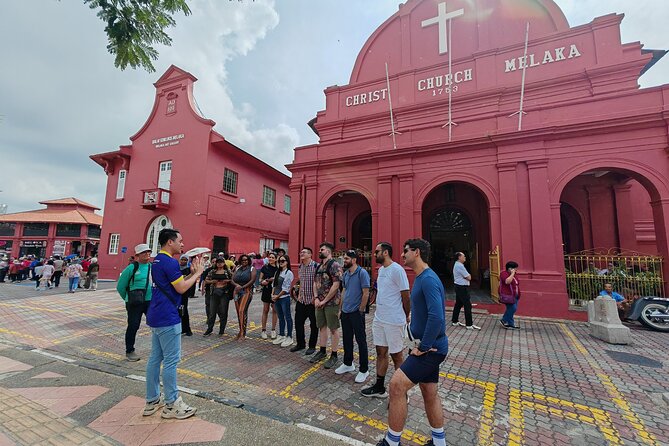
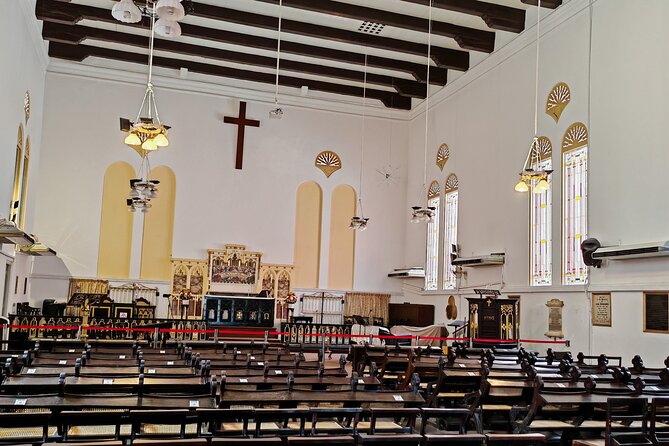
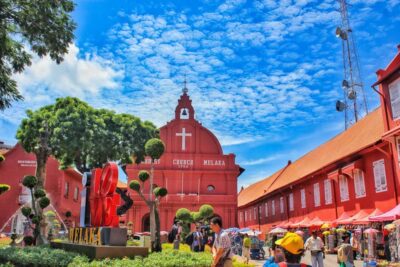
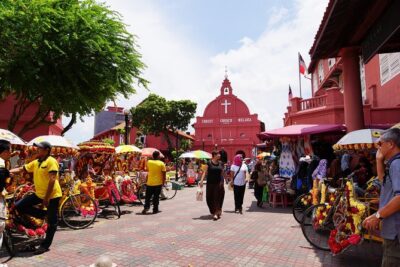
The meeting point is Jonker Chocolate House at No. 1, Jalan Laksamana, in Banda Hilir. From there, the walk begins at Christ Church, the red-painted 18th-century Dutch Protestant church that remains the oldest functioning Anglican church in Malaysia.
You get about 15 minutes here. That is enough to take in the building and hear why it matters, but not enough for a long interior visit. The value is in the setting. Christ Church anchors Dutch Square, where the color, architecture, and formal layout make the Dutch period easy to picture.
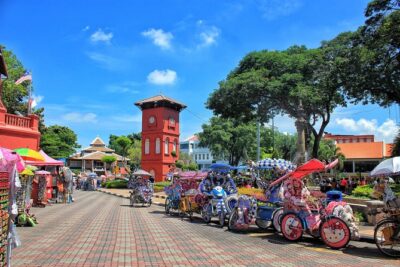
Next comes Red Square, also called Dutch Square. The former Dutch governor’s residence dates to 1650 and offers one of the clearest examples of Dutch civic design adapted to a tropical city. The stop lasts about 10 minutes.
I like this opening because it quickly shows you that colonial Melaka was more than a fortified port. It had government buildings, churches, residences, and an organized center of power. Your guide can help you read those buildings as part of a political story rather than simply as a scenic backdrop.
The square can be busy, and the strong sun reflects off the open space. Bring water, use sun protection, and wear shoes that can handle uneven pavements and slopes.
St. Paul’s Hill and the Portuguese chapter
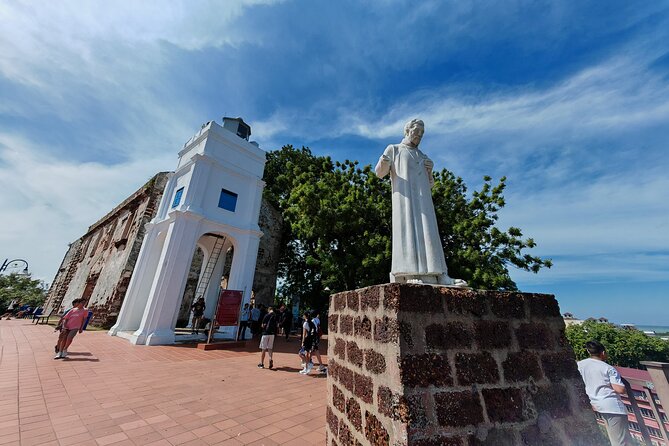
The walk then climbs St. Paul’s Hill, also known as Bukit St. Paul. The hilltop church began as a 16th-century Portuguese chapel and was later used by the Dutch as the Bovenkerk.
The ruins are often described as the oldest European building east of India. You will spend about 20 minutes here, making it one of the longer stops. The position above the old town also helps you understand why this spot mattered to successive rulers.
A particularly memorable detail is the statue of St. Francis Xavier, which is missing its right arm. That small feature gives your guide an easy opening for a short story and keeps the stop from becoming a dry list of dates.
The hill is not a major climb, but it does add physical effort to the walk. If you need a slower pace, this is a good place to say so. The benefit is a change of viewpoint and a closer look at the remains of Portuguese and Dutch rule.
Malay royalty at the Sultanate Palace
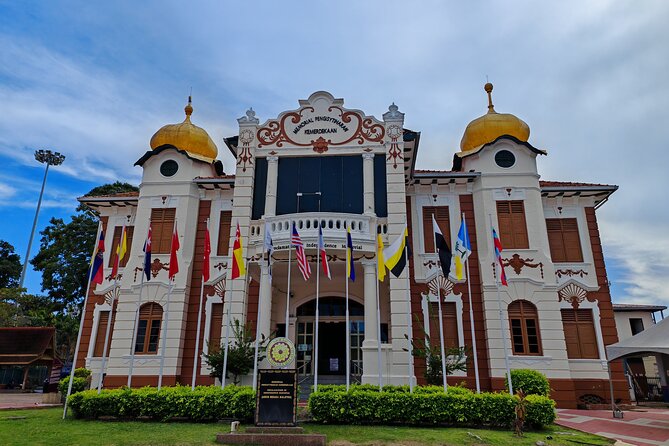
The Malacca Sultanate Palace is a timber reconstruction linked to the 15th-century palace of Sultan Mansur Shah. The stop lasts about 10 minutes and introduces the Malay court that existed before European control.
Because the present structure is a reconstruction, you should see it as an interpretation of the past rather than an untouched medieval building. That does not make it unhelpful. It gives you a visual sense of Malay royal life and reminds you that Melaka’s story began with a powerful local sultanate, not with European arrival.
This stop is important for balance. A walk focused only on Dutch and Portuguese monuments would give you a distorted picture of the city. Here, the guide places Malay political power at the center of the story.
A few more Malacca trips to weigh up
- Kuala Lumpur Local Street Food Private Walking Tour by Night
★ 4.5 · 224 reviews - 2d1n Mount Kinabalu Via Ferrata – Walk The Torq
★ 5.0 · 90 reviews - Kinabalu Park & Poring Hot Spring & Canopy Walk
★ 4.5 · 80 reviews - 2d1n Kinabalu Park & Poring Canopy Walk & Desa Cow Farm Tour
★ 5.0 · 35 reviews
A Famosa and the road to independence
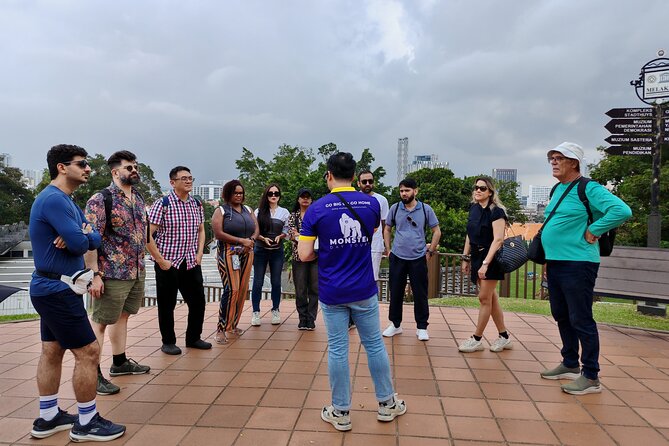
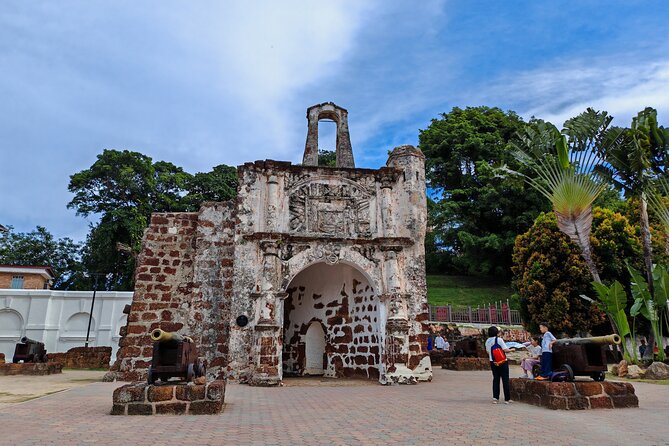
A Famosa is the surviving gateway of the Portuguese fortress built in 1512. The original stronghold enclosed an entire town, so the small section you see today is only a remnant of a much larger military complex.
You get about 15 minutes at the fort. It is an efficient stop, but do not expect a full fortress visit. The gateway is the main surviving feature, and the guide’s explanation supplies the missing scale.
The route continues to the Proclamation of Independence Memorial, a 1912 mansion later turned into a museum celebrating Malaysia’s independence in 1957. The stop lasts only five minutes, so it functions mainly as a quick historical marker.
I appreciate that the route does not stop at colonial architecture. The independence memorial shifts the story toward modern Malaysia and the end of colonial rule. You may want to return later if the museum interests you, since five minutes is enough for context but not a detailed visit.
The Malacca River and the mousedeer legend

The Malacca River was once the working center of the port, lined with warehouses and tied to the city’s trade. Today, the river area forms part of the UNESCO-listed heritage quarter and provides a calmer stretch of the walk.
You spend about 10 minutes here. The guide can help you picture the river as a place of cargo, commerce, and daily work rather than only a pleasant waterfront.
At the Melaka Tourist Information Center, you hear the local story behind the city’s name. The exiled prince Parameswara is said to have watched a brave mousedeer, or sang kancil, knock his hunting dog into the river while sitting beneath a Melaka tree. The tale is short, memorable, and a welcome change from formal political history.
I like stops such as this because they show how a city explains itself through legend. You do not need to decide if every detail is literal. The story gives the place character and helps you remember the name Melaka.
Jonker Street and the Peranakan quarter
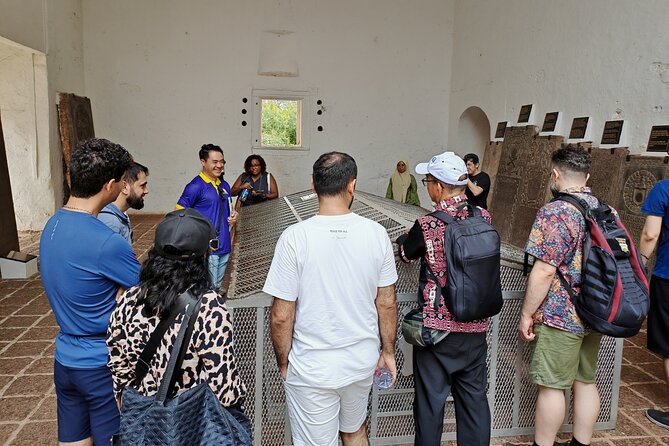
Jonker Street is Chinatown’s main artery and one of the most useful places to understand Melaka’s Chinese heritage. The route allows about 10 minutes here, which is enough to get your bearings but not enough to browse every shop.
By day, Jonker Street is known for antique shops and heritage shophouses. From Friday through Sunday, the street becomes a night market. If your walk takes place during those evenings, you will see a different side of the area, with more food, shopping, and street activity.
The schedule matters. If you are hoping to explore the market properly, treat this tour as an introduction and return later with more time. The guide’s explanation can make the return visit more rewarding because you will know what role the street plays in the old Chinese quarter.
The Baba and Nyonya Heritage Museum follows, with about 10 minutes devoted to Melaka’s Peranakan culture. The museum offers a glimpse into the opulent homes and distinctive customs of Straits Chinese families.
Ten minutes is brief for a museum, and the tour does not include an admission ticket. Still, the stop is valuable because Peranakan culture is central to Melaka’s identity. You see how Chinese traditions developed in a local setting and how that culture differs from a simple colonial or Chinatown story.
If this part of the city appeals to you, plan a separate visit to the museum. The walking tour gives you the background; a longer visit lets you study the rooms and objects at your own pace.
Three small heritage stops with big local detail
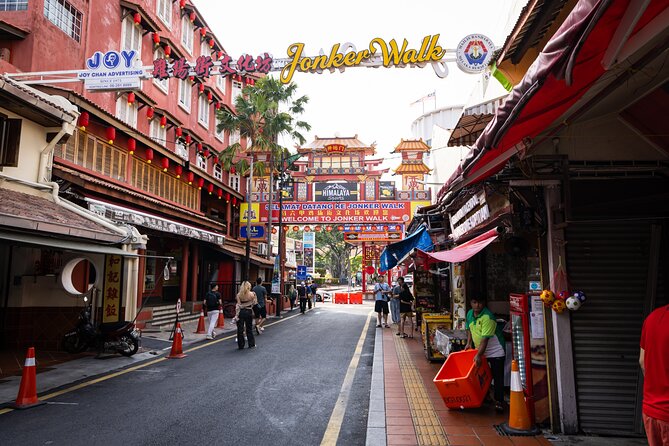
The final stops are easy to overlook if you explore alone, but they add texture to the route.
Chee Ancestral Mansion is a 1920s hall built by Chee Swee Cheng, who served as chairman of OCBC. Its unusual combination of a Dutch-style facade and Peranakan interior reflects the way Melaka’s communities borrowed from one another while keeping their own traditions.
The stop lasts about five minutes, so you should not expect a full house tour. It is more of a carefully chosen glimpse and an example of how architecture can reveal social history.
Hotel Puri Melaka was once the home of the 19th-century philanthropist Tan Kim Seng. The lobby is open for a look at its Straits Chinese decoration, making this another short but useful stop.
These places help the walk move beyond headline monuments. A fort tells you about military power. An ancestral mansion and a former private home tell you how prosperous families lived and how cultures met in everyday buildings.
The tour ends at Monster Day Tours Melaka on Jalan Hang Jebat. That location leaves you close to the old center and Jonker Street, so you can continue exploring, stop for food, or return to a museum without arranging transport.
Mimi, John, and the guide factor
The guide makes a major difference on a history walk. Mimi is praised for funny, passionate storytelling and for knowing her hometown from the inside. She has also extended the route to include important additional stops when time allowed, which is useful if you want more than the fixed outline.
John is described as kind and well informed, with an ability to explain what lies beyond the obvious sights. Another guide is praised for friendly help and a strong grasp of Melaka’s culture and past.
You should not assume a particular guide will lead your departure, but these names give you a sense of the experience’s intended style. This is not a silent march from monument to monument. The point is to ask questions, hear local stories, and connect the buildings.
The group limit of five is a real advantage. You can hear more easily, ask for clarification, and avoid the impersonal feel of a large procession. A small group can also make it easier for the guide to adjust the pace or add a nearby stop.
What the $5.20 booking price really means
At about $5.20 per person, the upfront cost looks remarkably low for a two-and-a-half-hour guided walk. Since the listed stops are free to enter, most of what you are paying for is the guide’s time and the reserved place in a small group.
But this is a tip-based tour. The booking fee secures your spot, while the suggested tip is RM50 to RM100 per person. That means you should judge the total cost using both amounts, not the booking fee alone.
This payment structure may suit you if you prefer to reward a guide directly after seeing the quality of the walk. It may frustrate you if you expect the online price to cover the full cost. Read the terms carefully before booking so there is no surprise at the meeting point.
A fair way to think about value is this: you receive a focused introduction to the old city, local storytelling, and a route that saves you the work of connecting distant historical points yourself. The tip is voluntary, but the suggested range is a meaningful part of the expected budget.
Practical advice before you go
Wear comfortable shoes and bring water. The route includes a hill, open squares, and several stops where you will stand while listening.
The tour requires moderate physical fitness. There is no transport included, and the experience is built around walking from one heritage site to the next.
All listed stops have free admission, but personal expenses are not included. If you want more time inside the Baba and Nyonya Heritage Museum or the independence museum, plan to return separately.
The tour uses a mobile ticket, and confirmation is provided at booking. It is designed for a maximum of five people, a useful detail if you prefer a quieter experience.
Free cancellation is available when you cancel at least 24 hours before the start time. Cancellations or changes made inside that window are not accepted, so do not leave adjustments until the last minute.
Who should book this Melaka walk?
I would choose this tour for a first visit to Melaka, especially if you have only one day in the historic center. The route gives you a clear introduction to Malay, Portuguese, Dutch, Chinese, Peranakan, and independence-era landmarks without requiring separate planning.
It also suits you if stories matter more than long indoor visits. The stop at each site is short, and the guide’s role is to explain the setting and connect the pieces.
You may want something else if you dislike tipping systems, need extensive time at museums, or cannot manage a moderate walking route with a hill. In that case, a self-guided plan or a private vehicle-based outing may be more comfortable.
For most budget-conscious visitors, I think the walk is a good buy once you understand the full payment arrangement. Book it for orientation, listen closely to the stories, then use the end of the route near Jonker Street to keep exploring on your own.
FAQ
How long does the Melaka UNESCO City Guided Walking Tour last?
The tour lasts approximately two hours and thirty minutes.
How much does the tour cost?
The booking price is about $5.20 per person. It is tip-based, with a suggested guide tip of RM50 to RM100 per person.
What is included in the experience?
The experience includes a guided city tour and an English-speaking guide.
How many people can join the tour?
The maximum group size is five people.
Where does the tour start and end?
The walk starts at Jonker Chocolate House, No. 1, Jalan Laksamana, Banda Hilir, Melaka. It ends at Monster Day Tours Melaka on Jalan Hang Jebat.
Is cancellation available?
Yes. You can receive a full refund if you cancel at least 24 hours before the experience begins. Changes or cancellations made less than 24 hours before the start time are not accepted.
Just added around Malacca
- Full Day Melaka Private Tour from Kuala Lumpur★ 4.0 · 5 reviews
- Small Group Melaka After Dark Food Tour★ 5.0 · 16 reviews
- Malacca To Kuala Lumpur International Airport★ 4.0 · 4 reviews
- Melaka Hotels to Kuala Lumpur Hotels★ 5.0 · 3 reviews
- Small Group Melaka Flavours Food and Culture Tour★ 5.0 · 11 reviews
- Malacca City To Singapore City★ 3.5 · 3 reviews
- Private Tour: 2 in 1 Kuala Lumpur & Malacca Historical Day Tour★ 5.0 · 4 reviews
- Melaka Full-Day Trip From Kuala Lumpur★ 3.5 · 4 reviews
Malacca Tours, compared.
Historical Malacca Guided Day Tour (Shared Tour)
Read our review →
Historical Malacca Day Tour from Kuala Lumpur (Private Tour)
Read our review →
Malacca Historical Private Tour With Personal Chauffeur
Read our review →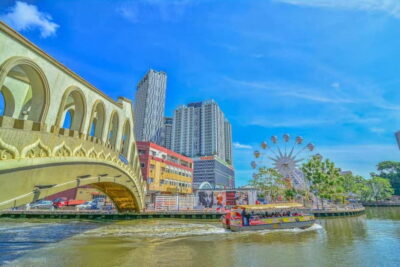

Malacca Sunset Tour: UNESCO Heritage Highlights & River Cruise
Read our review →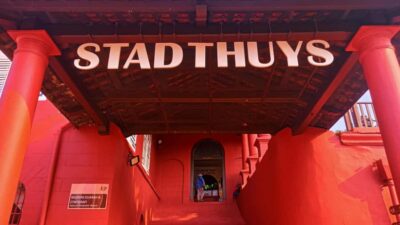
Browse the lists this tour appears in