
Reviewed · WORKSHOPS
Batik Bag Painting Workshop by myBatik
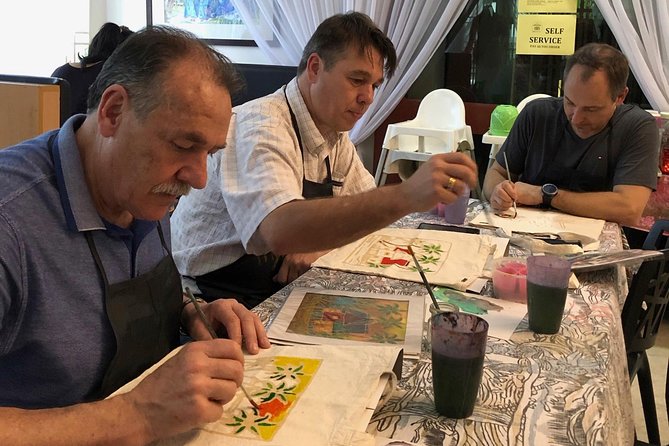
The most appealing part of this Kuala Lumpur experience is that you do not simply watch Malaysian batik being made. You draw with wax, mix your own colors, paint the cloth, and remove the wax to reveal the final pattern. Your souvenir is a useful 13-inch cotton bag, not a small trinket that gets lost in your luggage.
I like the hands-on format and the chance to learn a traditional craft in a private setting with only your group taking part. I also like the practical extras: all materials are supplied, an apron and rubber gloves are included, and you receive a workshop certificate.
The main thing to consider is the location. MyBatik is in Ampang Jaya, not directly beside the Petronas Twin Towers, so you need to plan your transport carefully. The workshop is by appointment, and the listed start time is 10:30 am.
In This Review
- Key points to know before booking
- Why making the bag is more rewarding than buying batik
- What happens during the 90-minute session
- The Ampang setting and the nearby attractions
- A calm craft break from city sightseeing
- What the $42 price includes
- A useful stop at the batik gallery
- What the strong rating tells you, and what it does not
- Who will get the most from this experience
- Practical details that affect your morning
- Should you book the myBatik bag workshop?
- FAQ
- Where does the batik bag workshop take place?
- How long does the activity last?
- What time does the workshop start?
- What do I make during the workshop?
- Are materials and protective clothing included?
- Is food included?
Key points to know before booking

- You create a real cotton bag: The finished calico bag measures about 13 inches, or 34 centimeters, across.
- The process is genuinely hands-on: You use wax to form a resist, paint the fabric, and remove the wax at the end.
- A teacher guides the full process: You learn the basics, see a demonstration, and work with the supplied equipment from start to finish.
- The session lasts about 90 minutes: That is enough time for a focused craft lesson without taking over your entire Kuala Lumpur day.
- The setting has useful extras: A garden café serves breakfast, lunch, and snacks, while a batik gallery is nearby.
- It suits families and private groups: Children under seven must have an adult with them, and only your own group participates.
Why making the bag is more rewarding than buying batik
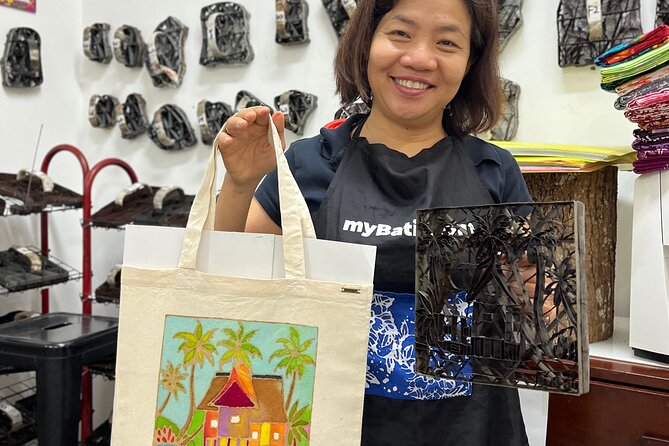
Kuala Lumpur offers many chances to buy Malaysian textiles, but shopping and making are different experiences. At myBatik, you get a short lesson in the method behind the finished cloth. You leave with a bag that carries your own choices, including the colors, lines, and pattern.
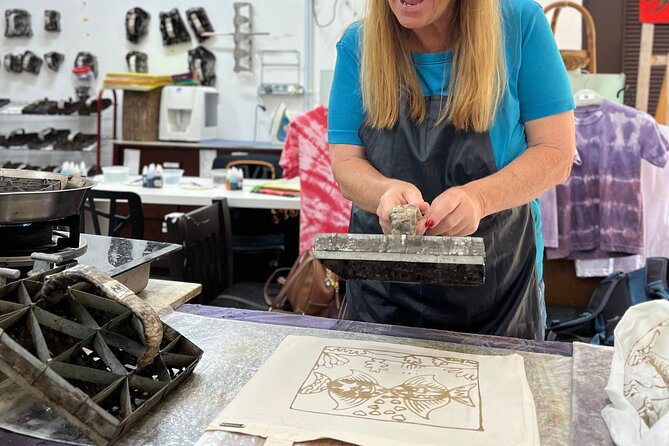
Traditional Malaysian batik uses wax-resist dyeing. The wax marks areas that should resist the paint or dye, creating borders and shapes in the cloth. You begin with an undyed fabric bag, apply your design with wax, and then fill the sections with color.
You can follow a traditional Malaysian look, or make something more personal. The workshop also gives you a chance to mix primary colors into new secondary shades. That small detail matters because it turns the activity from simple coloring into a basic lesson in how batik patterns and tones are built.
The final wax-removal step provides the payoff. Once the wax is removed, the pattern becomes clear and the color relationships make more sense. You can see how the barrier shaped the design instead of just admiring a completed textile in a shop.
A few more Kuala Lumpur trips to weigh up
- Batu Caves and Sari Experience with Batik Workshop
★ 5.0 · 181 reviews - LaZat Malaysian Cooking Class
★ 5.0 · 87 reviews - Malaysia Cooking Classes With Local
★ 5.0 · 87 reviews
What happens during the 90-minute session
The class begins at the myBatik center at 51, Embun Kemensah, Jalan Tiara Kemensah 3, 68000 Ampang Jaya, Selangor. The activity is listed as starting at 10:30 am and ending back at the same meeting point.
First, the instructor introduces the basic batik process and demonstrates the equipment. This is useful even if you have painted or crafted before, since the wax-resist method has its own order and technique. You need to understand where the wax goes before you start adding color.
You then work on the cotton bag. The materials are included, and the supplied apron and rubber gloves help keep the session manageable for children and anyone who does not want paint on their clothes. The equipment is set up to help you experience the different stages rather than simply rush toward a finished object.
The creative part is flexible. You can choose colors and fill in a prepared idea, or make your own design from scratch. The activity information does not promise a fixed pattern, so you should expect room for personal choices rather than a tightly scripted craft class.
As you paint, the instructor helps you understand how to fill the waxed sections and how colors can be combined. You may prefer a simple design, especially if you are working with young children, while older children and adults can spend more time on custom shapes and color mixing.
At the end, the wax is removed to show the finished batik effect. You take home the completed 100 percent calico cotton bag, which measures about 34 centimeters across. The workshop also includes a certificate, giving you a small record of the lesson as well as the useful souvenir.
The Ampang setting and the nearby attractions
The workshop center is in Ampang Jaya, within reach of Kuala Lumpur transport options and downtown sights. It is described as a short distance from the Twin Towers and other central attractions, but you should not treat that as meaning the class takes place at the towers themselves.
The meeting point is specific, and the activity is by appointment only. Confirm the address and start time before setting out, especially if you are fitting the class between hotel plans and sightseeing. A 10:30 am start makes it possible to use the afternoon for central Kuala Lumpur, but the transfer time to and from Ampang still needs to be part of your plan.
The supplied schedule also lists Zoo Negara as a stop, while the detailed activity description places the workshop at myBatik and says the activity ends there. Because of that mismatch, I would rely on the confirmed meeting instructions for the workshop rather than assume zoo admission or a zoo visit is included. The included experience is the batik session, its materials, demonstration, certificate, apron, and gloves.
A calm craft break from city sightseeing
Kuala Lumpur sightseeing can fill a day with towers, shopping centers, food stops, and traffic. A 90-minute craft class gives you a different pace. You sit down, work with your hands, and pay attention to one object instead of moving from one photo stop to the next.
I find this particularly useful for families. The task has a clear beginning and end, and the bag gives children something tangible to take home. Children below seven must be accompanied by an adult, but the activity is otherwise described as suitable for most participants.
It also works well for a couple, a small family, or friends who want a private cultural activity. Since only your group participates, you do not have to keep pace with strangers or worry about a large class. The private format may also make it easier to ask questions and receive help with the wax and paint.
The class is not a full study of Malaysian textile history. At 90 minutes, it is better understood as an introduction through making. You learn the basic process, get a guided chance to try it, and leave with an object that helps you remember the experience.
Same city, a completely different kind of day:
- Kuala Lumpur: Batu Caves Half-Day Tour with Pick-Up Option
★ 4.5 · 4,288 reviews - Private Half-Day Batu Caves and Cutural Tour in Kuala Lumpur
★ 5.0 · 3,107 reviews - Sambal Streets Kuala Lumpur Food Tour with 15+ Tastings
★ 5.0 · 2,438 reviews - Historical Malacca Guided Day Tour (Shared Tour)
★ 5.0 · 2,172 reviews
What the $42 price includes
At $42 per person, this is more expensive than a casual souvenir purchase or a free museum visit. The value comes from the combination of instruction, materials, private participation, and the finished bag.
You are not paying only for the cloth. The fee covers all materials, a batik demonstration, the workshop, apron, rubber gloves, certificate, local taxes, and your completed cotton bag. Food and drinks are not included, and transportation to and from attractions is also your responsibility.
I would judge the price favorably if you want an activity rather than a shopping stop. The bag is useful, but the key value is learning how the pattern is made. If you only want an inexpensive Malaysian souvenir, a market purchase may cost less. If you want a guided cultural activity that works for a family or private group, the package is easier to justify.
The nearby Green Tomato Cafe adds convenience. Breakfast, lunch, and snacks are available inside the myBatik center, so you can pair the class with a meal or a simple refreshment. Since food is separate, budget for it independently.
A useful stop at the batik gallery
After the workshop, you have access to a nearby garden café and batik gallery. The gallery gives you a chance to see finished work after trying the method yourself. That comparison can help you notice the precision, color planning, and wax lines in professionally made pieces.
I would save a little time for this area instead of leaving as soon as the bag is complete. The café can also make the morning easier for families, particularly if someone wants breakfast or a snack before the workshop.
The gallery and café are extras around the central activity, not replacements for it. The main reason to book is the making process. Think of the gallery as a useful follow-up and the café as a convenient add-on.
What the strong rating tells you, and what it does not
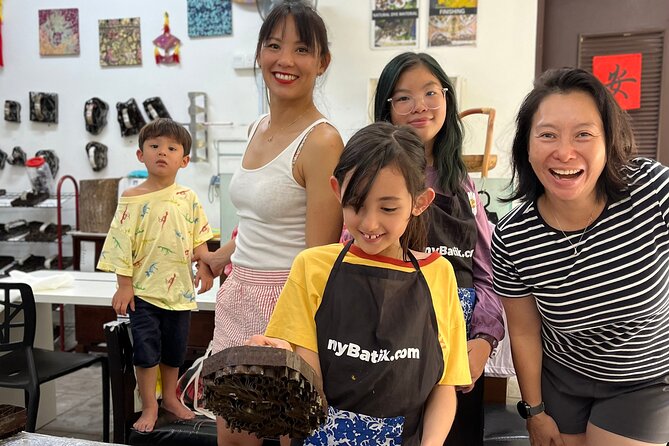
The experience has a five out of five rating from 35 reviews, with 100 percent recommending it. The most useful praise focuses on the teaching and equipment. One recorded experience describes the session as a delightful learning experience and highlights how the participant and her granddaughter came away feeling they understood the craft.
That points to the workshop’s strongest feature: you are not left to guess what to do. The teacher demonstrates the stages and provides equipment that lets you try the method properly. For a craft activity, that guidance matters more than a long lecture.
Still, a high rating does not mean every person will want the same thing. If you dislike paint, prefer a fast sightseeing tour, or want a large-scale studio visit, this may feel too focused. The class also depends on your willingness to make design choices. There is no promise that every bag will look polished, and part of the fun is accepting your own handmade result.
Who will get the most from this experience
I would recommend this workshop to families looking for a cultural activity with a clear take-home result. The 90-minute length is manageable, the materials are supplied, and an adult can help a younger child work through the design.
It is also a good fit for adults who want to understand batik by trying it rather than reading about it. You do not need to arrive with an art background. The instructor covers the basics, and you can choose a simple pattern if you want a relaxed session.
The private format helps small groups who prefer a quieter class. It also gives you more control over the pace and the design than a large public demonstration would.
I would be less likely to recommend it to someone with only a few hours in Kuala Lumpur who is staying far from Ampang. The class itself is short, but the journey to the center and back can add time. It is best placed into a day when you already plan to be near Ampang or when the craft is a priority.
Practical details that affect your morning
Book ahead and pay attention to the appointment requirement. The average booking lead time is 13 days, which suggests planning early is sensible, especially if you want a particular date during a busy Kuala Lumpur visit.
The listed start time is 10:30 am, and the duration is about one hour and 30 minutes. Your activity ends at the myBatik meeting point, not at a separate downtown attraction.
A mobile ticket is available, and confirmation is provided at booking. The center is near public transportation, though the supplied details do not specify a particular train or bus route. Use the exact address when planning your route.
Service animals are allowed, and most participants can take part. Children below seven need an accompanying adult. Food, drinks, and transport are not part of the fee.
You can cancel for a full refund if you do so at least 24 hours before the local start time. Changes or cancellations made within 24 hours are not accepted for a refund, so keep that deadline in mind when arranging transport and family plans.
Should you book the myBatik bag workshop?
Book it if you want a short, practical introduction to Malaysian batik and like the idea of taking home something you made yourself. The strongest reasons are the guided process, private group format, useful cotton bag, supplied equipment, and nearby café and gallery.
The $42 cost makes the most sense when you value the lesson and the finished object together. It is less compelling if you are searching only for the cheapest souvenir or if Ampang is inconvenient from your hotel.
For families, couples, and small private groups, this is a well-focused cultural break from standard Kuala Lumpur sightseeing. Check the meeting details carefully, allow time for the journey, and book early if the 10:30 am session fits your plans.
FAQ
Where does the batik bag workshop take place?
The workshop takes place at myBatik, 51, Embun Kemensah, Jalan Tiara Kemensah 3, 68000 Ampang Jaya, Selangor, Malaysia.
How long does the activity last?
The workshop lasts approximately 90 minutes.
What time does the workshop start?
The listed start time is 10:30 am.
What do I make during the workshop?
You wax and paint a 100 percent calico cotton bag. The finished bag is about 13 inches, or 34 centimeters, across.
Are materials and protective clothing included?
Yes. The fee includes all materials, a batik demonstration, workshop certificate, apron, and rubber gloves.
Is food included?
No. Food and drinks are not included, but breakfast, lunch, and snacks are available at Green Tomato Cafe inside the myBatik center.
Just added around Kuala Lumpur
- Kuala Lumpur City & Batu Caves Temple Private Tour★ 4.5 · 3 reviews
- Transit Tour Private Tour (Ex Port Klang Cruise Centre/KLIA 1 &2)★ 5.0 · 10 reviews
- Private Kuala Lumpur Shore Excursions★ 4.5 · 22 reviews
- Private Transfer: Kuala Lumpur International Airport to or from Hotel★ 4.5 · 14 reviews
- Genting SkyWorlds Theme Park Tickets (Optional)★ 5.0 · 5 reviews
- Full Day Melaka Private Tour from Kuala Lumpur★ 4.0 · 5 reviews
- Private Port Klang Cruise to Kuala Lumpur City Tour★ 5.0 · 3 reviews
- Kuala Lumpur Airport Transit Tour (4 hours)★ 5.0 · 12 reviews
Workshops, compared.
Batu Caves and Sari Experience with Batik Workshop
Read our review →
New Malaysian Kitchen Cooking Class and Garden Tour
Read our review →
Market Visit & Private Hands-on Cooking Class at Daun Senja
Read our review →
Malaysian Hands-On Cooking Class : Masala Medley
Read our review →
Sabah Traditional Authentic Cuisine Cooking Class 3 Hours
Read our review →Browse the lists this tour appears in