Reviewed · KUALA LUMPUR TOURS
Culinary Journey Through Chinatown with All Type of Delicacies
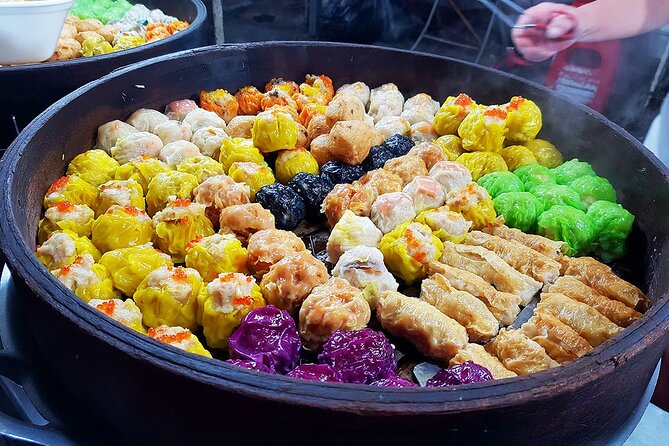
Kuala Lumpur’s Chinatown is best understood one bite at a time. This three-hour walk takes you from Central Market through Petaling Street and nearby food stops for bakkwa, apam balik, tofu fa, tropical fruit, roti canai, teh tarik, and Hokkien mee. You are not just ticking off restaurants. You are seeing how Chinese, Indian Muslim, and Malay food traditions share the same few streets.
I like the wide range of dishes and the fact that the food comes in small tastings, so you can try more without filling up too soon. I also like the personal touch from guide Rayhan Raj Naidu, whose friendly advice can continue after the walk if you need ideas for the rest of your Malaysia trip. The main drawback is simple: you need to reach Central Market yourself, and the food stops can change when availability does.
In This Review
- Key points to know before you book
- Starting at Central Market at 4 pm
- Petaling Street, the public face of Chinatown
- Bakkwa, Malaysia’s smoky Chinese dry meat
- Apam balik, a pancake with two textures
- Soy bean drink, tofu fa, and tropical fruit
- Teh tarik and roti canai at an Indian Muslim restaurant
- Hokkien mee closes the food walk
- What the $104.80 price means
- Dietary needs, clothing, and practical limits
- Who will enjoy this Chinatown food walk
- Should you book it?
- FAQ
- Where does the Chinatown food tour start?
- What time does the activity begin?
- How much walking is involved?
- Is hotel pickup included?
- Are halal and vegetarian food choices available?
- What happens if I need to cancel?
Key points to know before you book
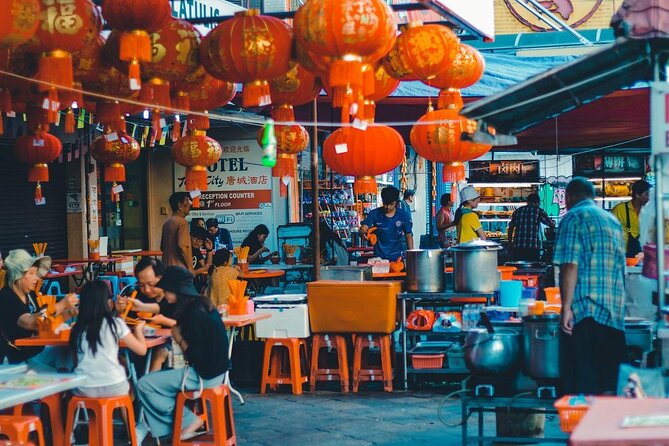
- Seven distinct food moments: Try Malaysian Chinese dry meat, apam balik, soy desserts, tropical fruit, roti canai, teh tarik, and Hokkien mee.
- A 4 pm start: The timing works well for a late lunch or early dinner, but arrive hungry and avoid a large meal beforehand.
- About 2 to 3 kilometers on foot: You will stop often, but comfortable shoes still matter.
- A small group of up to 15: This gives you a better chance to ask questions and keep up with the guide.
- Dietary requests are possible: Halal and vegetarian options are available if you tell the operator when booking.
- Central Market meeting point: You arrange your own taxi, Grab, or other transport to the information counter near the entrance.
Starting at Central Market at 4 pm
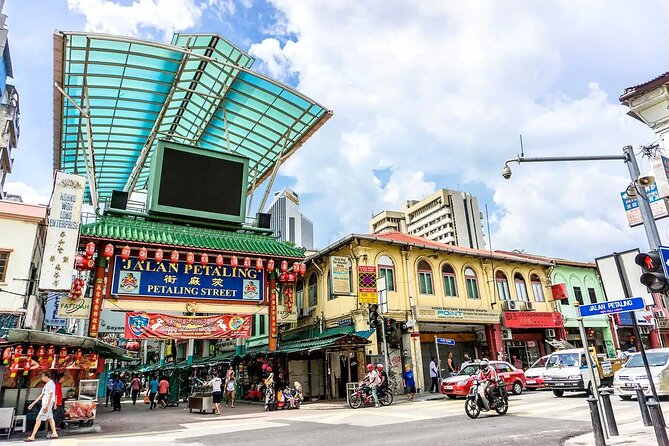
The tour begins near the information counter at Central Market, a useful landmark in central Kuala Lumpur. You do not need to search for a restaurant or navigate the first part of Chinatown alone. Meet the host at the entrance, then set off on foot.
I like this starting point because it gives you a clear, practical meeting place near public transportation. Still, hotel pickup is not included. If you use Grab or a taxi, ask to be dropped at Central Market Kuala Lumpur, then allow a few minutes to find the entrance and information counter.
The scheduled duration is about three hours. The pace is built around short walks, food stops, and time to eat. You will cover around 2 to 3 kilometers, so this is not a strenuous hike, but you should wear shoes that handle uneven city sidewalks and standing comfortably.
The maximum group size is 15 people. That is large enough to create some energy but small enough for the host to explain dishes and answer questions without shouting across a crowd. If your group is smaller, you may get more personal attention. One practical point: the number of tastings is designed for sharing and sampling, not for giving you a full restaurant meal at every stop.
Other Kuala Lumpur days worth putting on the list:
- Kuala Lumpur: Batu Caves Half-Day Tour with Pick-Up Option
★ 4.5 · 4,288 reviews - Private Half-Day Batu Caves and Cutural Tour in Kuala Lumpur
★ 5.0 · 3,107 reviews - Sambal Streets Kuala Lumpur Food Tour with 15+ Tastings
★ 5.0 · 2,438 reviews
Petaling Street, the public face of Chinatown
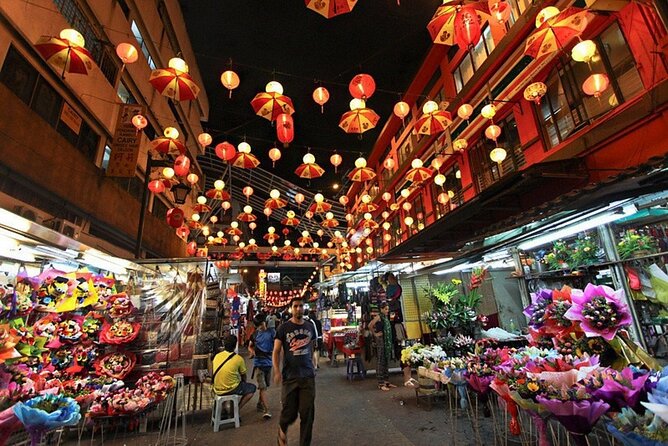
From Central Market, the route heads toward Petaling Street, the main market road in Kuala Lumpur’s Chinatown. This is where you can browse souvenirs, see the covered market stalls, and get a feel for the neighborhood before the tasting begins in earnest.
Petaling Street can be busy, so keep your belongings close and stay aware when crossing or walking through crowded areas. The tour does not treat the market as a quick photo stop only. It uses the street as a starting point for understanding how shopping, snack stalls, old food traditions, and daily city life meet in this part of Kuala Lumpur.
The listed stop is around 15 minutes, though the real rhythm may depend on the group and the food vendors available that day. The operator notes that a street-food site may change. That is worth knowing in advance. You should expect the same kind of local tasting experience, but not assume every dish will come from the exact same stall or shop pictured in promotional material.
Bakkwa, Malaysia’s smoky Chinese dry meat
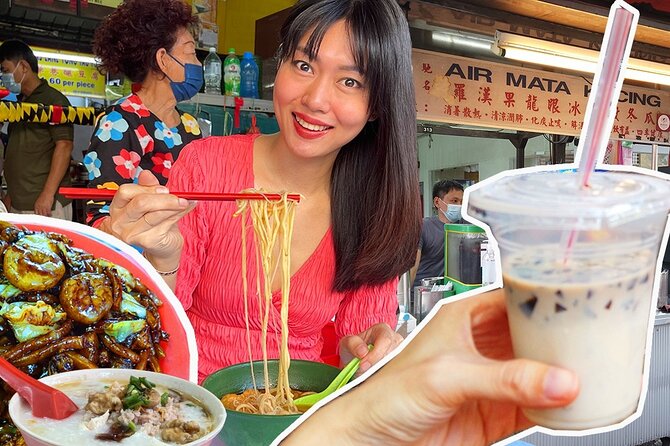
One of the first tastings is bakkwa, a Chinese dry meat prepared in a Malaysian style. Two types of meat are offered, giving you a direct comparison of texture and seasoning.
Bakkwa is often sliced into thin, sweet-savory pieces with a grilled character. It is a good opening taste because it introduces the Chinese side of Kuala Lumpur’s food culture without requiring a full plate or a long sit-down meal. Watch how the meat is cut and served, then ask Rayhan about the differences between the two varieties.
This is also a stop where dietary needs matter. If you do not eat meat, tell the operator in advance rather than waiting until the food is in front of you. The tour offers vegetarian and halal options, but the host needs notice to plan suitable choices.
Apam balik, a pancake with two textures
Next comes apam balik, a Malaysian-style pancake. The appeal is the contrast between a soft, fluffy center and crisp edges, with sugar and other filling ingredients adding sweetness.
This is the sort of snack that makes a food walk useful. You can find pancakes in many countries, but apam balik has its own local shape and texture. I would eat this slowly enough to notice the difference between the middle and the rim. It is also a sensible reason to arrive with an empty stomach, because sweet food arrives before the savory dishes are finished.
The tasting is brief, about 15 minutes at each scheduled stop. You are not expected to sit over a full serving. Instead, the guide keeps the route moving so you can sample several foods from different communities in one afternoon.
Same city, a completely different kind of day:
- Historical Malacca Guided Day Tour (Shared Tour)
★ 5.0 · 2,172 reviews - Kuala Lumpur: Sambal Street Food Tour with 15+ Tastings
★ 4.9 · 1,657 reviews - Genting Highland & Batu Cave Guided Day Tour (SIC/Shared Tour)
★ 5.0 · 1,289 reviews - From Kuala Lumpur: Cameron Highlands Day Tour with Lunch
★ 4.3 · 1,178 reviews
Soy bean drink, tofu fa, and tropical fruit
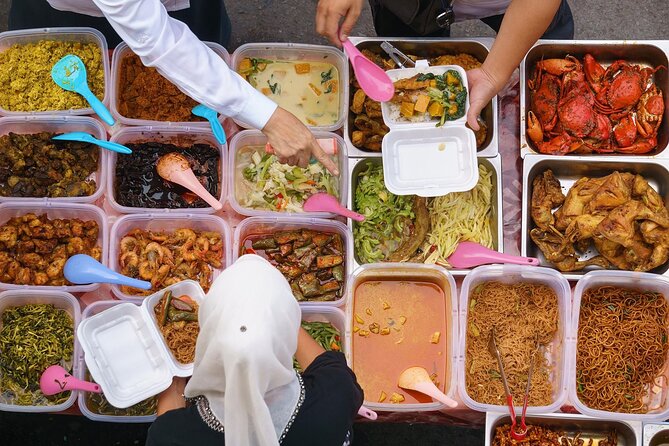
After the first three food samples, the group stops for a soy bean drink. You can have it hot or cold. The hot version may come with tofu fa, a soft, jelly-like soy dessert.
This stop gives the tour a gentler pause after grilled meat and a sweet pancake. Tofu fa has a smooth, delicate texture, so it is unlike the chewy or crisp snacks you may have just tried. If you prefer cold drinks in Kuala Lumpur’s heat, choose the chilled soy option. If you want to try the more traditional dessert texture, ask for the hot version with tofu fa.
Local tropical fruit is also included during the walk. The exact fruit is not specified, and availability can change, but this is a useful chance to taste fresh produce rather than only cooked or fried food. If you have a fruit allergy, mention it when booking and remind the host at the start.
Bottled water is included. Additional drinks, including alcohol, are not included, so bring some extra money if you want something beyond the listed tastings.
Teh tarik and roti canai at an Indian Muslim restaurant
The route then moves to a local Indian Muslim restaurant for two Malaysian favorites: teh tarik and roti canai. This is one of the strongest parts of the walk because the pairing shows how Kuala Lumpur’s food culture crosses community lines.
Teh tarik is pulled tea, traditionally poured back and forth to create a frothy top. You can expect a sweet, milky drink with a strong tea base. It is one of Malaysia’s best-known beverages and a useful taste of the country’s mamak restaurant culture, where Indian Muslim cooking has become part of everyday Malaysian life.
Roti canai is a flaky flatbread served as a breakfast or tea-time food. It may look simple, but the layers and texture are the point. One participant praised the roti here as the best they had eaten during their trip, and I can see why this stop often makes an impression: fresh bread and pulled tea are a straightforward but memorable combination.
You should pace yourself. By this point, you have already tried meat, pancake, soy dessert, and fruit. Roti canai is more filling than a small snack, especially if you eat a whole portion. Treat it as a shared tasting when possible, and save room for the final noodle dish.
Hokkien mee closes the food walk
The final tasting is Hokkien mee at a Chinese restaurant. This is a satisfying finish after the lighter snacks because noodles give the tour a proper savory ending.
Malaysian Hokkien mee is generally associated with noodles cooked in a dark, savory sauce, though the exact preparation at the restaurant can vary. The supplied details describe it as a unique-style Chinese noodle dish, so ask the guide what makes that version different when you arrive. A good guide can explain the ingredients and show you how the dish fits into Kuala Lumpur’s Chinese food traditions.
Ending with noodles is practical. You get a substantial final taste rather than finishing with another dessert or drink. Still, do not expect a large, individual dinner unless the portion provided on the day is generous. The experience is built around sampling several foods, not replacing every meal of the day.
The walk returns to the original Central Market meeting point. That makes the end easy to manage, especially if you plan to continue sightseeing in central Kuala Lumpur or want to arrange a Grab from the same general area.
What the $104.80 price means
At $104.80 per person, this is not a bargain street-food crawl if you compare the cost only with buying individual snacks. Kuala Lumpur’s food is often inexpensive, and you could spend less by exploring Petaling Street alone.
The value comes from the structure. Your price includes an English-speaking local host, food, drinks, dessert tastings, and bottled water. You also receive a planned route across several food traditions without having to identify dishes, choose safe places, or decide how much to order at each stop.
The small group matters here. A large food tour can turn into a line behind the guide, with little chance to ask why a dish matters or how to eat it. A maximum of 15 gives you a better shot at conversation. Rayhan Raj Naidu is especially worth noting if you value a host who remains helpful beyond the scheduled walk. His personal recommendations for a road trip through Malaysia were praised as a useful extra.
I would consider the price worthwhile if you are short on time, cautious about ordering unfamiliar food, or keen to learn the local context. I would be less likely to book it if your main goal is the lowest possible food cost or if you prefer to spend an entire evening at one restaurant.
Dietary needs, clothing, and practical limits
Tell the operator about allergies or special diets at booking. Halal and vegetarian choices are available, but the team needs advance notice. The menu includes meat and dairy-based items, so people with strict restrictions should ask exactly which substitutes will be provided.
The information supplied does not give a complete vegan menu. If you are vegan, contact the provider before booking and explain your needs clearly. Do not assume every stop can be adapted on the spot.
The activity is described as suitable for most people with moderate physical fitness. You will walk 2 to 3 kilometers, stop to eat, and move through city streets. There is no hotel transport, so you are responsible for reaching Central Market and returning afterward.
The Hindu Temple clothing note applies if the route includes a temple visit or you choose to visit one nearby. Cover shoulders and knees, and remember that footwear must be removed at the entrance. Lockers are available. A scarf or shawl is an easy solution for travelers who are otherwise dressed for hot weather.
The operator also notes that weather and safety procedures can affect the schedule. Street-food locations may change because of availability. These are normal limits for a food walk based on working local businesses, but they mean you should treat the route as a food theme rather than a fixed promise of one exact stall.
Who will enjoy this Chinatown food walk
I would recommend this experience to first-time visitors who want a guided introduction to Kuala Lumpur’s Chinese and Indian Muslim food scenes. It also suits solo visitors, since the guide supplies company and removes the awkwardness of ordering several unfamiliar dishes alone.
It is a good fit for curious eaters who want variety. In three hours, you sample meat, pancake, soy dessert, fruit, tea, flatbread, and noodles. That range gives you a useful first map of local tastes, even if no single stop becomes your favorite.
Families and mixed groups may also like the format because portions are spread across many stops. Ask about dietary arrangements in advance, especially for children or anyone with allergies.
I would hesitate to recommend it to anyone expecting a formal food history lecture, a luxury dining experience, or a full meal at each stop. It is a walking tasting tour. You should enjoy being outdoors, trying small portions, and adjusting to the day’s available vendors.
Should you book it?
Book this tour if you want a guided, three-hour introduction to Chinatown with a wide menu and a personal host. The strongest reasons are the variety of tastings, the chance to compare Chinese and Indian Muslim food traditions, and Rayhan Raj Naidu’s friendly help with wider Malaysia plans.
Skip it if you are comfortable exploring Petaling Street alone and want to spend under $104.80 on food. You can certainly eat more cheaply without a guide. But if you value context, careful pacing, and the confidence to try seven different local specialties, this walk gives you a convenient first taste of Kuala Lumpur.
Free cancellation is available when you cancel at least 24 hours before the 4 pm start time. After that cutoff, refunds are not available.
FAQ
Where does the Chinatown food tour start?
It starts at the entrance of Central Market in Kuala Lumpur, near the information counter. The listed meeting address is Kuala Lumpur City Centre, 50050 Kuala Lumpur.
What time does the activity begin?
The tour starts at 4 pm and lasts approximately three hours.
How much walking is involved?
You should expect around 2 to 3 kilometers of walking, with regular stops to eat and rest.
Is hotel pickup included?
No. You must arrange your own transport to Central Market, using a taxi, Grab, or another option.
Are halal and vegetarian food choices available?
Yes, halal and vegetarian options are available. You should advise the operator of your requirements when booking.
What happens if I need to cancel?
You can receive a full refund if you cancel at least 24 hours before the local start time. Cancellations or changes made less than 24 hours in advance are not accepted for a refund.
Just added around Kuala Lumpur
- Kuala Lumpur City & Batu Caves Temple Private Tour★ 4.5 · 3 reviews
- Transit Tour Private Tour (Ex Port Klang Cruise Centre/KLIA 1 &2)★ 5.0 · 10 reviews
- Private Kuala Lumpur Shore Excursions★ 4.5 · 22 reviews
- Private Transfer: Kuala Lumpur International Airport to or from Hotel★ 4.5 · 14 reviews
- Genting SkyWorlds Theme Park Tickets (Optional)★ 5.0 · 5 reviews
- Full Day Melaka Private Tour from Kuala Lumpur★ 4.0 · 5 reviews
- Private Port Klang Cruise to Kuala Lumpur City Tour★ 5.0 · 3 reviews
- Kuala Lumpur Airport Transit Tour (4 hours)★ 5.0 · 12 reviews
Kuala Lumpur Tours, compared.
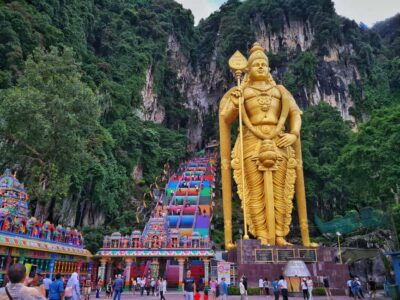

Private Half-Day Batu Caves and Cutural Tour in Kuala Lumpur
Read our review →
Sambal Streets Kuala Lumpur Food Tour with 15+ Tastings
Read our review →
Historical Malacca Guided Day Tour (Shared Tour)
Read our review →
Genting Highland & Batu Cave Guided Day Tour (SIC/Shared Tour)
Read our review →