
Reviewed · HISTORICAL TOURS
Kuala Lumpur Colonial History Walk – Private Guided Tour
Kuala Lumpur’s colonial center is compact, but its story is not. This private walk links railway stations, government offices, a mosque, a cathedral, old banks, and Central Market into one clear route. The best part is the way the buildings explain how the city grew from a riverside settlement into a capital.
I like the small private format, limited to your own group of up to four people. I also like the guides’ storytelling approach, with Priam and Pritam named among the guides who have led the walk. The main drawback is simple: you will walk for three to four hours in Kuala Lumpur’s heat, with no meal or bottled water included.
In This Review
- Key points about this Kuala Lumpur walk
- Why this route works so well in central Kuala Lumpur
- Kuala Lumpur Railway Station and the railway offices
- The Klang River and the city’s original meeting point
- Old Market Square and the 1937 clock tower
- Jamek Mosque at the river confluence
- Sultan Abdul Samad Building and Merdeka Square
- St. Mary’s Cathedral and the old Selangor Club
- Kuala Lumpur Library and the former Government Printing Office
- The old Chartered Bank building and Queen Victoria Fountain
- The first Federated Malay States Railway headquarters
- Central Market, the final half-hour
- What $45 per person gets you
- Timing, fitness, and what to bring
- Who should book this private history walk
- Should you book the Kuala Lumpur Colonial History Walk?
- FAQ
- How long does the Kuala Lumpur Colonial History Walk last?
- Where does the tour start?
- Where does the tour end?
- Is this a private tour?
- What is included in the price?
- Are meals or bottled water included?
- Do I need to be physically fit?
- Is the tour close to public transportation?
- What is the cancellation policy?
Key points about this Kuala Lumpur walk

- Railway architecture first: Begin at the ornate Kuala Lumpur Railway Station and the former Malayan Railway administration offices.
- A compact historical route: See the Klang and Gombak rivers, Jamek Mosque, Merdeka Square, and Central Market without long transfers between stops.
- Private attention: The experience is designed for one group of up to four people, making questions and pacing easier.
- Colonial Kuala Lumpur beyond the postcard views: Learn how railways, banks, courts, churches, clubs, and printing offices shaped the city.
- A thoughtful finish: The tour ends at Central Market, a useful place to continue sightseeing or catch public transport.
- Good value for history fans: At $45 per person, the cost covers a three to four-hour private walk and printed material, with no separate admission charges listed.
Why this route works so well in central Kuala Lumpur
Many city walks give you a quick look at famous façades and move on. This one has a stronger thread. You follow the systems that made colonial Kuala Lumpur function: railways brought people and goods, government offices managed the growing settlement, banks handled trade, churches and clubs served expatriate society, and markets fed the city.
That structure gives the walk purpose. You are not simply ticking off old buildings. You can see how the city’s power and commerce gathered around the rivers and the open field now associated with Merdeka Square.
The private setup matters here. A group of four can stop for questions without holding up a larger party. Guides such as Priam and Pritam have been praised for bringing personal care and local storytelling to the route, which suits a tour built around details that are easy to miss from the pavement.
The walk is also convenient for a first day in Kuala Lumpur. It covers a large share of the historic center on foot, begins at a major transport point, and ends at Central Market. You get your bearings while seeing a side of the city that is easy to miss between modern towers and shopping malls.
A few more Kuala Lumpur trips to weigh up
- Historical Malacca Guided Day Tour (Shared Tour)
★ 5.0 · 2,172 reviews - Kuala Lumpur: Batu Caves & Historic Buildings Tour
★ 4.7 · 539 reviews - Historical Malacca Day Tour from Kuala Lumpur (Private Tour)
★ 5.0 · 515 reviews
Kuala Lumpur Railway Station and the railway offices
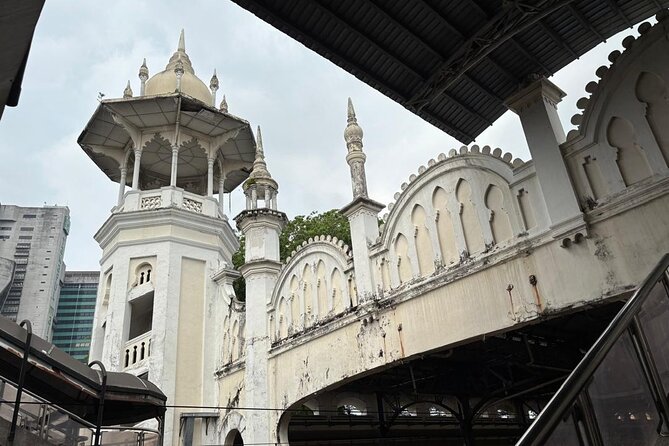
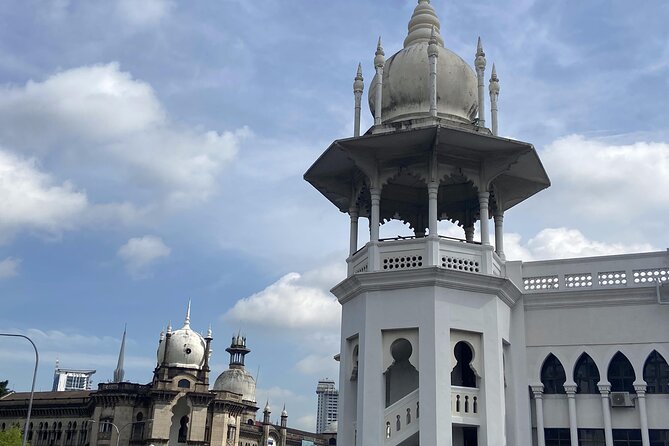
The opening stop, Kuala Lumpur Railway Station, is one of the most memorable buildings on the route. Its white exterior, domes, arches, and minaret-like forms give it a storybook appearance. The design is associated with Arthur Benison Hubback, a government architect whose work helped give British Malaya’s civic buildings their distinctive look.
You have about 15 minutes here. That is enough for an introduction to the station, its design, and its place in the city’s growth, though it is not a long architectural study. Take time to look at the building from different angles. The mix of railway function and decorative style is the point.
Across the road is the former Malayan Railway Administration Building, also designed by Hubback. Construction began in 1914, and the building once housed the administration of the Federated Malay States railway system. The visit here lasts about 10 minutes, so expect an exterior explanation rather than a long indoor visit.
These two stops make a strong opening because they show that Kuala Lumpur’s colonial story was not built only through government offices. Railways connected the inland mining town to wider markets and helped turn it into a major administrative center.
The Klang River and the city’s original meeting point
The route then brings you toward the Klang River. At about 120 kilometers long, it is Selangor’s longest river and one of Malaysia’s major waterways. It passes through Kuala Lumpur before continuing toward the Strait of Malacca.
The river is not treated as scenery alone. It helps explain why the city developed where it did. At the confluence of the Klang and Gombak rivers, Kuala Lumpur found its name and its early focus. The walk gives you a useful geographic frame before moving into the city’s civic heart.
Expect a short outdoor stop rather than a long river excursion. The value is the connection between physical setting and urban history. Once you understand the river junction, Jamek Mosque and the old administrative quarter make much more sense.
Old Market Square and the 1937 clock tower
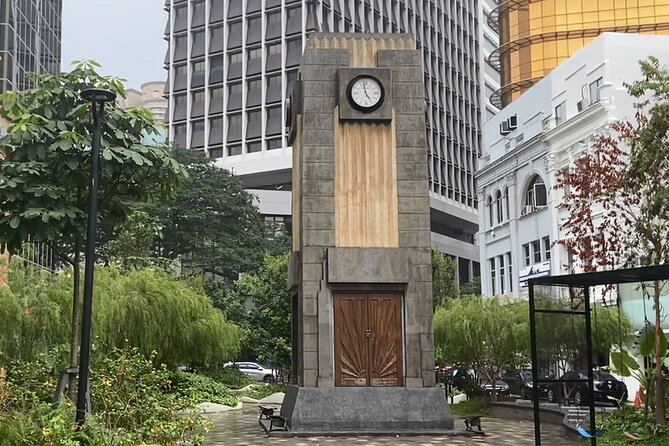
Old Market Square has a 1937 clock tower built to mark the coronation of King George VI. The tower was conceived by Arthur Oakley Coltman, another important architect in Kuala Lumpur’s colonial-era story.
The stop lasts about 10 minutes. You will get the background to the tower and the square’s role in the city, along with a chance to compare this smaller civic marker with the grander buildings nearby.
This is one of those stops that can be easy to rush past on your own. A clock tower rarely demands much attention when you are trying to reach the next major attraction. With a guide, it becomes part of the larger story of how British authority was displayed in public spaces.
Same city, a completely different kind of day:
- Kuala Lumpur: Batu Caves Half-Day Tour with Pick-Up Option
★ 4.5 · 4,288 reviews - Private Half-Day Batu Caves and Cutural Tour in Kuala Lumpur
★ 5.0 · 3,107 reviews - Sambal Streets Kuala Lumpur Food Tour with 15+ Tastings
★ 5.0 · 2,438 reviews - Kuala Lumpur: Sambal Street Food Tour with 15+ Tastings
★ 4.9 · 1,657 reviews
Jamek Mosque at the river confluence
Jamek Mosque sits at the meeting point of the Klang and Gombak rivers, traditionally regarded as the birthplace of Kuala Lumpur. Its location is as important as its architecture.
You spend about 15 minutes here. The guide connects the mosque to the city’s name and early development, while also explaining its place beside the colonial civic quarter. This is a useful reminder that Kuala Lumpur was never only a British project. The city’s identity grew from Malay, Chinese, Indian, and British influences, even if the surviving public buildings often reflect the colonial administration.
The tour information does not promise an interior visit, so plan on viewing and discussing the mosque from the route. Dress and behave respectfully around this active place of worship.
Sultan Abdul Samad Building and Merdeka Square
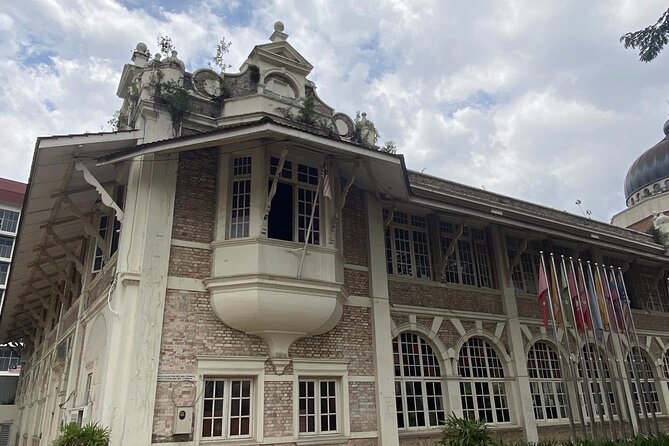
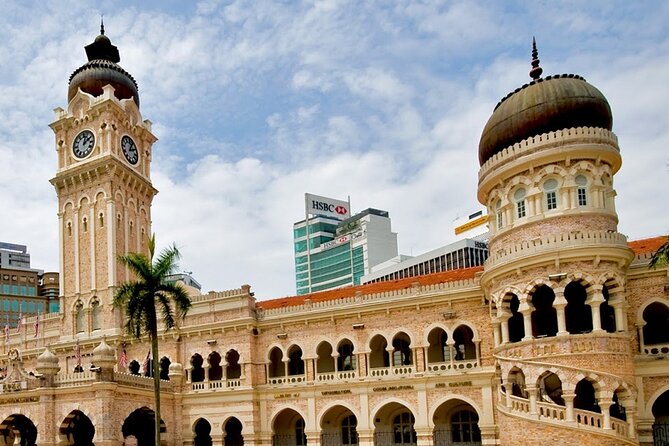
Sultan Abdul Samad Building is the visual centerpiece of the walk. Built in 1894 for the British colonial administration, it once worked as part of a larger government complex that included the former General Post Office, Magistrate Courts, and Kuala Lumpur Council Building.
You have about 15 minutes here. The guide’s job is to help you read the building as an office complex, not just a photogenic façade. Its clock tower, domes, arches, and long frontage were designed to project authority, but the building also reveals the practical machinery of colonial rule.
The open area beside it, commonly known as Merdeka Square, gives you room to appreciate the relationship between the building and the civic space. This is a good place for photographs, but the historical explanation is more valuable than a quick snapshot.
You should expect some standing in the open, with limited shade depending on the time of day. Bring water and wear shoes that are comfortable on city sidewalks. The tour does not include bottled water.
St. Mary’s Cathedral and the old Selangor Club
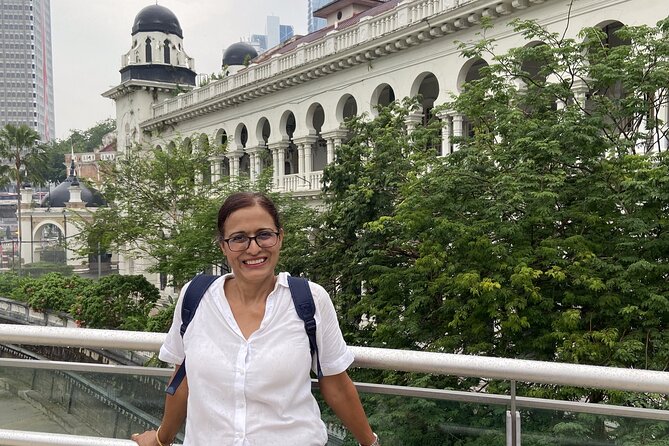
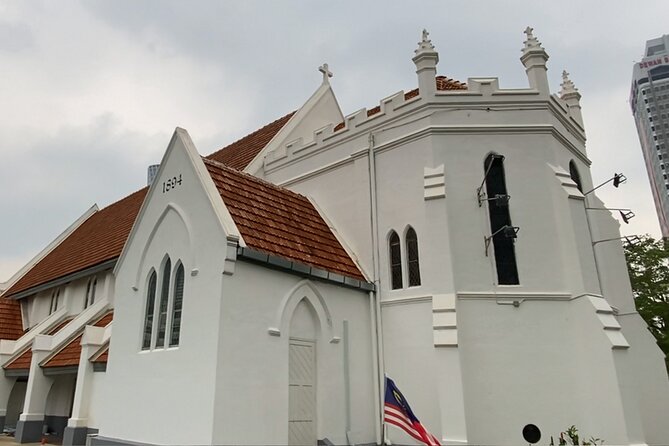
St. Mary the Virgin began as a modest timber church in 1887 on nearby Bukit Aman hill. The present brick structure replaced it in 1895. The stop lasts about 15 minutes and adds a religious and social layer to the government buildings around Merdeka Square.
The cathedral helps show how colonial Kuala Lumpur served different communities and institutions. It was an Anglican church for the British presence, while nearby buildings handled administration and finance. The contrast is useful: the city center was designed around work, worship, ceremony, and social life rather than a single purpose.
The former Selangor Club adds another piece. Founded in 1884, it was a meeting place for educated and high-ranking members of British colonial society. Early membership was mainly British, though admission was tied more to education and social standing than nationality alone.
That detail is worth hearing because it complicates the usual picture. Colonial society had its own internal rules and status lines. A guide can explain those distinctions better than a plaque can, especially when the building is viewed as part of the wider square.
Kuala Lumpur Library and the former Government Printing Office
The route continues to the Kuala Lumpur Library, where the former Government Printing Office remains in the library grounds. Completed in 1899, the building produced government reports, official books, and public notices.
You spend about 10 minutes here. It is a quieter stop, but it has real value. Printed orders and reports were how a colonial administration spread rules, recorded decisions, and managed distant territories. The building gives you a glimpse of that less glamorous side of power.
This is also a good example of the walk’s focus. A standard sightseeing route might skip a former printing office in favor of another grand façade. Here, the guide uses it to show how the city operated day to day.
The old Chartered Bank building and Queen Victoria Fountain
At 2, Jalan Ampang, you see a building completed in 1909 for the main branch of the Chartered Bank of India, Australia and China. The bank was founded in London in 1853 and later became associated with Standard Chartered.
The stop takes about 10 minutes. Its importance lies in trade and finance. Railways moved goods, government buildings set policy, and banks supported the commercial links connecting Malaya with the wider British imperial economy.
Nearby, the Queen Victoria Fountain marks another kind of colonial symbolism. It was shipped from Britain to commemorate Queen Victoria’s diamond jubilee in 1897, though it was not assembled on site until later. You get about 10 minutes here.
The fountain is a small object compared with Sultan Abdul Samad Building, but it shows how public spaces were filled with symbols from Britain. The delayed assembly is a good local detail, and the kind of fact that gives the walk its character.
The first Federated Malay States Railway headquarters
The old FMS Railway Office was the first headquarters of the Federated Malay States Railways. It marks the move from separate state railway systems toward a unified network.
Malaya’s first railway line opened in 1885 between Taiping and Port Weld. That fact helps explain why railway buildings appear so often in the historic center. Rail transport was not a side project. It changed how goods, workers, officials, and information moved through the peninsula.
The visit lasts about 10 minutes. By this point, the railway theme has come full circle, linking the opening station and administration building with the earlier beginnings of organized rail travel.
If you care about architecture, this sequence is especially satisfying. You see grand passenger-facing design, administrative offices, and the institutional headquarters behind the system. Each building served a different role.
Central Market, the final half-hour
Central Market is the final stop and the longest, with about 30 minutes. Its roots go back to a wet market first conceived by Kapitan Yap Ah Loy in 1888. The original market later developed into a larger hall of commerce.
This is a fitting finish because it brings the walk back to ordinary urban life. Government offices and banks can tell you who held power, but markets show how a city was fed, supplied, and used.
The tour ends here, and that is practical. Central Market is close to the starting area by foot and is well placed for public transport. You can continue exploring, find food independently, or return to your hotel without arranging a separate pickup.
Do not expect a meal to be included. The half-hour stop gives you an introduction to the market, not a full shopping or food tour. If you want more time inside, ask your guide if the route can finish slightly earlier or adjust its pace, though any change depends on the private guide and timing.
What $45 per person gets you
The price is $45 per person. That is easiest to judge by remembering that this is a private experience for up to four people, lasting roughly three to four hours. Admission charges are included, though every listed stop is described as free entry, so the main value comes from the guide’s time, research, printed material, and personal attention.
For one person or a couple, the price is higher than joining a large group city walk. For a group of four, the per-person cost becomes more attractive because you are sharing a private guide rather than paying for separate tours.
I would choose this if you want context and conversation. I would not choose it mainly for entering paid monuments, since the route is built around exterior architecture and public spaces. Group discounts are available, which may improve the value for larger bookings, though the personalized experience is specified for up to four people.
Timing, fitness, and what to bring
The walk lasts approximately three to four hours. A moderate level of physical fitness is recommended, and you should be ready for sustained city walking with periods of standing.
Near public transport, the starting point is Kuala Lumpur Railway Station at 110 Jalan Sultan Hishamuddin. The finish is Central Market in Kuala Lumpur City Centre. The route is therefore easy to connect with public transport at both ends.
Bring:
- Comfortable walking shoes
- Drinking water
- Sun protection
- A hat or light cover for open areas
- Respectful clothing for the mosque area
The tour includes printed material, but not meals or bottled water. Since the route is outdoors and includes several open civic spaces, an earlier or later start may feel more comfortable than the hottest part of the day. Confirm the exact start time when booking.
Who should book this private history walk
This is best for you if buildings, city planning, and local stories matter more than checking off a long list of attractions. It suits first-time visitors who want to understand central Kuala Lumpur, as well as returning visitors who have already seen the Petronas Towers and want a different side of the city.
It is also a good match for couples, families, and small friend groups who prefer to ask questions as they go. The private format makes the walk more personal than a standard group outing.
You may want another activity if you dislike walking in warm weather, need frequent seated breaks, or want extensive interior access. The route is also not designed as a food tour, shopping tour, or full architectural photography workshop.
Should you book the Kuala Lumpur Colonial History Walk?
Book it if you want the old city to make sense. The route connects railways, rivers, mosques, churches, banks, clubs, government offices, and markets in a way that gives each stop a reason to be there.
The strongest features are the compact route, the private guide, and the storytelling. Guides named Priam and Pritam have been associated with a warm, personal approach, and the experience is built around the kind of local anecdotes that can turn a familiar façade into a useful piece of history.
Skip it if you want air-conditioned sightseeing or a fast photo circuit. Otherwise, $45 per person is a fair price for a focused private walk, especially for a group of up to four. Allow three to four hours, carry water, and arrive ready to look up at the buildings instead of simply walking past them.
FAQ
How long does the Kuala Lumpur Colonial History Walk last?
The tour lasts approximately three to four hours. The listed stop times add up to a substantial walking visit, with extra time used to move between sites and hear the guide’s explanations.
Where does the tour start?
The tour starts at Kuala Lumpur Railway Station, 110 Jalan Sultan Hishamuddin, Kampung Attap, Kuala Lumpur.
Where does the tour end?
The tour ends at Central Market in Kuala Lumpur City Centre. From there, public transport back to your hotel is convenient.
Is this a private tour?
Yes. Only your group participates, with the personalized experience designed for up to four guests.
What is included in the price?
The tour includes admission fees, printed material, and the three to four-hour private walking tour of Kuala Lumpur’s colonial landmarks.
Are meals or bottled water included?
No. Meals and bottled water are not included, so bring your own water and plan any food stops separately.
Do I need to be physically fit?
You should have a moderate level of physical fitness. The experience is a three to four-hour walking tour with outdoor stops and periods of standing.
Is the tour close to public transportation?
Yes. The start is at Kuala Lumpur Railway Station, and the end at Central Market is also convenient for public transport.
What is the cancellation policy?
You can cancel up to 24 hours before the experience for a full refund. Cancellations or changes made less than 24 hours before the start time are not accepted for a refund.
Just added around Kuala Lumpur
- Transit Tour Private Tour (Ex Port Klang Cruise Centre/KLIA 1 &2)★ 5.0 · 10 reviews
- Kuala Lumpur City & Batu Caves Temple Private Tour★ 4.5 · 3 reviews
- Private Kuala Lumpur Shore Excursions★ 4.5 · 22 reviews
- Private Transfer: Kuala Lumpur International Airport to or from Hotel★ 4.5 · 14 reviews
- Genting SkyWorlds Theme Park Tickets (Optional)★ 5.0 · 5 reviews
- Full Day Melaka Private Tour from Kuala Lumpur★ 4.0 · 5 reviews
- Private Port Klang Cruise to Kuala Lumpur City Tour★ 5.0 · 3 reviews
- Kuala Lumpur Airport Transit Tour (4 hours)★ 5.0 · 12 reviews
Historical Tours, compared.
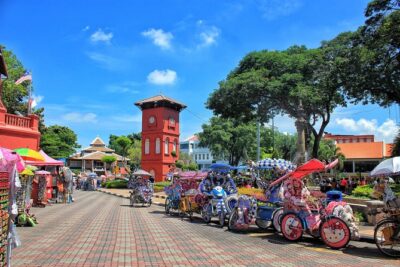
Historical Malacca Guided Day Tour (Shared Tour)
Read our review →
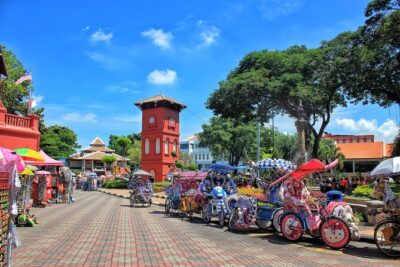
Historical Malacca Day Tour from Kuala Lumpur (Private Tour)
Read our review →
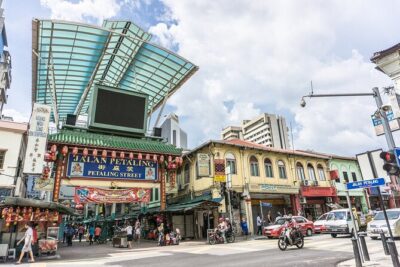
Private Half-day Batu Caves and Cultural Tour Kuala Lumpur *2026*
Read our review →
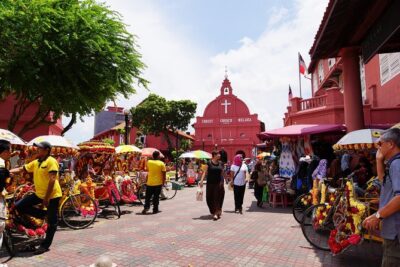
Malacca Historical Private Tour With Personal Chauffeur
Read our review →Browse the lists this tour appears in