Reviewed · KUALA LUMPUR TOURS
Malaysian Batik Experience-Handkerchief
Creating batik by hand gives you a much better feel for Malaysian craft than simply buying a finished scarf. At Jadi Batek Gallery, you sketch a design, draw wax lines with a traditional canting, then paint the fabric with dyes you can mix yourself.
I like the patient, step-by-step help, especially for first-time artists, and the wide choice of templates makes it easy to produce something attractive even if your drawing skills are modest. I also like that the $17 price includes tools, fabric, bottled water, and snacks.
The main point to plan around is finishing time. You can take the piece after it dries if you want it as wall art, but a washable handkerchief or scarf may need four hours or an overnight visit for the wax removal and final preparation.
In This Review
- Key points before you book
- Why this two-hour craft class is worth your Kuala Lumpur time
- Arriving at Jadi Batek Gallery in Imbi
- Learning the batik process before you touch the fabric
- Sketching your design with templates or freehand ideas
- Applying hot wax with the traditional canting
- Painting with Malaysian fabric dyes
- Drying, framing, and the important collection choice
- The gallery shop adds a useful second look at batik
- Who will enjoy this batik activity most
- Practical planning for a smooth visit
- Should you book the Malaysian Batik Experience?
- FAQ
- How long does the Malaysian Batik Experience take?
- Where does the activity begin and end?
- Is previous art experience required?
- What is a canting?
- Can I choose my own colors?
- Can I take my batik piece home the same day?
- Are extra finishing services available?
Key points before you book
- Use a real canting tool: You apply hot wax by hand, using a method that has decorated Malaysian fabric for more than a century.
- Choose your artistic level: Draw your own pattern or select from traditional templates supplied at the gallery.
- Mix your own colors: The workshop provides fabric dyes, and you can blend shades to make the design your own.
- Expect close guidance: Staff demonstrate each stage and help you correct problems as you work.
- Plan your collection time: A dry artwork can go home the same day, while a finished, washable piece may require four hours or next-day collection.
- Stay for the gallery: Jadi Batek also sells batik clothing, scarves, shorts, and tops, so you can compare your handmade work with finished pieces.
Why this two-hour craft class is worth your Kuala Lumpur time
Kuala Lumpur has plenty of shopping, towers, food stops, and indoor attractions. This batik session offers a different kind of souvenir: one you make yourself, with uneven lines and personal color choices that prove it was not mass-produced.
The activity lasts about two hours, though your exact time can stretch if you work slowly or receive extra help. It takes place at Jadi Batek Gallery in the Imbi area, near public transportation, and the activity begins and ends at the same meeting point.
I see the price as good value for a hands-on cultural activity. At $17 per person, you are not paying only for admission or a demonstration. The fee covers the instruction, materials, tools, GST, bottled water, and snacks, plus the fabric piece you create. Optional finishing costs are separate, including RM10 for sewing the edge and a courier fee based on the delivery location.
That matters because craft workshops can become expensive once materials and finished-product charges are added. Here, the basic creative session is clear and reasonably priced. You should still ask about the exact finishing arrangement when you arrive, especially if you need the piece ready before leaving Kuala Lumpur.
Other Kuala Lumpur days worth putting on the list:
- Kuala Lumpur: Batu Caves Half-Day Tour with Pick-Up Option
★ 4.5 · 4,288 reviews - Private Half-Day Batu Caves and Cutural Tour in Kuala Lumpur
★ 5.0 · 3,107 reviews - Sambal Streets Kuala Lumpur Food Tour with 15+ Tastings
★ 5.0 · 2,438 reviews
Arriving at Jadi Batek Gallery in Imbi
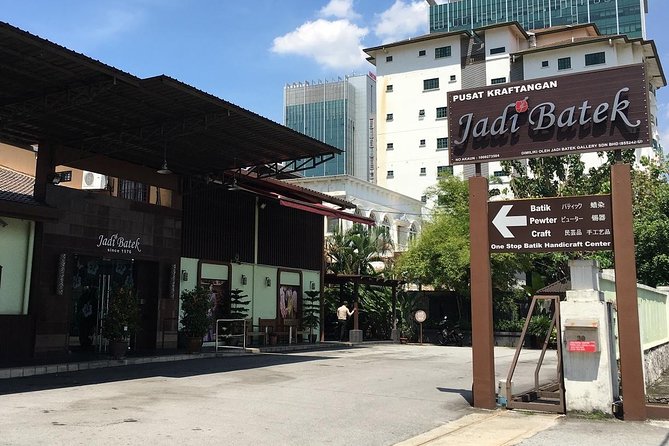
Your meeting point is Jadi Batek, Batik fashion gifts wholesaler retailer at 30, Jalan Inai, Imbi, Kuala Lumpur. Since transport to and from the attraction is not included, you need to make your own way there. The location is near public transportation, which makes it practical to fit into a day around central Kuala Lumpur.
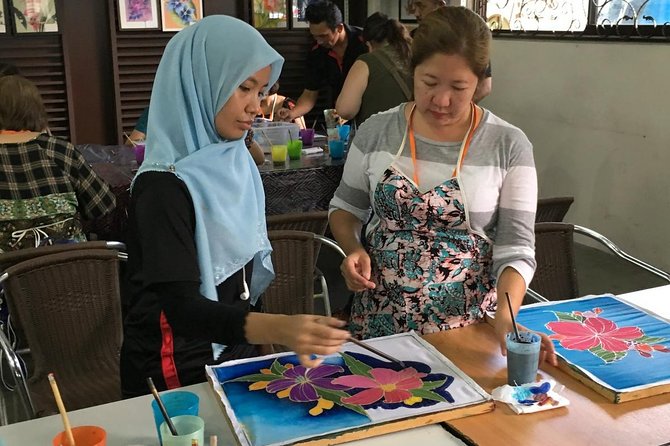
The activity is private, meaning only your own group takes part. That is useful for families, couples, or small groups with different artistic speeds. You are not trying to keep pace with a large class, and the staff can give more direct attention when you need help with the wax or paint.
The gallery itself adds context before you begin. The session starts with an introduction to the batik-making process and the place of batik in Malaysian craft. You may also see hand-drawn batik work being made in the gallery, which gives you a useful comparison before you attempt your own lines.
The surroundings have been described as spacious and cool, a welcome feature if Kuala Lumpur’s heat has worn you down. This is also a sensible rainy-day or midday activity. You get a creative break without giving up the local focus of your sightseeing.
Learning the batik process before you touch the fabric
The introduction is brief and practical. You learn the main steps, then move on to making your own piece rather than sitting through a long talk.
Batik depends on wax as a barrier. The wax marks keep dye from spreading into selected areas, allowing the artist to build a pattern with lines, sections, and color changes. The result comes from the relationship between the wax and the dye, not from painting alone.
The guide explains the tools and demonstrates how to work. This is important because the canting is not an ordinary pen. It holds hot wax, which must be applied with a steady hand and a controlled flow.
One of the strongest features of this activity is that no previous art experience is required. The staff stay with you from the first sketch to the final drying step. Clear instructions make the process accessible to children from primary-school age upward, according to the supplied activity details.
Still, do not expect the wax stage to be effortless. A steady hand helps, and the wax may not follow your intended line perfectly. That small risk is part of the charm, but it also means you should not arrive expecting a flawless factory finish.
Sketching your design with templates or freehand ideas
Once you understand the process, you sketch the design for your fabric. You can draw your own pattern or choose from pre-drawn traditional templates.
The templates are a smart option if you want a reliable result. You still make the key decisions about color and application, but the basic composition is already in place. This lets you focus on learning the craft rather than worrying about whether you can draw a balanced motif.
If you enjoy art, you can use the templates as a starting point and add your own details. If you are working with children, a prepared design reduces frustration and leaves more time for the fun parts.
The experience information refers to the finished item as a handkerchief, while the working description also calls it a scarf. Confirm the exact fabric format at the gallery when you arrive. Either way, you are creating a small fabric artwork designed to go home with you.
I would spend a little time choosing a pattern before asking for the dyes. The color plan affects the whole result, and the number of available designs can make the choice harder than expected. If you are traveling with a partner, choosing different templates can make the final comparison more fun.
Same city, a completely different kind of day:
- Historical Malacca Guided Day Tour (Shared Tour)
★ 5.0 · 2,172 reviews - Kuala Lumpur: Sambal Street Food Tour with 15+ Tastings
★ 4.9 · 1,657 reviews - Genting Highland & Batu Cave Guided Day Tour (SIC/Shared Tour)
★ 5.0 · 1,289 reviews - From Kuala Lumpur: Cameron Highlands Day Tour with Lunch
★ 4.3 · 1,178 reviews
Applying hot wax with the traditional canting
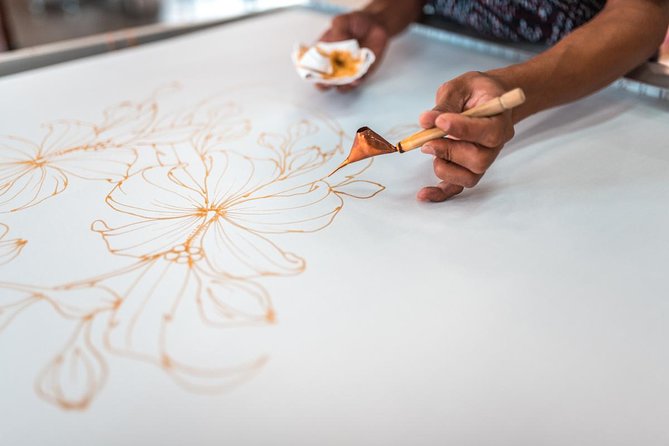
The wax stage is the most distinctive part of the workshop. You use a canting to trace the design, creating lines that will guide the dye.
The tool has been used in Malaysian batik decoration for more than 100 years. Handling it turns a short cultural lesson into a physical skill. You are not simply watching an artist work. You are learning how pressure, direction, and patience affect the line.
This is where the class becomes more focused. The activity can be peaceful, but it does require attention. One supplied comment describes it as an intense activity because of the need for a steady hand. That is fair advice, especially if you are used to quick craft projects.
Your guide can demonstrate the motion and help when you are unsure. The staff’s role is not to take over your artwork, but to help you understand the tool and recover when a line goes astray.
Take your time here. A rushed wax line can change how the dye moves later. The small imperfections are not a failure. They are evidence that you made the piece yourself, though careful work will give you cleaner borders.
Painting with Malaysian fabric dyes
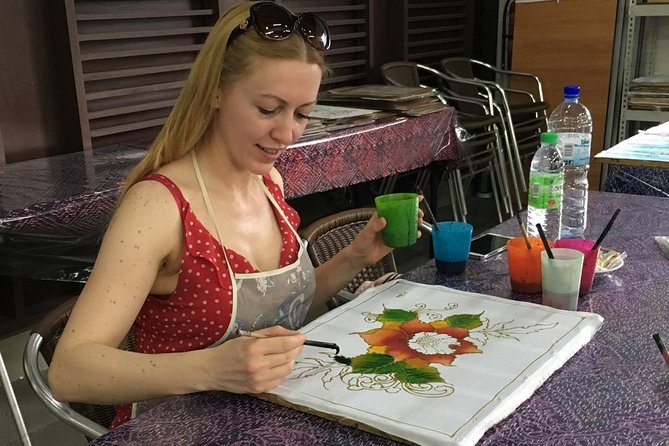
After the wax is in place, you paint the fabric. The workshop provides a selection of fabric dyes, and you can mix custom colors.
This is the most relaxed part for many people. You can work with bold blocks of color, softer combinations, or a personal mix that is not available straight from the container. The wax lines help separate sections, giving you a clear structure to follow.
Staff provide individual instructions and help as needed. If you are unsure how much dye to use or how to combine shades, ask before covering a large section. The point is to experiment, but a small amount of care can prevent one color from overwhelming the rest of the design.
The activity works well for families because each person can make different choices from the same basic process. It also suits couples who want a shared activity without having to produce matching souvenirs.
One useful tip is to leave enough time for the painting itself. Some people enjoy this stage so much that they want to continue beyond the scheduled two hours. Extra time has been allowed in some sessions, but you should not count on that. If your day is tightly planned, keep an eye on the clock.
Drying, framing, and the important collection choice
Once you finish drawing and painting, the team dries the fabric so you can take it home. If you want a piece to display as artwork, same-day collection may be possible after the quick drying process.
The situation changes if you want to use it as a washable handkerchief or scarf. The wax needs additional treatment, and the final piece may require four hours or collection the next day. Some visitors have chosen to take the fabric with the wax still present because they were flying out soon afterward.
Ask about the finish you want before you begin. If you are leaving Kuala Lumpur the next morning, you may need to accept a piece with wax remaining, arrange a later collection, or pay for courier delivery. Courier fees depend on the destination and are not included in the listed price.
You can also pay RM10 to have the edge sewn. This is a practical extra if you want the item to function as a handkerchief or scarf rather than remain a flat art piece.
The gallery may place a finished design in a cardstock frame, making it easier to transport and display. That presentation is useful if your main goal is a souvenir for a wall, desk, or office. It also protects the fabric during the rest of your trip.
The gallery shop adds a useful second look at batik
Jadi Batek is more than the workshop meeting point. The gallery shop sells finished batik clothing and accessories, including shorts, scarves, and tops.
I like seeing finished work after making a first attempt. You can notice the precision of the lines, the balance of color, and the difference between hand-drawn pieces and your own beginner design. That comparison gives you a better sense of the labor behind batik clothing than a quick purchase alone.
Shopping is not required, and it should not be treated as part of the base price. It is simply a convenient extra for anyone who wants a larger batik souvenir or a gift for family.
If you are trying to pack light, your handmade piece is easier to manage than a large garment. If you have room and want to support Malaysian craft beyond the class, the shop gives you that option.
Who will enjoy this batik activity most
This is a strong choice for you if you want a creative activity with clear instruction rather than a passive museum visit. It suits first-time artists, families, couples, and anyone who prefers a slower morning or afternoon.
The private format is helpful if your group includes children or people who need extra time. Most people can participate, and the supplied information says it is suitable from primary-school age upward.
It is also a good match for anyone looking for a personal souvenir. A purchased batik scarf may be more polished, but your own design carries a different kind of value. You will remember the wax, the color choices, and the moment the pattern began to look finished.
This may not suit you if you want a fast activity with no follow-up. The artwork may need additional drying or preparation, and the wax stage rewards patience. It is also not the best choice if you dislike making decisions, since you will need to pick a design and colors.
The class has a calm feel, but it is not entirely effortless. Keep your expectations realistic: you are learning a traditional process in two hours, not becoming a professional batik artist.
Practical planning for a smooth visit
Book with the correct collection plan in mind. You can cancel for a full refund up to 24 hours before the local start time, but cancellations or changes inside that window are not refunded or accepted.
Allow time to reach Jalan Inai because transportation is not included. The activity ends at the same place where it starts, so you can continue shopping or sightseeing in Kuala Lumpur afterward.
Wear something comfortable for a seated art session, though no special clothing requirement is given. Bottled water and snacks are included, so you do not need to plan a meal around the two-hour class.
Most important, tell the staff whether your priority is a display piece or a usable, washable textile. That one choice affects whether you leave with the work the same day or return later.
The experience receives a 4.9 rating from 37 ratings, with 100 percent recommending it. The strongest praise centers on the friendly instruction, clear demonstrations, wide template choice, relaxing pace, and the satisfaction of taking home a handmade piece. Those are also the features that matter most when deciding if the $17 is well spent.
Should you book the Malaysian Batik Experience?
Book it if you want a hands-on introduction to Malaysian batik and a souvenir with your fingerprints in it, literally and creatively. The low price, private format, supplied materials, helpful staff, and choice of templates make it welcoming for beginners.
I would especially choose it on a hot or rainy day, or near the end of a Kuala Lumpur visit when you want something personal instead of another shopping stop. Just leave enough time for the finished piece, and confirm whether your booking is for a handkerchief, scarf, or display artwork.
Skip it if you need to finish every activity within a strict schedule or want a polished textile without doing the work. For everyone else, this is a thoughtful two-hour pause that teaches you how batik is made and sends you home with a small piece of Malaysia you helped create.
FAQ
How long does the Malaysian Batik Experience take?
The activity lasts approximately two hours. Your working time may vary depending on your design and how quickly you paint.
Where does the activity begin and end?
It begins and ends at Jadi Batek, Batik fashion gifts wholesaler retailer, 30, Jalan Inai, Imbi, Kuala Lumpur. Transportation to and from the attraction is not included.
Is previous art experience required?
No. The guide provides help from start to finish, and you can choose from available templates if you do not want to draw your own design.
What is a canting?
A canting is the traditional tool used to apply hot wax to the fabric. The wax creates lines and sections that help control where the dye goes.
Can I choose my own colors?
Yes. You can select from the fabric dyes provided and mix custom colors for your design.
Can I take my batik piece home the same day?
The team can quickly dry the fabric for same-day collection. If you want the wax removed so the piece can be used as a washable handkerchief, you may need to wait four hours or return the next day.
Are extra finishing services available?
Yes. Sewing the edge costs RM10. Courier delivery is also available for an additional fee, with the price depending on the delivery location.
Just added around Kuala Lumpur
- Kuala Lumpur City & Batu Caves Temple Private Tour★ 4.5 · 3 reviews
- Transit Tour Private Tour (Ex Port Klang Cruise Centre/KLIA 1 &2)★ 5.0 · 10 reviews
- Private Kuala Lumpur Shore Excursions★ 4.5 · 22 reviews
- Private Transfer: Kuala Lumpur International Airport to or from Hotel★ 4.5 · 14 reviews
- Genting SkyWorlds Theme Park Tickets (Optional)★ 5.0 · 5 reviews
- Full Day Melaka Private Tour from Kuala Lumpur★ 4.0 · 5 reviews
- Private Port Klang Cruise to Kuala Lumpur City Tour★ 5.0 · 3 reviews
- Kuala Lumpur Airport Transit Tour (4 hours)★ 5.0 · 12 reviews
Kuala Lumpur Tours, compared.


Private Half-Day Batu Caves and Cutural Tour in Kuala Lumpur
Read our review →
Sambal Streets Kuala Lumpur Food Tour with 15+ Tastings
Read our review →
Historical Malacca Guided Day Tour (Shared Tour)
Read our review →

Genting Highland & Batu Cave Guided Day Tour (SIC/Shared Tour)
Read our review →