
Reviewed · WALKING TOURS
Kuala Lumpur Walk, Eat & See Tour
Kuala Lumpur reveals itself best one neighborhood at a time, and this tour links several of the city’s most distinctive districts in a single outing. You’ll sample Malaysian food, ride local trains, visit a wet market, and walk from Little India Brickfields through Malay Kampung Baru to Chinatown.
I like the broad cultural mix and the personal style of Charles, also called Charlie. He can explain the food, the neighborhoods, and the city’s past, while giving you choices rather than forcing one set menu. I also like that snacks and train tickets are included.
The main thing to consider is the flexible duration. The tour is advertised at roughly one to five hours, so the exact pace and number of food stops may depend on the group and the options you choose. Some stops are brief, and this is a walking tour rather than a formal sightseeing circuit.
In This Review
- Key points to know before booking
- Why this route gives you a better first look at Kuala Lumpur
- Starting in Brickfields, Kuala Lumpur’s Little India
- Chow Kit and the city’s early market life
- Kampung Baru and the old Malay settlement
- From Masjid Jamek to the River of Life
- Central Market and the small art lane
- Petaling Street, street food, and Chinatown’s changing lanes
- What you may eat along the way
- The guide makes the difference
- Is $75 a fair price?
- Timing, walking, and practical details
- Who should book this Kuala Lumpur food walk?
- Should you book it?
- FAQ
- Where does the Kuala Lumpur Walk, Eat & See Tour start?
- Where does the tour finish?
- How long does the tour take?
- What food is included?
- Are train tickets included?
- Are alcoholic drinks included?
- How many people can join the tour?
- What is the cancellation policy?
Key points to know before booking
- Three major cultures in one route: Visit Indian, Malay, and Chinese areas, from Brickfields to Kampung Baru and Petaling Street.
- Charles or Charlie leads the walk: He is praised for clear English, humor, local contacts, and his ability to explain both food and culture.
- Food choices can vary: You might taste nasi lemak, jackfruit, Chinese noodles, banana roti, and other local bites.
- Chow Kit adds a local market stop: This early Kuala Lumpur district gives the tour a more everyday feel than a standard city-center walk.
- The route ends in Chinatown: Petaling Street, old lanes, cafes, bars, murals, and red-light district history provide a lively finish.
- Small group format: The maximum group size is 12 people, with discounts available for groups.
Why this route gives you a better first look at Kuala Lumpur
Many Kuala Lumpur tours focus on a short list of grand buildings. This one takes a different approach. You move through neighborhoods shaped by different communities, seeing how Indian, Malay, and Chinese traditions fit into the same city.
That matters because Kuala Lumpur can feel scattered on a first visit. Brickfields, Chow Kit, Kampung Baru, the old city center, and Chinatown each have a different mood. Moving between them helps you understand the city as a collection of districts rather than a single modern center.
The route also uses public transport. Train tickets are included, which keeps the walk practical and saves you from having to work out every connection yourself. You are not simply driven from photo stop to photo stop. You get a feel for how the city links together.
The group limit of 12 is another plus. It is small enough for questions and food ordering without the stiffness of a large coach party. That is especially useful when you are deciding what to eat or asking about religious customs, neighborhoods, and local life.
A few more Kuala Lumpur trips to weigh up
- Sambal Streets Kuala Lumpur Food Tour with 15+ Tastings
★ 5.0 · 2,438 reviews - Kuala Lumpur: Sambal Street Food Tour with 15+ Tastings
★ 4.9 · 1,657 reviews - The 10 Tastings of Kuala Lumpur With Locals: Private Street Food Tour
★ 5.0 · 249 reviews
Starting in Brickfields, Kuala Lumpur’s Little India
The meeting point is at Nu Sentral, 201 Jalan Tun Sambanthan, in Kuala Lumpur Sentral. This is a useful place to begin because it is near public transport and easy to connect with from other parts of the city.
From there, the walk heads into Little India Brickfields. You’ll sample a few Indian-influenced bites and visit older religious sites in the district. The listed stop lasts about 20 minutes and has no admission charge.
Do not expect a full museum visit here. This is a quick introduction to the area, using food and streetscapes to show how Indian culture shaped Brickfields. The short time can work well if you want variety, but it may feel rushed if you hoped for a detailed tour of every religious building.
Food is one of the reasons this opening stop works. Charles can help you choose and order, which is useful if you are unsure about unfamiliar dishes or do not know how much to buy. The food is not presented as a formal tasting menu, so ask early about your preferences and appetite.
Chow Kit and the city’s early market life
Chow Kit is included as a look at one of Kuala Lumpur’s early developing districts. The market is the focus here, giving you a chance to see a more practical side of the city than the polished shopping malls and office towers.
The supplied schedule does not give a fixed duration for this stop, so you should treat it as one of the flexible parts of the walk. That can be an advantage. Markets are best when the guide has time to explain what you are seeing instead of rushing you through a set route.
You might find produce, local food, and everyday shopping activity here, but the exact market experience can change with the day and the timing. This is not presented as a staged attraction. It is a chance to see an active local district and ask Charlie how it fits into Kuala Lumpur’s growth.
If you prefer tidy streets and major monuments, Chow Kit may feel less polished. If you want a closer look at ordinary city life, it is one of the more useful stops.
Kampung Baru and the old Malay settlement
Kampung Baru is the cultural heart of the walk. It is described as Kuala Lumpur’s first Malay settlement, with older village homes and a chance to see how local residents lived in an earlier period.
The scheduled visit is about 30 minutes, with no admission fee. That makes it a compact neighborhood walk rather than a long heritage tour. You’ll learn about the settlement and see how a traditional Malay community sits within a modern capital.
This contrast is one of the tour’s strongest features. High-rise Kuala Lumpur is never far away, yet Kampung Baru offers a different scale and rhythm. The value here is not a single landmark. It is the chance to connect food, housing, and community with the city’s wider story.
Food may be part of the stop or another point along the route. Specific dishes mentioned in the tour experience include nasi lemak, jackfruit, Chinese noodles, and banana roti. Since the guide offers options, you should tell him about dietary needs, dislikes, and how adventurous you want to be.
Same city, a completely different kind of day:
- Kuala Lumpur: Batu Caves Half-Day Tour with Pick-Up Option
★ 4.5 · 4,288 reviews - Private Half-Day Batu Caves and Cutural Tour in Kuala Lumpur
★ 5.0 · 3,107 reviews - Historical Malacca Guided Day Tour (Shared Tour)
★ 5.0 · 2,172 reviews - Genting Highland & Batu Cave Guided Day Tour (SIC/Shared Tour)
★ 5.0 · 1,289 reviews
From Masjid Jamek to the River of Life
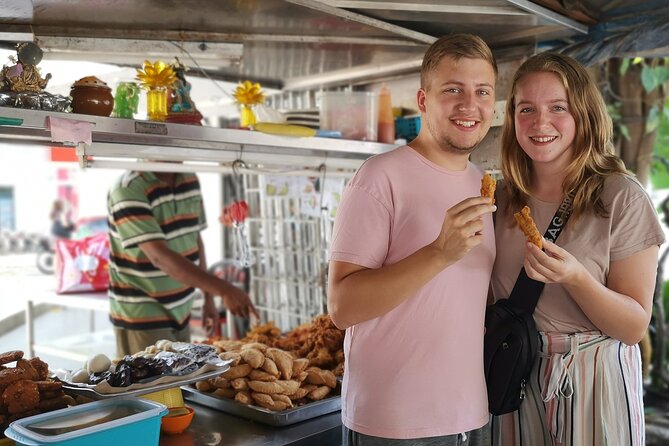
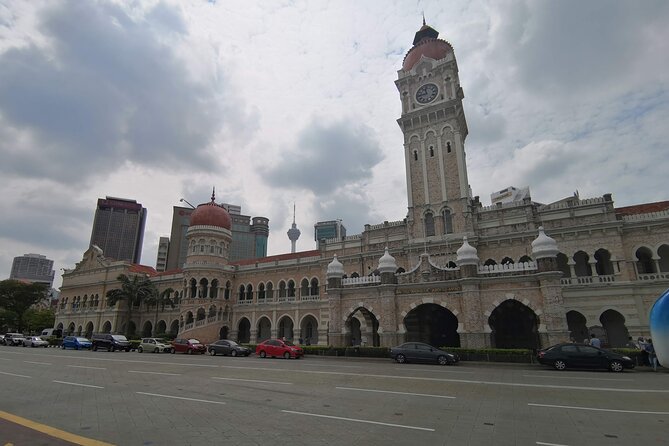
The route then moves through the old Kuala Lumpur heritage area, including Masjid Jamek and the River of Life project. You’ll also see older heritage buildings and continue toward Merdeka Square before heading to Central Market.
Masjid Jamek is an important visual marker in the old city center. The River of Life project adds a modern public-space layer to the historic setting. Together, these stops show how Kuala Lumpur presents its older core while updating parts of the city for residents and sightseers.
Merdeka Square adds national history to the walk. The tour does not list a separate admission ticket, and the focus is on strolling and interpretation rather than entering a paid attraction. That keeps the route moving, though anyone wanting a long architectural lecture or interior visit may find the treatment brief.
The heritage buildings are worth seeing at street level. This is where a guide helps more than a map. A building can look like one more old facade unless someone explains its place in the city. Charlie’s role is to connect what you see with the people, communities, and events that shaped Kuala Lumpur.
Central Market and the small art lane
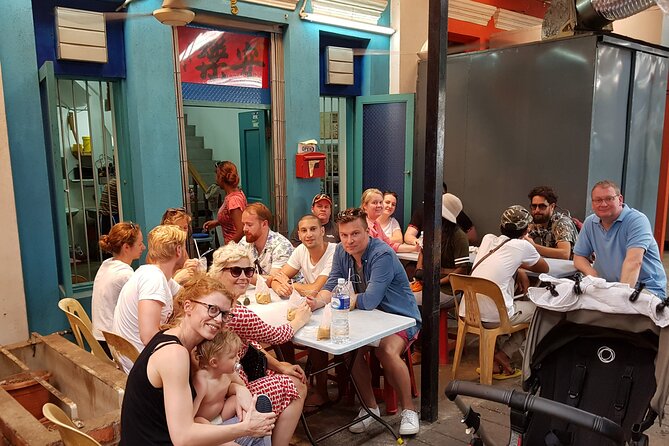
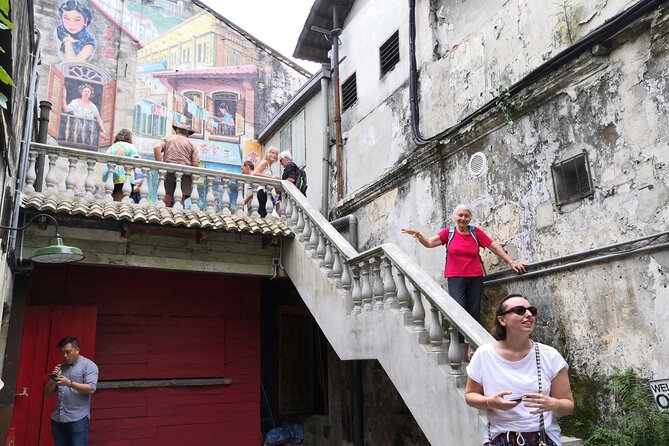
Central Market is the most visitor-oriented part of the route. You’ll stroll through the market, then look for a narrower alley associated with painters and Malaysian history.
The listed stop itself is only about five minutes, so do not plan on a long shopping session here. It functions more as a short orientation point between the old city center and Chinatown. If you want souvenirs, you may need to return on your own later.
That short timing is worth keeping in mind when you compare this tour with a dedicated shopping visit. Central Market can easily fill an hour or more if you browse carefully. On this walk, its value is the transition between districts and the chance to see a little local art rather than a full retail stop.
I like this part because it keeps the tour from being only about food. The walk connects markets, art, religious sites, old buildings, and neighborhoods. That mix gives you more context for the dishes you are eating.
Petaling Street, street food, and Chinatown’s changing lanes
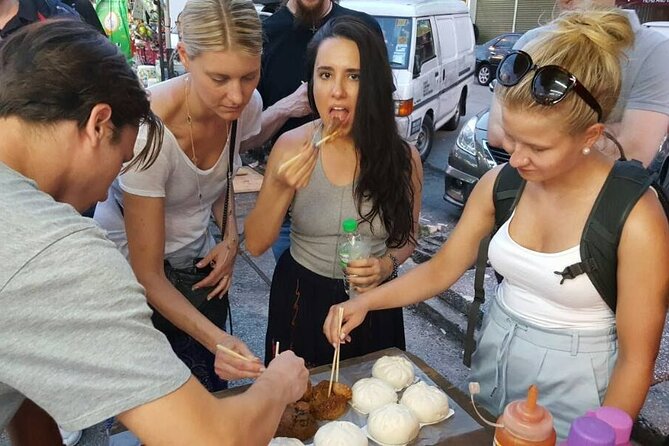
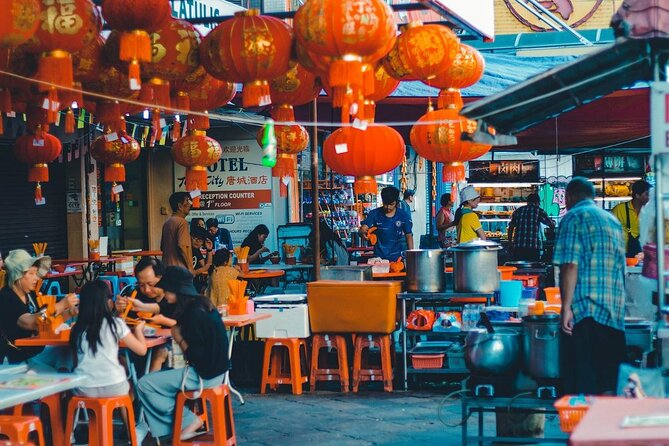
The final major stop is Petaling Street Market, the tour’s endpoint at Jalan Petaling in the city center. This is Kuala Lumpur’s Chinatown, with market stalls, food, old lanes, and the tourist energy that comes with a well-known district.
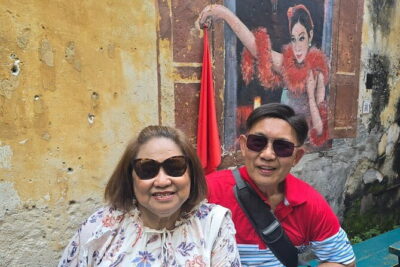
You’ll walk through the market and see how former red-light lanes have been reused as cafes and bars. The route also points out back alleys with street art and murals. The scheduled time is about 10 minutes, but this is another area where your actual pace may vary.
Petaling Street can feel more commercial than Kampung Baru or Chow Kit. That is part of the point. The tour lets you compare a tourist market with older neighborhood life instead of presenting Chinatown as a single unchanging place.
Ending here is practical. You can keep eating, browse the market, or continue exploring the old center after the tour. You are not returned to the starting point, so make sure you are comfortable finishing at Petaling Street rather than Nu Sentral.
What you may eat along the way
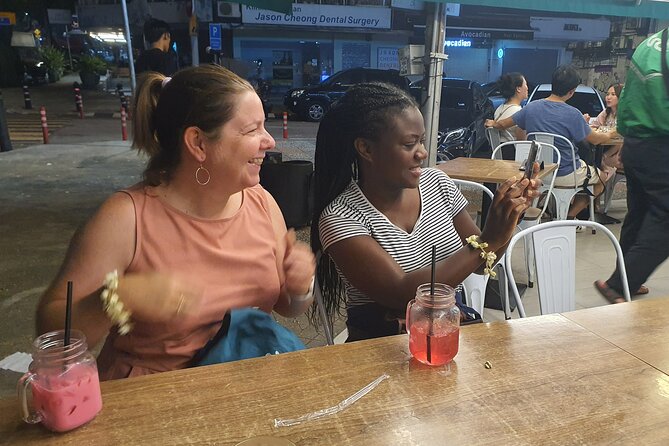
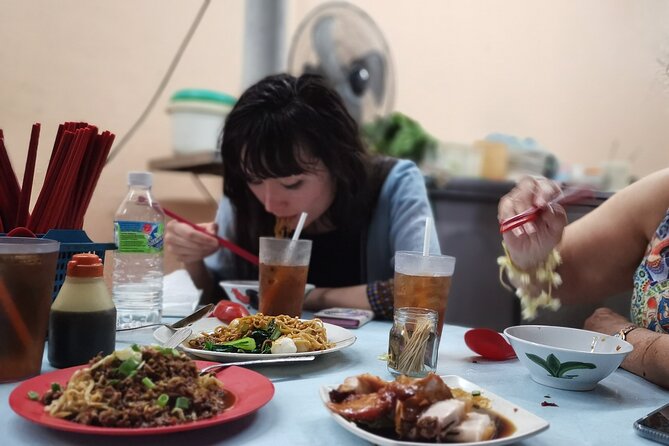
This is a tasting walk, not a restaurant meal. Snacks are included, while alcoholic drinks are not. The dishes can vary, but the food examples connected with the experience include nasi lemak, jackfruit, Chinese noodles, and banana roti.
Banana roti is especially worth noting if you like sweet or griddled breads. Nasi lemak gives you a classic Malaysian staple, while jackfruit and Chinese noodles add different textures and culinary traditions to the route.
The guide’s help matters here. Charlie is described as someone who orders for the group while explaining the dishes and their origins. That can remove much of the guesswork, especially when a menu is unfamiliar or a stall does not cater to first-time visitors.
At the same time, you should not book this expecting a fixed list of ten guaranteed tastings. The tour offers options, and the duration can range widely. Ask what is available when you meet, and speak up if you want more food, fewer stops, or a longer version of the walk.
The guide makes the difference
The strongest part of this experience is the guide’s role. Charles is described as friendly, fluent in English, humorous, and able to answer questions across food, culture, and city life.
That range is useful in Kuala Lumpur because the route crosses several communities. You are not only asking what a dish is. You may also want to know why a neighborhood developed where it did, how a religious site fits into the district, or how old settlements remain part of a modern capital.
The tour can also be adjusted through conversation. Charlie offers options and may provide a longer tour, according to the experience details. This makes it a good choice for people who prefer a flexible walk over a rigid timetable.
The tradeoff is that the experience depends heavily on the guide and the day. If you want a fully scripted tour with exact departure and arrival times, this may feel loose. If you enjoy asking questions and letting the route develop around food and local sights, that flexibility should suit you.
Is $75 a fair price?
At $75 per person, this is not the cheapest way to eat in Kuala Lumpur. You can buy individual dishes at markets for much less. The price makes more sense when you count the guide, the neighborhood planning, the included snacks, and the train tickets.
You are paying for interpretation and access to places you might skip on your own. Brickfields, Chow Kit, Kampung Baru, the old city center, and Chinatown are spread across Kuala Lumpur. A good guide saves you planning time and helps you understand what you are seeing.
The value is strongest if you are new to the city, curious about food but unsure where to start, or traveling with a small group that wants a personal introduction. It is weaker if you already know Kuala Lumpur well, dislike group walks, or mainly want a long meal at one restaurant.
Group discounts may improve the price for several people. Since the maximum group size is 12, you are also paying for a smaller setting than a standard city coach tour.
Timing, walking, and practical details
The advertised duration is approximately one to five hours. That is a very wide range, so clarify the expected length when booking or at the start. The schedule lists short visits at several stops, but food choices and a longer route can extend the outing.
Wear comfortable walking shoes. You will move through markets, old districts, city streets, and heritage areas, with train travel included. The route is near public transport, and most people can participate, but the experience still requires you to walk between stops.
The tour starts at Nu Sentral and ends at Petaling Street Market. It does not return you to the starting point. That makes it easy to continue exploring Chinatown, but plan your evening around the end location.
Weather matters. The experience requires good weather, and a cancellation caused by poor conditions offers either another date or a full refund. You can cancel for a full refund up to 24 hours before the start time. Cancellations or changes within 24 hours are not refunded or accepted.
Who should book this Kuala Lumpur food walk?
I would choose this tour for a first or second day in Kuala Lumpur. It gives you a useful map of the city’s cultural districts and introduces foods you can seek out again later.
It also suits people who want more than a standard food crawl. You’ll see religious sites, a local market, a Malay settlement, old buildings, Merdeka Square, street art, and Chinatown along with the snacks.
Families and small groups may appreciate the personal format, though the exact pace should be discussed if anyone in your party cannot walk for long periods. Food-focused visitors should also like the freedom to ask for choices rather than accept a preset plate.
I would look elsewhere if you want a fixed menu, a long sit-down dinner, a detailed interior tour of major monuments, or a guaranteed five-hour schedule. This is a flexible introduction to Kuala Lumpur, not a formal heritage course or a restaurant tasting menu.
Should you book it?
Book the Kuala Lumpur Walk, Eat & See Tour if you want to connect the city’s food with its neighborhoods. The best reasons are the three-community route, the use of local trains, the visit to Kampung Baru and Chow Kit, and Charles’s personal way of guiding and ordering food.
Before paying, confirm the likely duration and ask what tastings are planned that day. If you are happy with a flexible pace and a mix of snacks, markets, murals, and heritage streets, $75 can be a fair price for a well-organized first look at Kuala Lumpur.
FAQ
Where does the Kuala Lumpur Walk, Eat & See Tour start?
The tour starts at Nu Sentral, 201 Jalan Tun Sambanthan, Kuala Lumpur Sentral, 50470 Kuala Lumpur, Malaysia.
Where does the tour finish?
The tour ends at Petaling Street Market on Jalan Petaling, City Centre, 50000 Kuala Lumpur, Malaysia.
How long does the tour take?
The advertised duration is approximately one to five hours. The exact length may depend on the route, food options, and pace of the group.
What food is included?
Snacks are included. Food examples associated with the experience include nasi lemak, jackfruit, Chinese noodles, and banana roti. The exact choices may vary.
Are train tickets included?
Yes. Train tickets are included in the tour price.
Are alcoholic drinks included?
No. Alcoholic beverages are not included.
How many people can join the tour?
The maximum group size is 12 people. Group discounts are available.
What is the cancellation policy?
You can cancel at least 24 hours before the start time for a full refund. Cancellations and changes made within 24 hours are not refunded or accepted. If poor weather causes the tour to be canceled, you can choose another date or receive a full refund.
Just added around Kuala Lumpur
- Kuala Lumpur City & Batu Caves Temple Private Tour★ 4.5 · 3 reviews
- Transit Tour Private Tour (Ex Port Klang Cruise Centre/KLIA 1 &2)★ 5.0 · 10 reviews
- Private Kuala Lumpur Shore Excursions★ 4.5 · 22 reviews
- Private Transfer: Kuala Lumpur International Airport to or from Hotel★ 4.5 · 14 reviews
- Genting SkyWorlds Theme Park Tickets (Optional)★ 5.0 · 5 reviews
- Full Day Melaka Private Tour from Kuala Lumpur★ 4.0 · 5 reviews
- Private Port Klang Cruise to Kuala Lumpur City Tour★ 5.0 · 3 reviews
- Kuala Lumpur Airport Transit Tour (4 hours)★ 5.0 · 12 reviews
Walking Tours, compared.
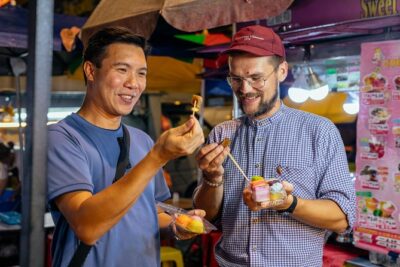
Kuala Lumpur Local Street Food Private Walking Tour by Night
Read our review →
2d1n Mount Kinabalu Via Ferrata – Walk The Torq
Read our review →
Kinabalu Park & Poring Hot Spring & Canopy Walk
Read our review →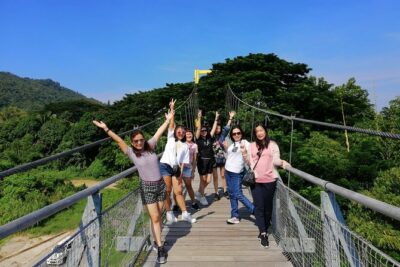
2d1n Kinabalu Park & Poring Canopy Walk & Desa Cow Farm Tour
Read our review →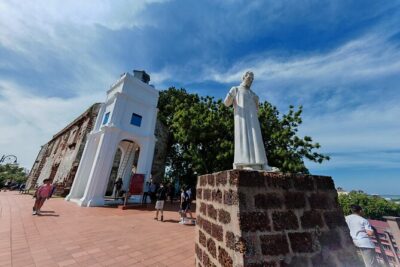
Melaka UNESCO City Guided Walking Tour – Tip Based
Read our review →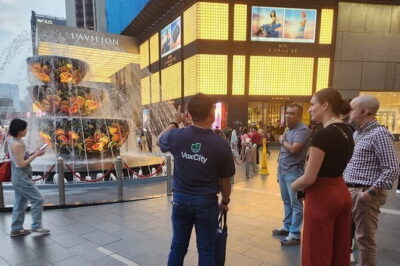
Half Day Cultural And Heritage Walking Tour in Kuala Lumpur
Read our review →
Browse the lists this tour appears in