
Reviewed · CULTURAL VILLAGE TOURS
Mari Mari Cultural Village
Mari Mari Cultural Village gives you a close look at Sabah’s indigenous traditions without requiring a long trip into the interior. You move from tribal house to tribal house, try hands-on activities, sample local food, and finish with dance and lunch.
I like the interactive demonstrations, especially the natural-tool fire-making, blowpipe shooting, and Murut bamboo dance. I also like that hotel pickup, a guide, transport, snacks, and lunch are bundled into a three-hour outing.
The main caution is pickup reliability. One booking was forgotten in the morning, leaving the visitor waiting for more than an hour before the afternoon tour was arranged. Confirm your pickup time, and keep the operator’s contact details handy.
In This Review
- Key points at Mari Mari Cultural Village
- What Mari Mari Cultural Village is really about
- Entering the tribal homes
- Fire-making without a lighter
- Blowpipes, bark clothing, and the Lansaran
- Rice wine and traditional snacks
- The Murut bamboo dance
- Lunch in a natural setting
- Price, group size, and what you receive
- Pickup details you should not overlook
- Who will enjoy this three-hour outing
- Booking, confirmation, and cancellation
- Should you book Mari Mari Cultural Village?
- FAQ
- Where is Mari Mari Cultural Village located?
- How long does the experience last?
- Is hotel pickup included?
- What food and drinks are included?
- What activities are included at the village?
- How many people can join the tour?
- Can I cancel or change the booking?
Key points at Mari Mari Cultural Village
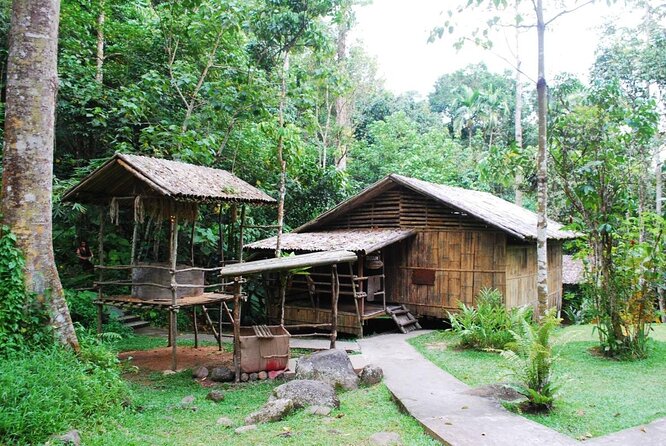
- Five tribal-house experiences: Each hut presents different customs, practical skills, food, or folklore.
- Hands-on activities: Try blowpipe shooting, touch the Lansaran trampoline-like floor, and take part in the bamboo dance.
- Traditional food included: Snacks, coffee or tea, and a buffet lunch are part of the outing.
- Live ethnic performance: A dance showcase brings the cultural program together near the end.
- Small maximum group: The tour is limited to 15 people, which should make demonstrations easier to follow.
- Simple Kota Kinabalu transfer: Pickup and drop-off are offered at city hotels, with a MYR30 per-person charge for certain outlying hotels.
What Mari Mari Cultural Village is really about
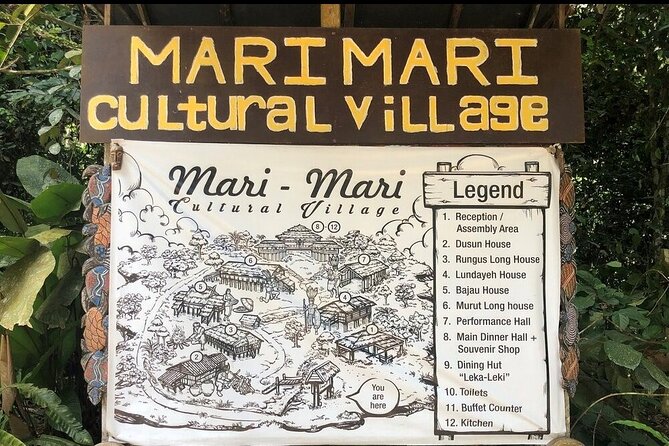
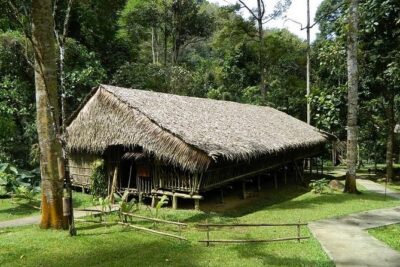
Mari Mari Cultural Village is designed as a compact introduction to several indigenous communities of Sabah. Rather than sending you from one remote settlement to another, it places traditional homes along a walking route and uses demonstrations to explain how people lived, worked, ate, traveled, and entertained themselves.
That format is useful if you have limited time in Kota Kinabalu. In about three hours, you get a guided cultural program, food tasting, live performance, and transport. You will not see every part of Sabah’s indigenous life, but you can sample a wide range of customs in one morning or afternoon.
The setting is part of the appeal. The drive leaves the city behind and follows roads bordered by greenery and open blue sky. Once at the village, traditional huts are spread through the trees rather than packed into a city museum. The effect is more active than simply reading signs or looking at old objects behind glass.
You should think of this as a staged cultural village with real traditional practices presented for learning and participation. That makes it accessible and family-friendly, but it also means the program follows a set route and schedule.
More Cultural Village Tours in Kota Kinabalu
- Kota Kinabalu: Mari Mari Cultural Village Tour with Lunch
★ 5.0 · 152 reviews - Mari-Mari Cultural Village Tour Including Lunch
★ 4.5 · 45 reviews - Private Tour Kampung Gipsi Sabah Cultural Village Kota Kinabalu
★ 5.0 · 32 reviews
Entering the tribal homes
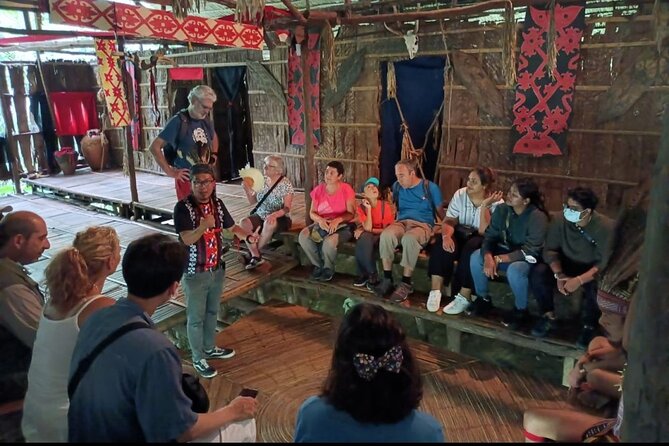
The tour moves through a series of tribe houses, each with its own focus. Your guide helps explain the objects, customs, and demonstrations, then directs you to the next stop.
This guided structure matters. Without context, a hut, tool, or cooking method can look like a collection of attractive objects. With explanations, you can connect each demonstration to daily work, food production, clothing, defense, and social life.
The homes are also where the tour becomes more than a photo stop. You are encouraged to watch closely and, in some cases, take part. That keeps the pace lively and gives children and adults something to do besides listen.
The program includes customs associated with several indigenous groups. The precise order can vary, but you should expect a mixture of practical demonstrations, tastings, and playful activities. Wear clothing that allows easy movement, since you may be invited to try some of the activities yourself.
Fire-making without a lighter
One of the most memorable demonstrations shows how to start a campfire using natural tools rather than a lighter. This simple skill makes a useful point: many everyday needs once depended on close knowledge of local materials and careful technique.
You may watch the guide or demonstrator prepare the materials and create the friction needed for a flame. The demonstration is short, but it gives the tour a practical center. You are not just hearing that older methods existed. You are seeing the work involved.
This is also a good moment to pay attention to the small details. Fire-making depends on preparation, dry material, and patience. It is easy to take modern convenience for granted until you watch someone build a fire by hand.
Blowpipes, bark clothing, and the Lansaran
The village adds several activities that make the visit more playful. Blowpipe shooting gives you a chance to try a traditional hunting tool in a controlled demonstration setting. It is the sort of stop that works well for families because the basic idea is easy to understand and the activity breaks up the storytelling.
Another demonstration shows how tree bark can be cut and processed to make traditional warrior vests. This is a striking reminder that clothing could be made from materials close at hand, but it also shows the skill and labor behind items that can look simple once finished.
Inside one of the tribe houses, you can try the Lansaran, a built-in floor that works somewhat like a traditional trampoline. The activity is presented as a fun challenge and may involve jumping for a prize. If you have limited balance or mobility, you can simply watch rather than take part. Most people can participate in the tour, but not every activity will suit every person.
These stops add variety without turning the visit into a lecture. You move from practical skill to physical activity, then back to cultural explanation.
Same city, a completely different kind of day:
- 2D1N Mount Kinabalu Climbing
★ 5.0 · 494 reviews - Guided Snorkeling Day Trip, Kota Kinabalu, Sabah, Malaysia
★ 5.0 · 282 reviews - Borneo (Klias) River Cruise & Fireflies Tour
★ 4.5 · 126 reviews - Sky-Mirror Photographing and Proboscis Monkey & Fireflies Watching River-Cruise
★ 4.0 · 109 reviews
Rice wine and traditional snacks
Food is woven into the tour rather than saved only for lunch. You may sample traditional treats and rice wine as part of the village demonstrations.
The rice wine tasting is a small but useful window into local food customs. It also means you should tell the guide if you do not drink alcohol or would rather skip the sample. The supplied details confirm the tasting, but they do not specify the exact recipe or strength, so do not assume it will match a familiar wine.
Snacks are included, along with coffee or tea. These tastings help you connect culture with ordinary life. Recipes and drinks often tell you as much about a community as its buildings do, especially when ingredients and preparation methods have been passed from one generation to the next.
The larger meal comes later as a buffet lunch. The spread features dishes associated with Sabah’s cultural identity and is included in the tour price. Since the exact menu is not fixed in the information provided, you should expect local dishes rather than a standard international lunch.
The Murut bamboo dance
The live performance is the emotional high point of the program. You watch an ethnic dance showcase, then may be invited to take part in the Murut tribe’s Magunatip bamboo dance.
Magunatip uses moving bamboo poles placed on the ground. Participants step between the poles in time with the rhythm, making it a test of timing as much as courage. You can watch first and decide if you want to join.
This is one of the tour’s strongest features because it turns cultural performance into shared activity. You are not asked to master a full dance routine. You get a short, memorable introduction to a traditional form and a chance to understand its rhythm through your feet.
The performance also gives the visit a clear ending before lunch. After the quieter house demonstrations, music and movement provide a lively finish.
Lunch in a natural setting
The included buffet lunch is more than a convenience. It gives you time to sit down, process what you have seen, and try several local dishes in one meal.
The setting around the village adds to the experience. You eat surrounded by greenery rather than returning immediately to the city. That makes the meal feel connected to the rest of the visit, even though the tour remains a planned attraction.
I would not book this tour solely for the food, since the menu is not listed in detail. But lunch adds real value to a $100 package that also includes transport, a local guide, live entertainment, snacks, and coffee or tea.
If you have dietary restrictions, ask about the meal before booking. The supplied details confirm that lunch is included, but they do not specify vegetarian, halal, allergy, or other special arrangements.
Price, group size, and what you receive
At $100 per person, this is not the cheapest short outing from Kota Kinabalu. The value depends on how much you want included in a half-day plan.
The package covers an air-conditioned vehicle, pickup and drop-off within the stated service area, a local guide, live entertainment, tastings, coffee or tea, and buffet lunch. You also avoid having to arrange separate transport to a cultural site outside the city.
The maximum group size is 15 people. That is a useful limit for demonstrations because you should have a better chance of seeing the activity and hearing the guide than you would in a large coach group. A small group does not guarantee a private tour, but it does keep the outing more manageable.
Group discounts are available, so the price may work better for families or small parties booking together. Compare the final total carefully, especially if your hotel is outside the standard pickup zone.
Pickup details you should not overlook
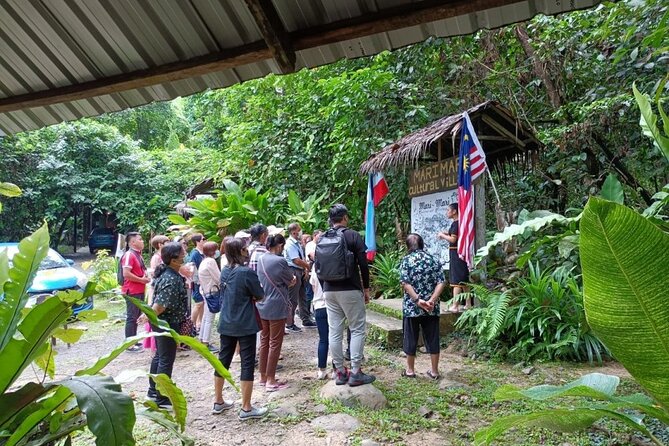
Pickup is offered from Kota Kinabalu accommodation, followed by a transfer to the village and a return to your hotel after lunch. The air-conditioned vehicle is welcome in Sabah’s warm climate.
Outlying hotels incur an additional charge of MYR30 per person. This applies to hotels outside Kota Kinabalu city and the 1 Borneo Shopping Mall area. Check your hotel’s location before assuming the advertised price includes door-to-door service.
One important warning comes from the tour’s operating record. A visitor booked a morning departure but was not collected and waited for more than an hour. The operator had forgotten the booking, and the visitor eventually went to a tourism office, found the company office, and joined the afternoon tour instead.
That problem was resolved, but it is still a useful planning lesson. Confirm the pickup time shortly before the tour, be ready at the stated location, and keep the tour company’s phone number available. If you have a flight, cruise, or other fixed appointment, leave plenty of extra time.
Who will enjoy this three-hour outing
I would recommend Mari Mari Cultural Village if you want a structured introduction to Sabah’s indigenous cultures and do not have time for a longer journey beyond Kota Kinabalu.
It suits families particularly well. The activities give children something concrete to watch and try, while the guide provides the wider explanation. The Lansaran, blowpipe activity, fire-making, and bamboo dance add movement to the visit.
It also works for first-time visitors who want culture alongside Kota Kinabalu’s outdoor attractions. You will see demonstrations, taste local items, and hear music without committing to a full-day excursion.
The tour is less suitable if you want an unplanned visit to a living village or extended time with one community. The schedule moves through a purpose-built cultural setting, so the experience is educational and organized rather than spontaneous.
Most people can participate, but physical activities are optional in practical terms. If the bamboo dance or Lansaran does not appeal to you, you can watch the demonstration and continue with the rest of the program.
Booking, confirmation, and cancellation
Confirmation normally arrives at booking. If you book within one day of departure, confirmation comes as soon as possible and depends on availability.
You must provide each participant’s passport name, number, expiry date, and country when booking. Have those details ready to avoid delays.
The experience is non-refundable and cannot be changed for any reason. That strict rule makes it wise to confirm your hotel, date, pickup area, and passport details before paying.
The tour is operated by TYH Borneo Tours and Travel SDN BHD. The published rating is 4.7 from 11 reviews, with 100 percent recommending the experience. That is a strong result, though the small number of ratings means I would still pay close attention to the pickup warning.
Should you book Mari Mari Cultural Village?
Book it if you want a convenient, guided introduction to Sabah culture with transport and food already arranged. The combination of tribal homes, fire-making, blowpipes, rice wine, bark clothing, Lansaran, bamboo dance, and buffet lunch gives you plenty to see in three hours.
The best value comes when you would otherwise need to arrange a taxi, admission, guide, and meal separately. Families and small groups should also check the group discount.
Skip it if you prefer independent exploration, dislike scheduled demonstrations, or need a fully flexible cancellation policy. And if you book, treat pickup confirmation as part of your preparation, not an afterthought. With that small precaution, Mari Mari Cultural Village makes a practical cultural side trip from Kota Kinabalu.
FAQ
Where is Mari Mari Cultural Village located?
Mari Mari Cultural Village is outside Kota Kinabalu, Malaysia. The tour provides pickup and drop-off from eligible Kota Kinabalu accommodation.
How long does the experience last?
The tour lasts approximately three hours.
Is hotel pickup included?
Pickup and drop-off are offered outside Kota Kinabalu accommodation. Hotels outside the Kota Kinabalu city area and 1 Borneo Shopping Mall area incur an additional MYR30 per person charge.
What food and drinks are included?
The tour includes snacks, rice wine tasting, buffet lunch, and coffee or tea. The exact lunch menu is not specified.
What activities are included at the village?
Activities and demonstrations include natural-tool fire-making, blowpipe shooting, tree-bark clothing production, rice-wine tasting, the Lansaran floor, traditional dance, and the Murut Magunatip bamboo dance.
How many people can join the tour?
The tour has a maximum group size of 15 people.
Can I cancel or change the booking?
No. The experience is non-refundable and cannot be changed for any reason.
Just added around Kota Kinabalu
- Sabah: White Water Rafting Grade 3-4 at Padas River★ 4.7 · 3 reviews
- Full-Day Sepilok Orangutan and Sandakan City Trail from Kota Kinabalu★ 4.0 · 6 reviews
- Mangrove Kayaking Experience in Borneo★ 5.0 · 8 reviews
- Sunset E-Foil Experience in Tanjung Aru Beach★ 5.0 · 10 reviews
- Island Hopping ( Manukan & Sapi Island ) From Kota Kinabalu★ 4.5 · 9 reviews
- Join us for a RAID Try Dive in Kota Kinabalu★ 5.0 · 27 reviews
- Padas River White Water Rafting from Kota Kinabalu (Grade 3 & 4)★ 3.5 · 4 reviews
- Monsopiad Cultural Village Visit with Private Transfer from Kota Kinabalu★ 4.5 · 5 reviews
Cultural Village Tours, compared.

Private Tour Kampung Gipsi Sabah Cultural Village Kota Kinabalu
Read our review →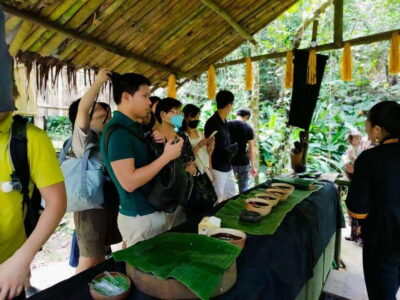
Mari-Mari Cultural Village Visit + Lunch + transfer
Read our review →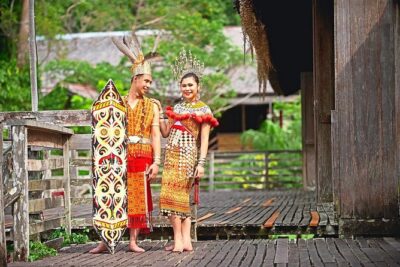
Semenggoh Orangutan Center & Sarawak Cultural Village
Read our review →Browse the lists this tour appears in