
Reviewed · CULTURAL VILLAGE TOURS
Mari-Mari Cultural Village Tour Including Lunch
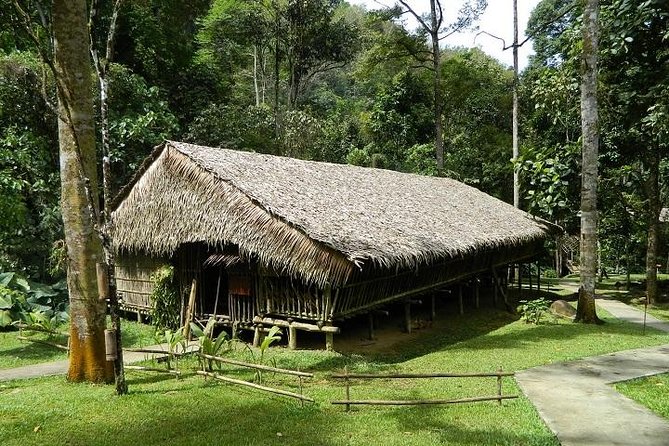
Mari-Mari Cultural Village turns a half-day from Kota Kinabalu into a walk through five Sabah communities: Dusun, Rungus, Murut, Bajau, and Lundayeh. You cross a suspension bridge, meet a village chief, enter traditional homes, sample local food and drinks, and watch dances that explain more than a museum label ever could.
I like the hands-on demonstrations, especially the chance to see how daily life was organized inside each house. I also like the food and drink tastings, followed by lunch and high tea, because they give the visit a practical taste of Sabah rather than only a staged show.
The main caution is transport. Several bookings had late or cramped pickups, and the wording about a shared tour can be confusing. The village itself earns strong praise, but the ride and tour coordination can shape your day.
In This Review
- Key points before you book
- Crossing into Mari-Mari Cultural Village
- Five communities, five different ways of life
- House visits and traditional demonstrations
- Food tastings, lunch, and high tea
- Music and dance that explain the traditions
- How much value do you get for $58?
- Shared tour wording deserves a close look
- The driver can make or break the morning
- Who will enjoy this visit most?
- Practical tips for a smoother day
- Should you book Mari-Mari Cultural Village?
- FAQ
- How long does the Mari-Mari Cultural Village tour last?
- What time does pickup start?
- Is transportation included?
- How many people can join the tour?
- Which ethnic groups are represented at Mari-Mari Cultural Village?
- Is lunch included?
- What activities are included at the village?
- Can I cancel for a refund?
Key points before you book
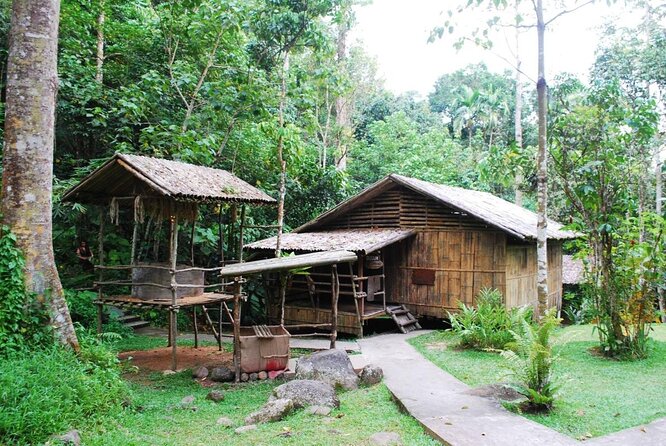
- Five Sabah communities in one visit: Learn about Dusun, Rungus, Murut, Bajau, and Lundayeh customs, homes, food, and performances.
- A real house-and-demo format: You do more than walk past buildings. Guides explain how the homes were used and show traditional activities.
- Food is part of the lesson: Expect samples from different groups, local lunch, and high tea, with other food and drinks available at your own cost.
- A lively cultural performance: Music and dance bring the customs together near the end of the visit.
- Small maximum group size: The tour is capped at 15 people, though shared departures can still feel busy when groups overlap.
- Hotel pickup is useful, but variable: Centrally located Kota Kinabalu hotels are covered, yet driver punctuality and vehicle comfort have not always been consistent.
Crossing into Mari-Mari Cultural Village
The day generally starts with a 9 a.m. pickup from a centrally located Kota Kinabalu hotel. Round-trip transport is included, along with an English-speaking driver. The drive takes you out toward the village, and the full experience lasts about five hours, with roughly three hours spent at Mari-Mari itself.
At the entrance, staff brief you on village rules before the visit begins. That small pause matters. Mari-Mari is designed as a cultural living-history setting, so the rules help keep the visit respectful and orderly.
You then meet the chief and take part in a welcome ceremony. The suspension bridge provides a memorable entrance, and it helps create a clear break between modern Kota Kinabalu and the village setting. Do not expect an untouched prehistoric settlement. This is a visitor attraction built to explain Borneo’s past and present, but the demonstrations and explanations give the setting real purpose.
Rain is possible, and it can make the paths muddy or less comfortable. It can also make the jungle setting feel more convincing. Bring a light rain layer or use one of the inexpensive ponchos sold at the village if the weather turns wet.
More Cultural Village Tours in Kota Kinabalu
- Kota Kinabalu: Mari Mari Cultural Village Tour with Lunch
★ 5.0 · 152 reviews - Private Tour Kampung Gipsi Sabah Cultural Village Kota Kinabalu
★ 5.0 · 32 reviews - Sabah: Mari-Mari Cultural Village Visit + Lunch + transfer
★ 4.5 · 16 reviews
Five communities, five different ways of life
Mari-Mari brings together five ethnic groups from Sabah: Dusun, Rungus, Murut, Bajau, and Lundayeh. The value of the visit is the comparison. You are not seeing one general version of Borneo culture. You are moving between distinct homes, customs, foods, and stories.
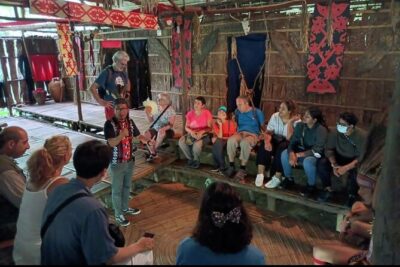
The house visits give each group a physical setting. The homes are not just photo backdrops. Guides explain how families lived, what certain spaces were used for, and how local materials shaped the buildings.
The Rungus, Murut, Bajau, Dusun, and Lundayeh sections each have their own stories and traditions. The exact order and amount of time at each stop can vary, especially when several groups are moving through the village at once. Expect an active route rather than a quiet private lesson.
This is where a good guide makes a big difference. Guides named Zul, Mac, and Aril have been particularly effective at keeping the information clear, lively, and suitable for families. Zul is also noted for his humor, which helps when the subject matter becomes dense.
House visits and traditional demonstrations
The demonstrations are the heart of the experience. You see how objects, tools, food, and household customs fit into daily life. The format gives you something to watch and respond to, rather than asking you to remember a long speech.
You may also get to try food and drinks connected with the different groups. Sampling is not a full meal, but it adds useful context. A drink or snack often tells you more about local ingredients and hospitality than a formal explanation alone.
The guides encourage interaction, so this is a good choice if you like asking questions or trying small activities. It works well for families because the route keeps changing and the demonstrations break up the walking.
The drawback is crowd flow. The village can become busy, and one group may catch up with another. When that happens, explanations overlap and some stops feel less personal. The maximum group size is 15, but the village may also be hosting other departures. If you want silence and long one-to-one conversations, this is not the right format.
Food tastings, lunch, and high tea
Food is included in the package, along with local lunch and high tea. The tasting stops let you try several tribal foods and drinks, while lunch gives you a more substantial break inside the village schedule.
The food has been a strong part of the day for many people, with a range of choices and samples from different communities. Still, portions and availability can move quickly when several groups arrive at once. If you see something you want to try, do not assume it will remain on the table for long.
The supplied details say lunch is served inside Mari-Mari. One account describes a modern local lunch instead, so the exact meal setting may depend on the departure or day. It is sensible to confirm the lunch arrangement before booking if eating inside the village is important to you.
Other food and drinks are not included. The package covers the stated local lunch and high tea, but extras are your responsibility. If you have dietary needs, the available information does not specify special menus, so ask the operator before paying.
Same city, a completely different kind of day:
- 2D1N Mount Kinabalu Climbing
★ 5.0 · 494 reviews - Guided Snorkeling Day Trip, Kota Kinabalu, Sabah, Malaysia
★ 5.0 · 282 reviews - Borneo (Klias) River Cruise & Fireflies Tour
★ 4.5 · 126 reviews - Sky-Mirror Photographing and Proboscis Monkey & Fireflies Watching River-Cruise
★ 4.0 · 109 reviews
Music and dance that explain the traditions
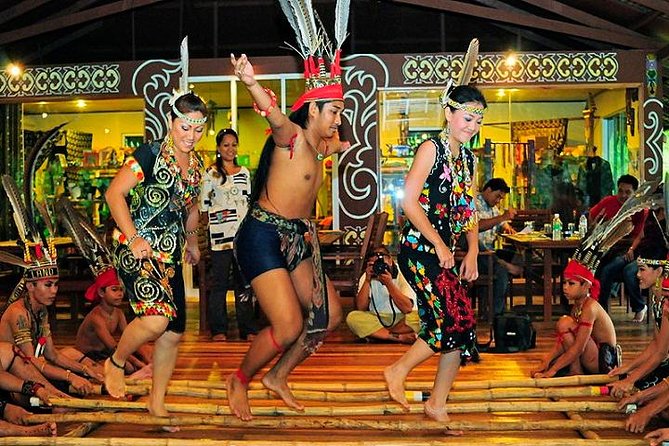
The cultural performance brings the separate house visits together. Traditional music and dance show how the communities express identity, ceremony, and social life.
The performance is one of the most consistently praised parts of the experience. It is lively, easy to follow, and suitable for children as well as adults. You do not need a background in Sabah’s history to appreciate it.
Keep your expectations realistic. This is a scheduled cultural show for visitors, not an unplanned village gathering. That does not make it worthless. The show works best when you treat it as interpretation, a performed way to explain traditions that might otherwise remain abstract.
The performance usually follows the house visits and tastings, though the order can shift. Afterward, you say farewell to the villagers and return to the modern world, with transport back to your hotel.
How much value do you get for $58?
At $58 per person, the price includes the village admission, round-trip transportation, English-speaking driver, hotel pickup and drop-off within central Kota Kinabalu, house demonstrations, activities, performance, lunch, and high tea.
That is fair value if you want a simple package and do not want to arrange transport or admission yourself. You are paying for convenience as well as the cultural program. For a first visit to Sabah, combining five communities, food, a show, and transport in one morning is efficient.
The value becomes less clear if your hotel is outside the central pickup area or if transport is the main reason you book. Several departures have had late pickups, poor communication, cramped cars, or drivers who seemed uninterested. One family was squeezed into an unsuitable vehicle, and one return journey included an unnecessary fuel stop.
That does not erase the quality of the village program, but it matters. If you are comfortable arranging your own ride and buying entry separately, compare the cost before booking. The package makes the most sense when you value the included transfer and want one reservation covering the day.
Shared tour wording deserves a close look
The tour is described as a shared experience with a maximum of 15 people, and some wording suggests a tour for you and your own party. Read those points carefully. A shared departure can include other people, and at least one booking expected privacy but ended up with a group of about 12 others.
Other departures were private or mostly private, including one group of eight. The difference may come from the booking size, vehicle assignment, or how the operator fills a departure. Do not pay a higher price expecting a private guide unless that is stated clearly in writing.
If you are a solo visitor, check the booking terms closely. The booking system has required some solo customers to pay for two people. That can make the package poor value, particularly if you only need a seat and village admission.
Cruise passengers should be especially careful. One booked departure was changed to an afternoon show at the last moment because of capacity problems, which did not work with the ship schedule. If you are visiting Kota Kinabalu for one day from a ship, confirm pickup and return times directly and leave a generous buffer.
The driver can make or break the morning
Hotel pickup and drop-off are useful, especially in Kota Kinabalu where arranging a ride for an early start may add effort. Some drivers have been prompt, friendly, and communicative through WhatsApp. One driver named Napoleon received particular praise for keeping the transfer smooth.
The record is not uniform. Some pickups were late with no advance message. Other problems included smoky vehicles, impatient driving, an overly tight back seat, and a driver who stopped for fuel on the return trip.
Ask for the driver’s name and vehicle details before the morning of departure. Keep your phone available for WhatsApp messages, and allow time at the hotel entrance. If you have a flight, cruise departure, or fixed appointment, tell the operator clearly before booking.
The English-speaking driver handles the transfer, while the village guide leads the cultural program. Those may be different people. A strong village guide cannot fully make up for a bad transfer, so judge the package on both parts.
Who will enjoy this visit most?
I would recommend Mari-Mari to families, first-time visitors to Sabah, and anyone who wants a structured introduction to local culture without planning several separate stops.
Children get movement, demonstrations, food samples, music, and dance. Adults get a useful overview of the five communities and their customs. The format also suits people who prefer a guide to explain the meaning behind what they are seeing.
You should choose it if you like:
- Short cultural visits with several different themes
- Guided explanations rather than independent wandering
- Food tastings and local lunch
- Traditional music and dance
- A morning departure with hotel transport
- A group setting with a set schedule
You may want another option if you dislike group tours, need a very precise return time, or expect a private experience. The route can be busy, and the transport standards are not always consistent.
Most people can take part, according to the supplied booking information. The tour has a maximum of 15 participants, but that does not guarantee a private group or a quiet visit.
Practical tips for a smoother day
Wear shoes that can handle wet ground. Rain can arrive quickly, and the village experience continues in wet weather.
Bring water and a rain layer. Extra drinks are not included, and cheap ponchos are available at the village if needed.
Eat a light breakfast. Lunch is included, but the timing of tastings and the main meal may vary. Food can disappear quickly when groups arrive together.
Keep your phone charged. Pickup updates may arrive through WhatsApp, and the operator may need to reach you before departure.
Confirm the pickup point, group type, lunch arrangement, and return timing. This is particularly important for solo customers, cruise passengers, and anyone booking a private-looking option.
Allow time for the full five-hour schedule. The village portion is listed at about three hours, but transfers and group movement fill out the morning.
Should you book Mari-Mari Cultural Village?
Yes, if you want a convenient, family-friendly introduction to Sabah’s Dusun, Rungus, Murut, Bajau, and Lundayeh cultures. The house visits, food tastings, dances, and welcoming guides create a useful day out, and the $58 price is reasonable when the transport runs well.
Book with care if you need privacy or strict timing. The strongest part is the village program, while transport and communication are the weak links. Confirm the shared or private setup directly, check the pickup plan, and avoid relying on the tour for a tight cruise or flight connection.
The cancellation policy allows a full refund when you cancel at least 24 hours before the start time. Changes or cancellations inside that window are not refunded.
FAQ
How long does the Mari-Mari Cultural Village tour last?
The experience lasts about five hours in total. The cultural village portion is listed at approximately three hours, with the remaining time used for round-trip transport from Kota Kinabalu.
What time does pickup start?
Pickup is scheduled for 9 a.m. from centrally located Kota Kinabalu hotels.
Is transportation included?
Yes. Round-trip transportation, an English-speaking driver, and hotel pickup and drop-off from centrally located Kota Kinabalu hotels are included.
How many people can join the tour?
The activity has a maximum of 15 participants. It is described as a shared tour, so you should not assume the booking is private unless that is confirmed directly.
Which ethnic groups are represented at Mari-Mari Cultural Village?
The village presents the Dusun, Rungus, Murut, Bajau, and Lundayeh communities.
Is lunch included?
Yes. Local lunch and high tea are included, along with food and drink tastings connected with the village experience. Other food and drinks are not included.
What activities are included at the village?
The program includes a welcome ceremony, house tours, traditional demonstrations, cultural activities, food and drink sampling, and a cultural performance.
Can I cancel for a refund?
You can cancel at least 24 hours before the experience start time for a full refund. Cancellations or changes made less than 24 hours before the start time are not accepted for a refund.
More Lunch Experiences in Kota Kinabalu
- Kota Kinabalu: Manukan & Sapi Islands Snorkeling with Lunch
★ 3.7 · 61 reviews - Kota Kinabalu City Tour: Culture & Heritage tour with Lunch
★ 5.0 · 20 reviews - Kota Kinabalu City Tour Cultural & Heritage Tour with Lunch
★ 5.0 · 7 reviews - Tambunan: Rafflesia Flower Trekking with Rustic Lunch
★ 4.4 · 5 reviews
Just added around Kota Kinabalu
- Sabah: White Water Rafting Grade 3-4 at Padas River★ 4.7 · 3 reviews
- Full-Day Sepilok Orangutan and Sandakan City Trail from Kota Kinabalu★ 4.0 · 6 reviews
- Mangrove Kayaking Experience in Borneo★ 5.0 · 8 reviews
- Sunset E-Foil Experience in Tanjung Aru Beach★ 5.0 · 10 reviews
- Island Hopping ( Manukan & Sapi Island ) From Kota Kinabalu★ 4.5 · 9 reviews
- Join us for a RAID Try Dive in Kota Kinabalu★ 5.0 · 27 reviews
- Padas River White Water Rafting from Kota Kinabalu (Grade 3 & 4)★ 3.5 · 4 reviews
- Monsopiad Cultural Village Visit with Private Transfer from Kota Kinabalu★ 4.5 · 5 reviews
Cultural Village Tours, compared.

Private Tour Kampung Gipsi Sabah Cultural Village Kota Kinabalu
Read our review →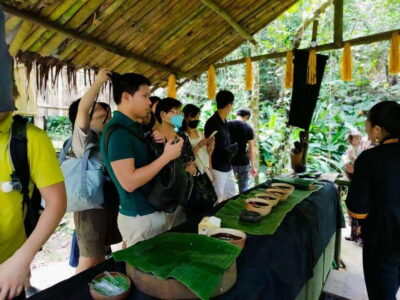
Mari-Mari Cultural Village Visit + Lunch + transfer
Read our review →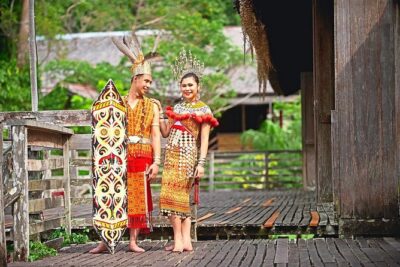
Semenggoh Orangutan Center & Sarawak Cultural Village
Read our review →Browse the lists this tour appears in