
Reviewed · CULTURAL VILLAGE TOURS
Half-Day Mari Mari Cultural Village from Kota Kinabalu
Mari Mari Cultural Village gives you a quick, well-organized introduction to five ethnic cultures of Sabah. In one countryside visit, you move through traditional houses, see blowpipe making and fire starting, taste local food, and watch a live Borneo dance performance.
I like the way the tour turns cultural information into things you can see, smell, and taste. I also like the practical hotel pickup and small maximum group of 15, which makes a half-day outing easier to manage. The main drawback is the fixed schedule: four hours is enough for an introduction, but not for a slow, detailed study of every culture.
In This Review
- Key Points to Know Before You Go
- Reaching Mari Mari Cultural Village From Kota Kinabalu
- What the Mari Mari Open-Air Museum Tries to Show
- The Dusun Stop and Sabah’s Paddy Traditions
- The Rungus Longhouse
- Lundayeh and Lun Bawang Food Traditions
- The Bajau Connection to the Sea
- The Murut Stop, Blowpipes, and Fire Starting
- Bamboo Cooking, Lunch, and Hi Tea
- The Live Borneo Cultural Dance Performance
- Guides, Group Size, and How the Visit Feels
- Is $90 a Fair Price?
- Who Should Book This Half-Day Visit?
- Practical Details Before Booking
- Should You Book Mari Mari Cultural Village?
- FAQ
- How long does the Mari Mari Cultural Village tour last?
- Is hotel pickup included?
- What cultures are covered during the visit?
- What demonstrations can I see?
- Is food included?
- How large is the tour group?
- Can I cancel for a full refund?
Key Points to Know Before You Go
- Five cultures in one visit: Learn about the Dusun, Rungus, Lundayeh, Bajau, and Murut communities.
- Hands-on demonstrations: Watch blowpipe making, fire starting, tattooing, and bamboo cooking demonstrations.
- Food is part of the lesson: The morning session includes a buffet lunch, while the afternoon session includes hi tea.
- Simple transport from Kota Kinabalu: Hotel pickup and drop-off are included, using an Innova for groups of five or fewer and an air-conditioned minivan for six or more.
- Small group size: The tour accepts a maximum of 15 people, a useful feature for a guided cultural visit.
- Port-call timing matters: Cruise passengers should note the morning session starts at 10:00 a.m. and the afternoon session at 2:00 p.m.
Reaching Mari Mari Cultural Village From Kota Kinabalu
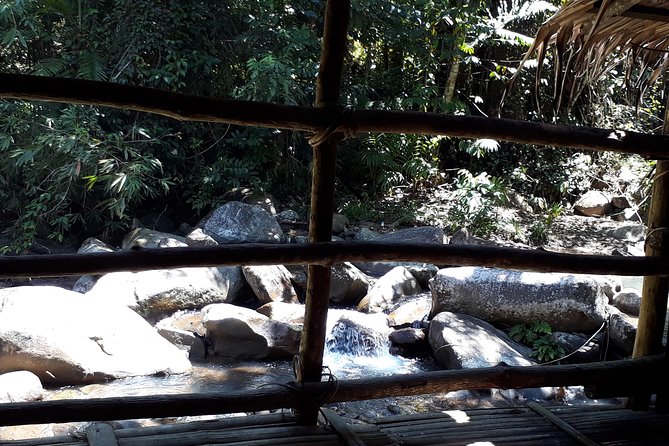
The village sits in the countryside outside Kota Kinabalu, away from the city’s hotels and shopping streets. That change of setting matters. You are not simply entering a city museum with display cases. You are heading to an open-air site built around traditional homes, food, tools, and demonstrations.
Hotel pickup and drop-off are included, so you do not need to arrange a separate taxi or work out a route to the village. Groups of five or fewer use an Innova. Groups of six or more travel in an air-conditioned minivan.
The total experience lasts about four hours. That makes it a sensible choice if you have limited time in Kota Kinabalu, but you should expect a planned circuit rather than a free afternoon. The group limit is 15 people, and most people can take part.
The tour is also offered to cruise passengers, but timing deserves close attention. The morning session begins at 10:00 a.m., and the afternoon session begins at 2:00 p.m. If you are visiting Sabah during a short port call, confirm that the return transfer fits your ship’s departure time. One guest had to leave before the full program ended because of limited port time, although the staff adjusted the visit after the driver explained the situation.
More Cultural Village Tours in Kota Kinabalu
- Kota Kinabalu: Mari Mari Cultural Village Tour with Lunch
★ 5.0 · 152 reviews - Mari-Mari Cultural Village Tour Including Lunch
★ 4.5 · 45 reviews - Private Tour Kampung Gipsi Sabah Cultural Village Kota Kinabalu
★ 5.0 · 32 reviews
What the Mari Mari Open-Air Museum Tries to Show
Mari Mari Cultural Village is designed to preserve and explain the cultures of Sabah’s ethnic groups. The visit uses traditional structures and demonstrations to show how people worked, cooked, built homes, farmed, traveled, and used local materials.
This format works best if you want a broad first look at Sabah. You will not become an expert in every community in four hours, and the displays cannot represent every family or modern way of life. Still, the route gives useful context before you explore more of Borneo on your own.
The village presents five cultural traditions:
- Dusun
- Rungus
- Lundayeh
- Bajau
- Murut
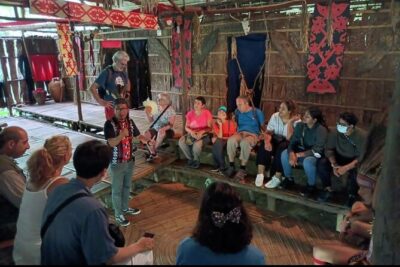
The information connects each group with particular housing styles, farming methods, food practices, and tools. Your guide helps explain the meaning behind activities such as tattooing, fire starting, and blowpipe use. This is important because the demonstrations are not just craft stops. They show how practical skills could also carry social or spiritual meaning.
The Dusun Stop and Sabah’s Paddy Traditions
The Dusun section introduces a community traditionally associated with paddy cultivation. The setting gives you a chance to consider how farming changes with geography. Dusun communities in the hills and inland areas traditionally grew dry paddy, while those on coastal plains and in valleys grew wet rice.
That distinction is a useful detail often skipped in quick cultural presentations. It shows that there is no single farming pattern for all of Sabah. Soil, water, and elevation shaped daily work.
You spend roughly 20 minutes at this stop. That is enough for a focused explanation and a look at the surroundings, but the short timing means you should listen closely. If you want to photograph structures or ask several questions, you may need to choose your moments.
The Rungus Longhouse
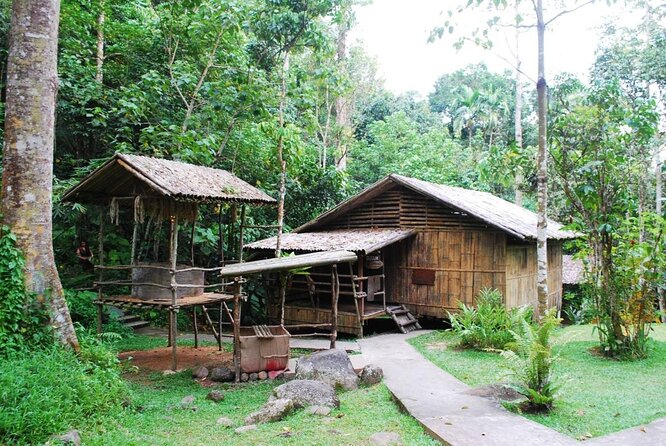
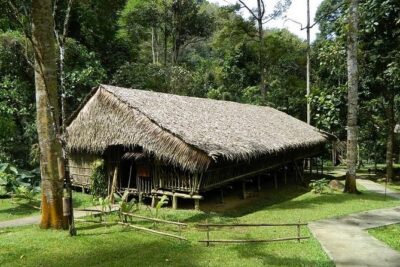
The Rungus longhouse is one of the more memorable parts of the route. A traditional longhouse contains seven to 15 family apartments, arranged within one extended structure. It is built with materials such as wood, bamboo, and atap, or palm leaves.
The house is raised above the ground. The design helped protect residents from flooding and wildlife, including snakes. That practical reason makes the building easier to understand than a simple explanation of its shape or materials.
As you walk through the longhouse, look for the relationship between private family space and shared living space. The structure reflects a community arrangement, not just a construction technique. At around 20 minutes, this stop gives you a clear introduction without asking you to spend a long time standing in one place.
Same city, a completely different kind of day:
- 2D1N Mount Kinabalu Climbing
★ 5.0 · 494 reviews - Guided Snorkeling Day Trip, Kota Kinabalu, Sabah, Malaysia
★ 5.0 · 282 reviews - Borneo (Klias) River Cruise & Fireflies Tour
★ 4.5 · 126 reviews - Sky-Mirror Photographing and Proboscis Monkey & Fireflies Watching River-Cruise
★ 4.0 · 109 reviews
Lundayeh and Lun Bawang Food Traditions
The itinerary identifies this section with the Lundayeh people and describes Lun Bawang traditions. The group is traditionally linked with agriculture, poultry, pigs, and buffaloes, along with hunting and fishing.
Food preservation is a central detail here. Meat and fish were brined or pickled with salt and stored for later use. That practice makes sense in a setting where food storage, seasonal work, and access to fresh supplies shaped household routines.
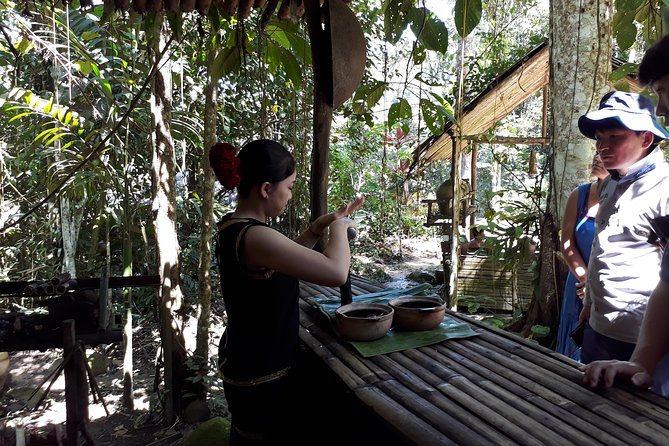
This stop also helps explain why food tasting is more than a break in the tour. Local ingredients and preservation methods connect directly with the daily life being described. You may not get a large sample of every dish at each station, but the route includes food and drink samples, followed by a meal or hi tea depending on your session.
The Bajau Connection to the Sea
The Bajau section explains a people traditionally associated with seafaring. The description distinguishes between East Coast and West Coast Bajau communities, with West Coast groups having settled and taken up agriculture.
That distinction is useful because the familiar label Sea Gypsies can flatten a complex story into a nickname. The presentation gives you a more practical view: some Bajau traditions are closely tied to the sea, while different communities developed other ways of living.
The stop lasts about 20 minutes. It is a short introduction, not a full account of Bajau life across Sabah. I would treat it as a starting point and pay attention to how the guide links movement, settlement, food, and work.
The Murut Stop, Blowpipes, and Fire Starting
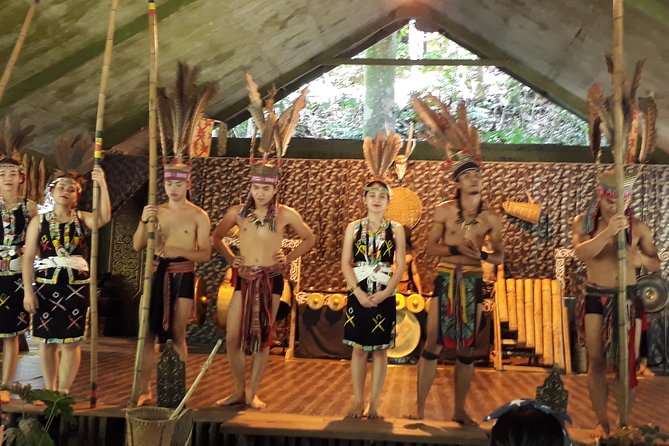
The Murut section covers a group traditionally connected with shifting cultivation, hill paddy, tapioca, blowpipe hunting, and fishing. The presentation also discusses the Murut as the last of Sabah’s ethnic groups to give up headhunting.
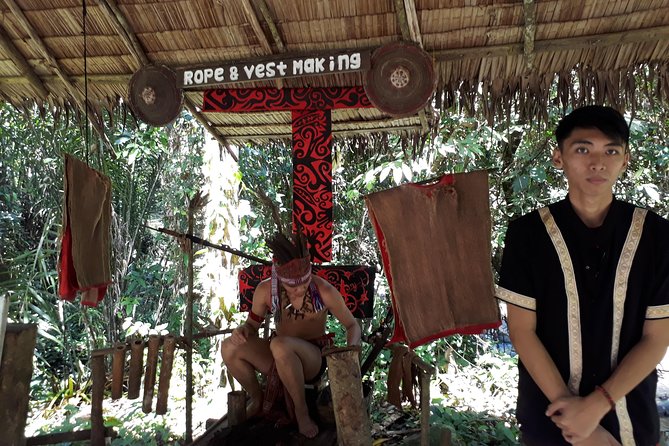
The strongest part of this stop is likely the practical demonstration. You can see blowpipe making and learn how the tool was connected with hunting. Fire starting shows another basic skill that would once have been part of everyday survival rather than a staged novelty.
Tattooing is also discussed as part of the cultural presentation. The guide explains the symbolism behind practices like this, giving you a better sense of why a custom mattered instead of showing it as an isolated design.
These activities are the reason I would choose this tour over a standard city sightseeing trip. You are not only looking at buildings. You are watching skills being explained and performed in front of you.
Bamboo Cooking, Lunch, and Hi Tea
Food adds a welcome sensory layer to the visit. Before the meal, you may notice the smell of food cooking in bamboo. That small detail helps connect the demonstrations with real preparation methods.
The 9:00 a.m. session includes a buffet lunch. The 1:00 p.m. session includes hi tea. Since the supplied schedule also lists the cruise passenger sessions as beginning at 10:00 a.m. and 2:00 p.m., confirm the exact departure time shown for your booking, especially if you are planning around a ship or another appointment.
The included food improves the value of the tour. At $90 per person, you are paying for transport, a guide, entry to the village, the cultural program, and food rather than admission alone. Personal expenses are not included, so budget separately for anything outside the stated program.
The meal should not be the only reason to book. Food portions, dishes, and presentation can vary, and this is still primarily a cultural visit. But the combination of tasting, cooking smells, and explanation makes the experience feel more connected than a talk followed by a standard restaurant lunch.
The Live Borneo Cultural Dance Performance
A live Borneo cultural dance performance is included. It gives the visit a lively finish and offers another way to see movement, music, costume, and group identity presented together.
The performance is best understood as a cultural showcase rather than a complete account of every dance tradition in Sabah. That does not make it less worthwhile. After the quieter stops through the longhouses, a live performance gives the half-day schedule a clear closing point.
The program is described as well organized, with transport, demonstrations, food, and performance fitting into one outing. That structure helps if you prefer a tour that handles the timing for you. If you prefer to wander alone or spend long periods photographing one building, the set route may feel brisk.
Guides, Group Size, and How the Visit Feels
The guide can make a major difference on a tour like this. Sam is named in the tour feedback, and one response specifically thanks him for organizing the experience. Joe is also mentioned in connection with a port passenger’s visit. You may not receive either guide on your departure, but the operator is Magunatip Holidays Sdn Bhd.
A 15-person maximum is a sensible balance. The group is small enough for a guide to explain demonstrations and respond to questions, while still large enough to keep the price below a private-tour rate in many cases.
Expect a guided route with several stops of about 20 minutes each. You will hear an explanation, look at the structure or activity, and then move on. Wear something comfortable for a four-hour outing, and keep your schedule realistic if you plan to add another activity afterward.
The tour is suitable for most people according to the supplied information. No special physical requirement is listed. Still, the village is an open-air cultural site, so you should be prepared for moving between stops rather than sitting indoors throughout the experience.
Is $90 a Fair Price?
At $90 per person, this is not the cheapest way to spend half a day in Kota Kinabalu. The price makes more sense when you count the included parts: hotel transfers, transport in an air-conditioned vehicle, a driver-guide, admission, food, demonstrations, and a live performance.
You also save the time and uncertainty of arranging separate transport to a countryside site. For a first visit to Sabah, that convenience has real value. You can see several cultural traditions in one morning or afternoon without having to coordinate taxis or research multiple locations.
The value is weaker if you mainly want a quiet look at traditional buildings. The cultural village presents a planned introduction, so the experience has an interpretive and performance element. If you want deeper contact with one community, a longer specialist visit might suit you better, though no alternative is included here.
I would consider the price reasonable for a short, all-in cultural outing, especially for a first-time visit or a cruise stop. It is less attractive if you already have extensive cultural activities planned or dislike organized group schedules.
Who Should Book This Half-Day Visit?
I would recommend this tour if you want a clear introduction to Sabah’s cultures and have only half a day. It suits people who value included transport, a guide, food, and a planned sequence of stops.
It is also a good fit for families and mixed-age groups because the demonstrations give the visit variety. A talk about farming is followed by a longhouse, then food, tools, fire, or dance. You are less likely to spend the entire outing listening to one long explanation.
Cruise passengers should consider it only after checking the timing carefully. The port schedule can make the visit shorter than planned, even though the staff may try to help. Hotel-based visitors have more breathing room because pickup and return are already built into the outing.
I would hesitate to book it if your main goal is independent exploration, extended photography, or detailed academic study. The four-hour program covers a lot, but it does so at a steady pace.
Practical Details Before Booking
Confirmation is provided at the time of booking. The experience offers a mobile ticket, group discounts, and pickup from Kota Kinabalu hotels.
You can cancel for a full refund if you do so at least 24 hours before the start time. Cancellations made within 24 hours are not refunded, and changes inside that period are not accepted. The cut-off follows local time.
The tour includes transport by Innova for groups of five or fewer and an air-conditioned minivan for groups of six or more. The maximum group size is 15. Personal expenses are excluded.
Check the meal session before you go. The 9:00 a.m. session includes buffet lunch, while the 1:00 p.m. session includes hi tea. Cruise passengers should use the stated 10:00 a.m. morning start or 2:00 p.m. afternoon start when planning their day.
Should You Book Mari Mari Cultural Village?
Book it if you want the efficient version of a Sabah cultural introduction: five communities, traditional houses, working demonstrations, food, transport, and dance in about four hours.
I especially like the mix of practical skills and cultural explanation. Blowpipes, fire starting, bamboo cooking, farming, and longhouse design give you concrete details to remember after the tour. The hotel transfer and 15-person limit also make the $90 price easier to justify.
Skip it if you want a completely independent visit or a deep study of one community. For most first-time visitors with limited time in Kota Kinabalu, though, Mari Mari Cultural Village is a useful and enjoyable way to begin understanding Sabah beyond the city.
FAQ
How long does the Mari Mari Cultural Village tour last?
The experience lasts approximately four hours.
Is hotel pickup included?
Yes. Hotel pickup and drop-off from Kota Kinabalu are included.
What cultures are covered during the visit?
The tour covers the Dusun, Rungus, Lundayeh, Bajau, and Murut cultures.
What demonstrations can I see?
The program includes demonstrations of blowpipe making, fire starting, and tattooing. It also includes bamboo cooking.
Is food included?
Yes. The 9:00 a.m. session includes a buffet lunch, while the 1:00 p.m. session includes hi tea.
How large is the tour group?
The maximum group size is 15 people.
Can I cancel for a full refund?
Yes, if you cancel at least 24 hours before the experience start time. Cancellations made less than 24 hours before the start time are not refunded.
More Half-Day in Kota Kinabalu
- Kuala Lumpur: Batu Caves Half-Day Tour with Pick-Up Option
★ 4.5 · 4,288 reviews - Private Half-Day Batu Caves and Cutural Tour in Kuala Lumpur
★ 5.0 · 3,107 reviews - Kuala Lumpur Suburbs Batu Caves Half-Day Tour (SIC/Shared Tour)
★ 5.0 · 753 reviews - Half-Day Penang Countryside Cycling Tour
★ 4.5 · 454 reviews
Just added around Kota Kinabalu
- Sabah: White Water Rafting Grade 3-4 at Padas River★ 4.7 · 3 reviews
- Full-Day Sepilok Orangutan and Sandakan City Trail from Kota Kinabalu★ 4.0 · 6 reviews
- Mangrove Kayaking Experience in Borneo★ 5.0 · 8 reviews
- Sunset E-Foil Experience in Tanjung Aru Beach★ 5.0 · 10 reviews
- Island Hopping ( Manukan & Sapi Island ) From Kota Kinabalu★ 4.5 · 9 reviews
- Join us for a RAID Try Dive in Kota Kinabalu★ 5.0 · 27 reviews
- Padas River White Water Rafting from Kota Kinabalu (Grade 3 & 4)★ 3.5 · 4 reviews
- Monsopiad Cultural Village Visit with Private Transfer from Kota Kinabalu★ 4.5 · 5 reviews
Cultural Village Tours, compared.

Private Tour Kampung Gipsi Sabah Cultural Village Kota Kinabalu
Read our review →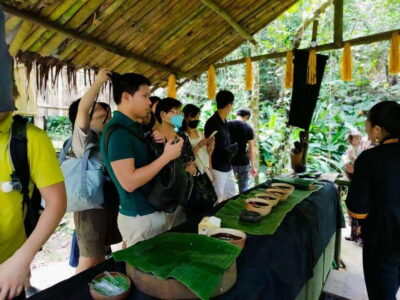
Mari-Mari Cultural Village Visit + Lunch + transfer
Read our review →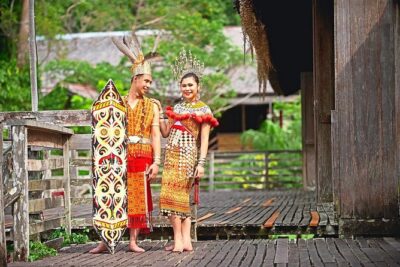
Browse the lists this tour appears in