
Reviewed · CULTURAL VILLAGE TOURS
Mari-Mari Cultural Village Half Day Tour
Mari-Mari Cultural Village gives you a clear, hands-on introduction to five indigenous cultures of Sabah in one forest setting. You move through traditional houses, watch cooking and craft demonstrations, sample local foods and rice wine, then finish with Sabahan dancing and lunch.
I like the small maximum group of 15, which should make the house demonstrations easier to follow, and I like that hotel transport, admission, tastings, performances, and lunch are bundled into one price. The main consideration is that the visit is a structured cultural attraction, not a free-form village visit, and the outskirt pickup fee can add MYR30.
In This Review
- Key points at a glance
- Reaching Mari-Mari from Kota Kinabalu
- The welcome ceremony sets the tone
- Five houses, five cultural introductions
- Food tastings make the houses memorable
- Demonstrations give the visit its practical edge
- Sabahan dance is the high-energy finale
- Lunch completes the four-and-a-half-hour schedule
- What the $85.79 price really includes
- Who should book this cultural visit
- Final verdict: a useful first look at Sabah
- FAQ
- Where is Mari-Mari Cultural Village located?
- How long does the tour last?
- What time does the morning session begin?
- Is there an afternoon session?
- What cultures are represented at the village?
- Is lunch included?
- Does the tour include hotel pickup and drop-off?
- Can I cancel for a full refund?
Key points at a glance
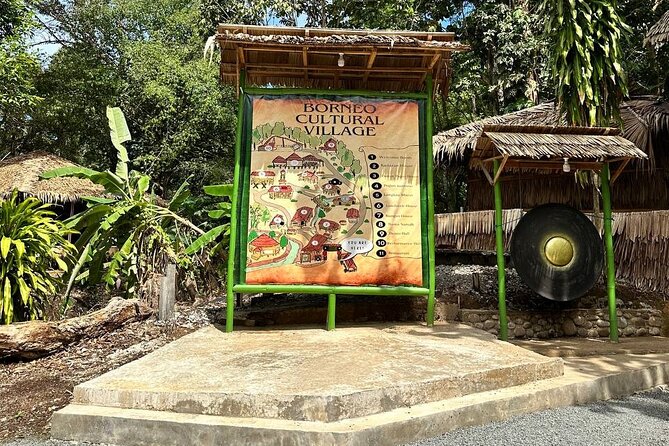
- Five Sabah cultures in one visit: See traditional houses associated with the Kadazan-Dusun, Rungus, Lundayeh, Bajau, and Murut communities.
- Food is part of the lesson: Sample light local foods, desserts, drinks, and house-brewed rice wine during the house visits.
- A guide adds useful context: The drive from Kota Kinabalu can include an introduction to Sabah’s politics and culture.
- Morning or afternoon timing: Choose a start around 9:00 a.m. or 1:00 p.m., depending on availability and your hotel pickup.
- The finale combines dance and lunch: A Sabahan cultural performance is followed by a local Malaysian buffet-style meal.
- Good value for an organized outing: The $85.79 price includes transport from Kota Kinabalu city hotels, entry, demonstrations, activities, lunch, and drop-off.
Reaching Mari-Mari from Kota Kinabalu
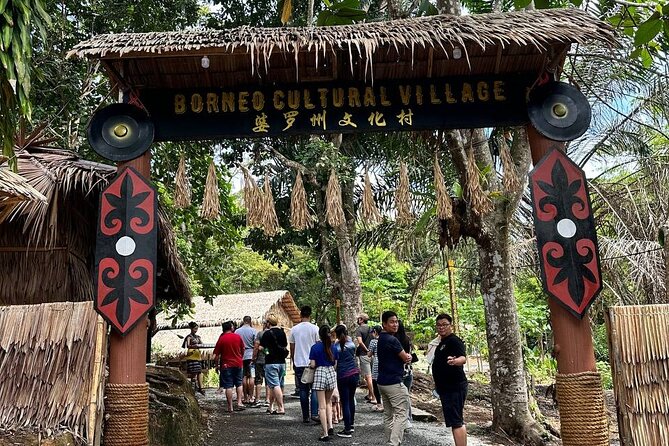
Mari-Mari Cultural Village is in Kionsom, Inanam, about 30 minutes from Kota Kinabalu. Pickup is offered from city hotels, with the exact collection time depending on where you are staying.
The drive is useful preparation for the visit. Your guide may use it to explain Sabah’s culture and politics before you arrive, giving you a little context instead of sending you straight into a series of displays. That early explanation matters because the village presents several different communities, and the names, customs, housing styles, and demonstrations can otherwise blur together.
The tour runs in two sessions. The morning program begins with pickup at about 9:00 a.m., followed by the village visit at 10:00 a.m. The afternoon version begins with pickup around 1:00 p.m. and starts at 2:00 p.m. The full outing lasts about four and a half hours, including transport, the village program, and lunch.
If you stay outside the standard Kota Kinabalu city hotel area, pickup and drop-off cost an additional MYR30. Check this before booking, since the extra charge affects the real price of the tour.
More Cultural Village Tours in Kota Kinabalu
- Kota Kinabalu: Mari Mari Cultural Village Tour with Lunch
★ 5.0 · 152 reviews - Mari-Mari Cultural Village Tour Including Lunch
★ 4.5 · 45 reviews - Private Tour Kampung Gipsi Sabah Cultural Village Kota Kinabalu
★ 5.0 · 32 reviews
The welcome ceremony sets the tone
The formal village visit begins with a welcome ceremony. This is more than a quick greeting, since it marks the shift from sightseeing to a guided presentation of Sabah’s indigenous traditions.
The program is carefully paced. You move through several houses with explanations and demonstrations, then gather for the performance and meal. That structure helps you see a lot in a short time, though it also means you should expect a scheduled group tour rather than a slow, independent walk.
The village is set in a quiet forest area. That setting helps the houses and demonstrations feel separate from Kota Kinabalu’s urban streets, while the covered or sheltered parts of the visit provide some protection when the weather turns wet. One family found that rain did not spoil the day, but you should still plan for tropical weather and wear comfortable footwear.
Five houses, five cultural introductions
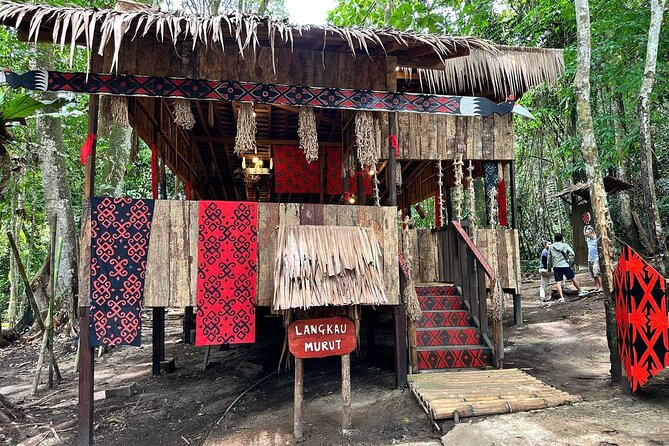
The central part of the program takes you through houses linked with five major indigenous groups of Sabah: Kadazan-Dusun, Rungus, Lundayeh, Bajau, and Murut. The point is not to become an expert in every community in three hours. Instead, you get a useful first look at how different groups express identity through homes, food, skills, and performance.
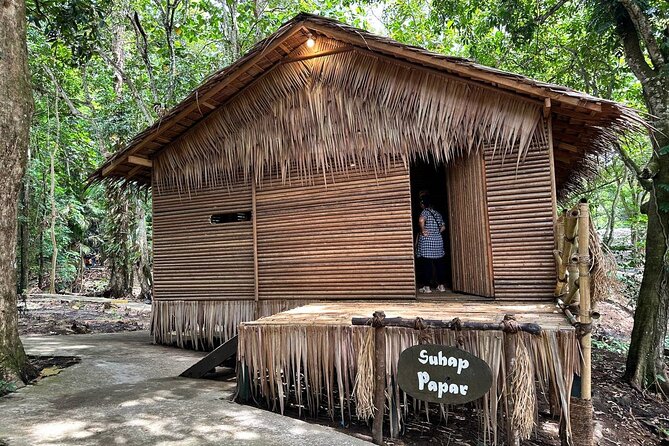
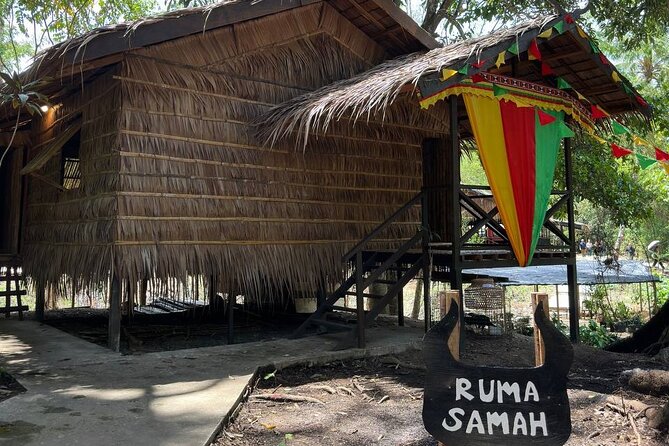
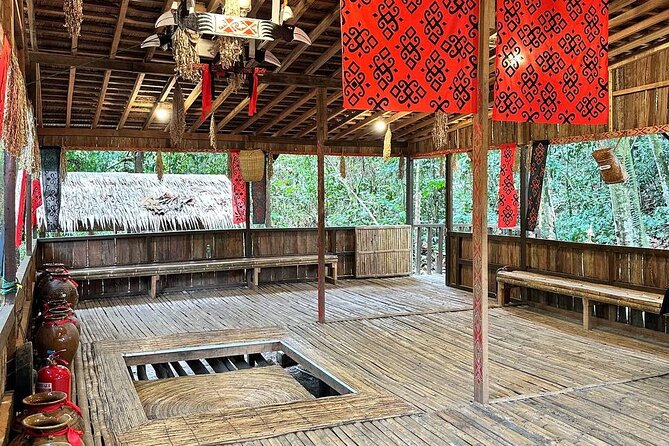
The Dusun House is one of the stops, and the broader Kadazan-Dusun tradition is an important part of Sabah’s cultural identity. The Rungus House and Lundayeh House are also included, along with presentations connected to the Bajau and Murut communities.
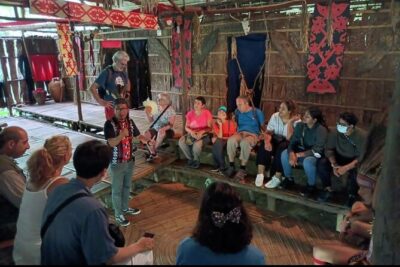
At each stop, the house is paired with a demonstration or explanation. This makes the visit more engaging than simply walking past a row of buildings. You might see how food or drink is prepared, learn about practical household traditions, and watch local skills being shown rather than just described.
The attraction’s value is strongest when you treat it as an introduction. You will see several traditions side by side, but the time available at each house is limited. If you already have detailed knowledge of Sabah’s indigenous communities, you may want a more specialized cultural visit as well. For a first visit to Kota Kinabalu, the range is a useful way to begin.
Food tastings make the houses memorable
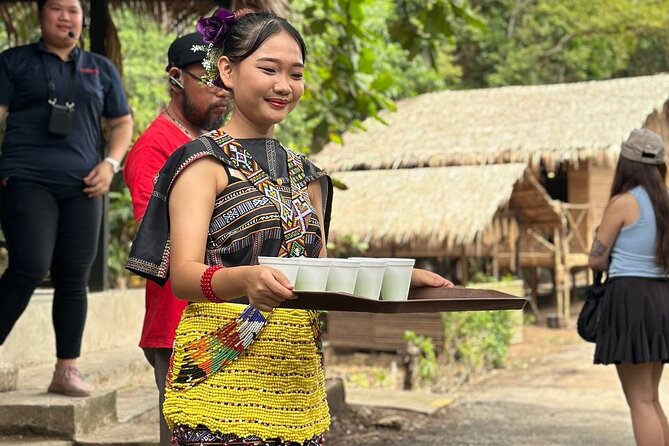
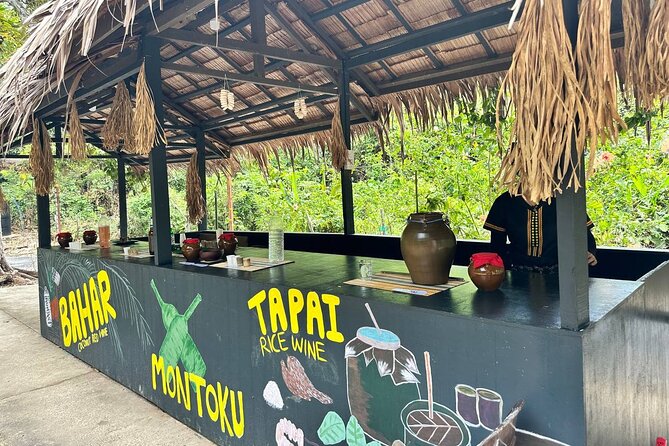
During the house visits, you can sample light foods and drinks. These include desserts, local snacks, and house-brewed rice wine.
The tastings are a practical part of the cultural program. Food gives you something concrete to remember from each stop, and it turns the explanations into an experience involving taste as well as sight and sound. The rice wine demonstration is especially distinctive, since it introduces a traditional drink that many visitors would not encounter through an ordinary city tour.
The food served during the house visits is not the main meal, so do not treat the early tastings as a replacement for lunch. They are small samples within the program. Later, you receive a local Malaysian buffet-style lunch.
If you do not drink alcohol, you can still take part in the wider food program. The information provided confirms that rice wine is sampled, but it does not say that you must drink it. If you have dietary restrictions, ask the tour provider before departure, since the meal is described as a local buffet rather than a special-diet menu.
Same city, a completely different kind of day:
- 2D1N Mount Kinabalu Climbing
★ 5.0 · 494 reviews - Guided Snorkeling Day Trip, Kota Kinabalu, Sabah, Malaysia
★ 5.0 · 282 reviews - Borneo (Klias) River Cruise & Fireflies Tour
★ 4.5 · 126 reviews - Sky-Mirror Photographing and Proboscis Monkey & Fireflies Watching River-Cruise
★ 4.0 · 109 reviews
Demonstrations give the visit its practical edge
The house tours include demonstrations, including cooking and alcohol-making activities. This is where the experience moves beyond architecture. You are not simply shown a traditional house and told that people once lived differently. You see examples of how food and drink were made and how everyday skills fit into community life.
You may also encounter local craft activities as you move through the village. The supplied information confirms that visitors can try local crafts, but it does not provide a full list of the activities or promise that every craft is available at every session.
The guide plays an important role here. One family’s guide used the drive to explain Sabah’s culture and politics, while another guide kept the group entertained throughout the program. No guide names are provided, so you cannot request a particular guide in advance. Still, a strong guide can make a major difference, especially when several ethnic groups and house styles are covered in a short time.
Sabahan dance is the high-energy finale
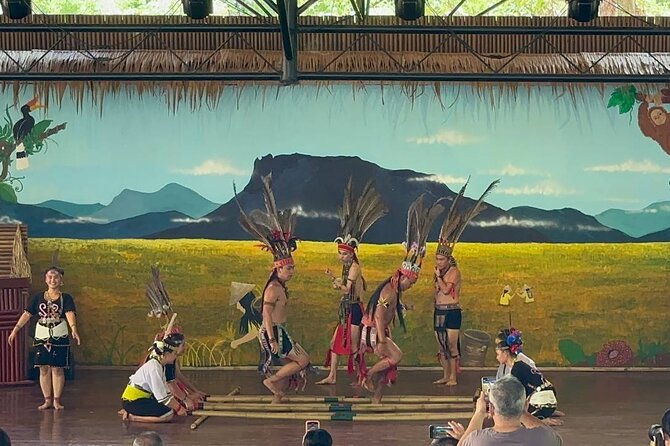
At about 11:45 a.m. in the morning session, or 3:45 p.m. in the afternoon session, the group gathers for a traditional Sabahan dance performance. The show lasts roughly 45 minutes.
This is the most theatrical part of the visit. After the quieter house explanations and food demonstrations, the dancing gives the program a lively finish. It also helps connect the separate cultural stops through music, movement, and costume.
The performance is designed for a group audience, so expect a prepared show rather than an informal village gathering. That is not a flaw, but it is worth understanding before you book. If you prefer unplanned encounters and long conversations with local residents, this format may feel packaged. If you want a clear introduction that works for a family or a first-time visitor, the performance adds energy and helps hold attention.
Families are likely to appreciate this balance. Younger visitors may lose interest during longer explanations, but the tastings, demonstrations, dancing, and meal provide several different kinds of activity.
Lunch completes the four-and-a-half-hour schedule
After the performance, lunch is served at about 12:45 p.m. for the morning session and 4:45 p.m. for the afternoon session. The meal is a local Malaysian buffet-style lunch, eaten in the natural setting of the village.
Including lunch is a practical advantage. You do not need to arrange a separate meal between the cultural program and your return to Kota Kinabalu. It also gives you time to sit down after the walking, demonstrations, and performance.
The wording describes the meal as a buffet-style local Malaysian lunch, not a premium restaurant meal. I would judge its value as part of the complete outing rather than as a standalone dining event. If you are looking for a polished fine-dining experience, this is not that. If you want to taste local food while visiting a cultural attraction, it fits the day well.
The morning program ends around 1:30 p.m. The afternoon program ends around 5:30 p.m. Since the afternoon meal is served late, plan your day around that timing.
What the $85.79 price really includes
At $85.79 per person, this is not the cheapest way to spend half a day near Kota Kinabalu. Its value comes from the number of inclusions: air-conditioned transport, hotel pickup and drop-off from city hotels, entry, house tours, demonstrations, activities, cultural entertainment, and lunch.
You are paying for convenience as well as access. A taxi or separate transport arrangement would require more planning, and you would still need to pay for admission and food. The included guide also gives the visit a clear flow and provides background during the drive and at the houses.
The maximum group size is 15 people. That is small enough to be more comfortable than a large coach outing, especially during demonstrations where you want to see what is happening. It does not guarantee a private or quiet visit, but it should keep the group manageable.
The price makes the most sense for you if you value an organized half-day with many included elements. It is less attractive if you already have transport, prefer independent sightseeing, or want to spend several hours at one community rather than sample five in one program.
The tour is booked about nine days ahead on average. That is a useful planning signal, particularly if you need a specific morning or afternoon session, although confirmation is subject to availability.
Who should book this cultural visit
I would recommend Mari-Mari Cultural Village to first-time visitors to Sabah who want a broad introduction without arranging several separate trips. It also fits families well because the day changes pace often: transport, storytelling, house visits, food, demonstrations, dance, and lunch.
It suits you if you enjoy learning through practical examples rather than museum labels alone. The rice wine, cooking, craft activities, and traditional houses give you several ways to connect with the subject.
The experience may be less suitable if you want a private tour, a long wilderness walk, or an unstructured meeting with people in their own homes. It is a purpose-built cultural attraction with a planned route and a prepared performance. That format offers clarity and convenience, but it naturally has limits.
Most people can participate, and the group is capped at 15. The experience depends on good weather. If poor weather forces cancellation, you receive a choice of another date or a full refund. The same applies if the minimum number of participants is not reached.
Final verdict: a useful first look at Sabah
Book this tour if you want an easy half-day from Kota Kinabalu that combines cultural background, traditional houses, food samples, dance, and lunch in one package. The strongest features are the variety of the five house visits, the guide’s role in explaining Sabah, and the practical demonstrations that keep the program active.
Think twice if your priority is deep study of one indigenous community or independent exploration. For everyone else, the $85.79 price is reasonable because it covers transport, entry, food, and a small-group program. Choose the morning session for an earlier finish, or the afternoon session if you want a slower start and do not mind returning around 5:30 p.m.
FAQ
Where is Mari-Mari Cultural Village located?
It is located in Kionsom, Inanam, about 30 minutes from Kota Kinabalu.
How long does the tour last?
The full experience lasts approximately four hours and 30 minutes. The village program itself is listed as three hours, with the remaining time covering pickup, transport, and drop-off.
What time does the morning session begin?
Morning pickup starts around 9:00 a.m., depending on your hotel. The village tour begins at about 10:00 a.m. and ends around 1:30 p.m.
Is there an afternoon session?
Yes. Afternoon pickup begins around 1:00 p.m., depending on your hotel. The village tour starts at about 2:00 p.m. and ends around 5:30 p.m.
What cultures are represented at the village?
The program presents five major indigenous groups of Sabah: Kadazan-Dusun, Rungus, Lundayeh, Bajau, and Murut.
Is lunch included?
Yes. A local Malaysian buffet-style lunch is included, along with light foods, desserts, drinks, and house-brewed rice wine sampled during the house visits.
Does the tour include hotel pickup and drop-off?
Yes, pickup and drop-off are included for Kota Kinabalu city hotels. Hotels in outlying areas incur an additional MYR30 charge.
Can I cancel for a full refund?
Yes. You can cancel at least 24 hours before the experience starts for a full refund. Cancellations or changes made less than 24 hours before the start time are not refunded or accepted.
Just added around Kota Kinabalu
- Sabah: White Water Rafting Grade 3-4 at Padas River★ 4.7 · 3 reviews
- Full-Day Sepilok Orangutan and Sandakan City Trail from Kota Kinabalu★ 4.0 · 6 reviews
- Sunset E-Foil Experience in Tanjung Aru Beach★ 5.0 · 10 reviews
- Island Hopping ( Manukan & Sapi Island ) From Kota Kinabalu★ 4.5 · 9 reviews
- Mangrove Kayaking Experience in Borneo★ 5.0 · 8 reviews
- Join us for a RAID Try Dive in Kota Kinabalu★ 5.0 · 27 reviews
- Padas River White Water Rafting from Kota Kinabalu (Grade 3 & 4)★ 3.5 · 4 reviews
- Monsopiad Cultural Village Visit with Private Transfer from Kota Kinabalu★ 4.5 · 5 reviews
Cultural Village Tours, compared.

Private Tour Kampung Gipsi Sabah Cultural Village Kota Kinabalu
Read our review →
Mari-Mari Cultural Village Visit + Lunch + transfer
Read our review →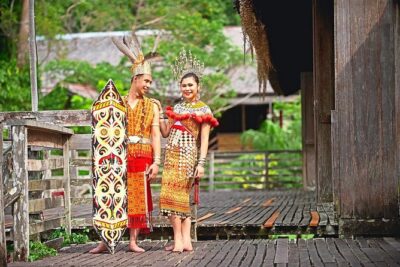
Browse the lists this tour appears in